
Saving money doesn’t have to be hard. What matters is sticking with it.
Managing your money can feel tough. Bills, subscriptions, and daily expenses can leave you stretched in many directions. Most people in America want a budget tool that works with their life, not something that feels like extra work.
Here’s the thing: the latest personal budgeting apps can help you track expenses, save lower money worries, and stay on top of things without needing messy spreadsheets or constant manual updates.
Below are top budgeting apps of 2025 made for everyday people looking for easy tools to stay in control of their finances.
Why Budgeting Apps Are More Important Now
Millions of U.S. adults struggle with money, but it’s rarely a lack of willpower, it’s usually the absence of clear visibility and a reliable system. Questions like “Where did my money go this month?”, “What bills are coming up?”, and “How can I stay on track without checking numbers every day?” are common.
Modern budgeting apps are designed to solve these problems by syncing transactions, categorizing spending, helping you plan ahead instead of reacting, sending alerts before you overspend, tracking savings and net worth, supporting shared finances, and surfacing spending patterns you might otherwise miss. With that in mind, let’s break down some of the top budgeting apps to consider in 2025.

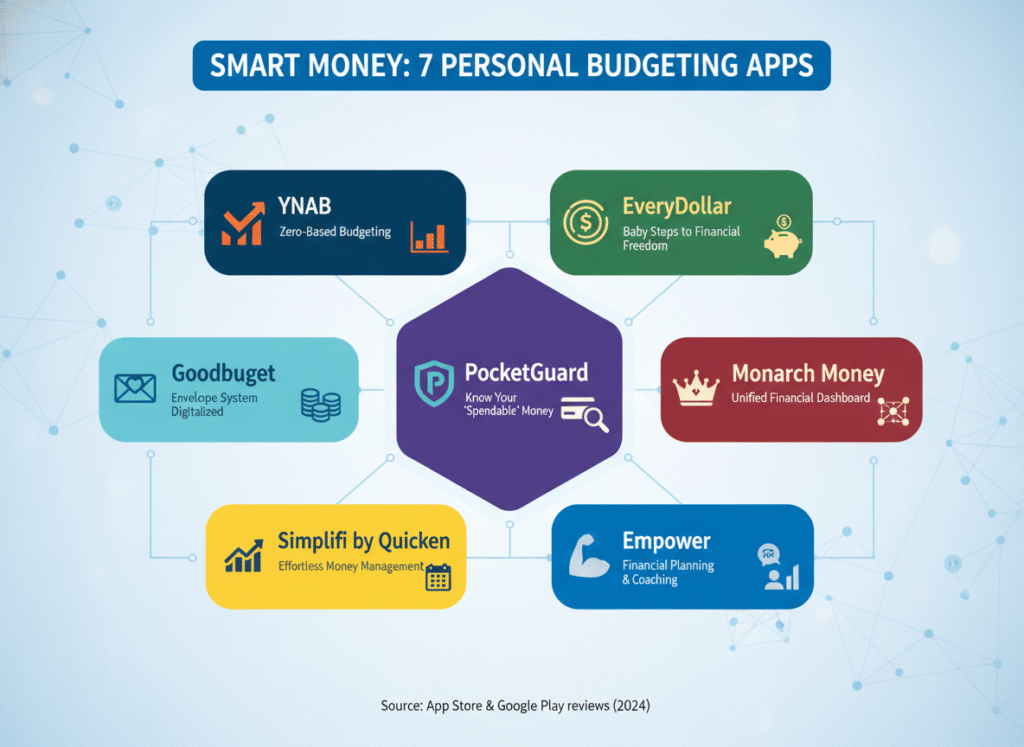
1. YNAB (You Need a Budget)
Great choice for proactive budgeters who like control.
YNAB uses a zero-based budgeting method. This means you assign every dollar to a specific purpose before you spend it. Instead of looking at past spending, YNAB encourages you to think ahead and manage your money with clear goals. Here are a couple of things to keep in mind: learning takes time, and there is no free version once the trial ends.
Why YNAB is Unique
YNAB is built around zero-based budgeting principles, encouraging you to give every dollar a job. It focuses on helping users develop strong financial habits, syncs seamlessly across devices, and provides detailed reports with easy-to-understand visuals. YNAB also stands out by offering free classes, workshops, and live support to help users stay engaged and confident.
Perfect For Those Who
YNAB is ideal for people who want a deeper understanding of their money, prefer taking consistent and hands-on control of their finances, and feel motivated by seeing clear progress toward specific goals.
2. EveryDollar
Why People Like It
EveryDollar is easy to set up and helps you create a personalized monthly budget without feeling overwhelming. It supports both debt repayment and saving goals, offers optional bank connections, and keeps categories clean and straightforward without unnecessary features. It’s especially popular with first-time budgeters and those who prefer a Ramsey-style approach.
Drawbacks
The free plan requires manual data entry, which can be time-consuming for some users. Automation features, including bank syncing, are only available with the premium version.
3. Goodbudget
Advantages
Goodbudget offers a simple, familiar budgeting style that works especially well for couples or anyone managing shared finances. It includes helpful educational tools and an easy-to-follow virtual envelope layout, making it a great choice for learning and using the envelope budgeting method.
Skip This App If
You prefer automatic bank syncing or need advanced features like investment tracking or net worth monitoring.
4. PocketGuard
PocketGuard is best suited for overspenders or anyone who needs instant accountability. If you often find yourself thinking, “Do I have enough to buy this right now?”, PocketGuard’s In My Pocket tool gives you immediate answers. It helps you understand how much money is safe to spend, keeps track of subscriptions and recurring payments, assists with setting savings goals, and offers clear, easy-to-read visuals. However, the free version has limited features, and it may not be the best option for long-term financial planning.
5. Monarch Money
It’s ideal to manage all your finances in one place, such as spending, savings, and investments. Former Mint users often like how sleek and easy it feels. The platform works especially well for couples or families who want a shared view of their finances, all without clutter or unnecessary distractions. But here are a couple of things to keep in mind: there’s no free version, and syncing with certain banks may not always work.
6. Simplifi by Quicken
Simplifi sets up a spending plan based on your habits and updates it when things in your finances shift. It works well for those who prefer some structure without feeling stuck to rigid rules.
Main Advantages
This app automatically categorizes your spending, tracks subscriptions and recurring bills, and helps predict upcoming cash flow so there are fewer surprises. It also links multiple accounts, giving you a clear, centralized view of your finances.
What’s Lacking
There’s no free version available, which may be a drawback for budget-conscious users. In addition, it offers limited features for tax planning or business-related finances, making it better suited for personal money management than more complex needs.
7. Empower (called Personal Capital)
Empower combines tools for budgeting and investment insights. It’s perfect if you want to grow wealth, not just monitor your expenses. However, this option isn’t best suited for those looking for in-depth budgeting categories or individuals who need an app primarily focused on budgeting.
Key Features
This platform offers a free net worth tracking dashboard, a built-in retirement planning tool, and an investment fee analyzer to help identify hidden costs. It can also sync with most financial accounts for a complete view of your finances.
How to Find the Right Budgeting App for You
Are you a hands-on or hands-off budgeter?
- Hands-on people: YNAB, Goodbudget
- Hands-off folks: Monarch, Empower, Simplifi
Do you like structure or flexibility?
- Fans of structure: EveryDollar, YNAB
- More flexible users: PocketGuard, Simplifi
Do you like planning ahead or checking past spending?
- Planning ahead types: YNAB, Goodbudget
- Take another look after spending your money: PocketGuard, Empower
Are you handling your budget solo or teaming up?
- On your own: Simplifi YNAB, Empower
- With a partner: Goodbudget, Monarch, Honeydue
Everyday Problems These Apps Help You Solve
If you’re constantly wondering where your money goes, tools like Simplifi or PocketGuard can give you instant clarity. If sticking to a budgeting system has been the challenge, YNAB or EveryDollar offer structured methods that many people actually follow through on.
For those who want to save more but keep slipping, Monarch and YNAB help reinforce consistency. Couples looking to merge or manage finances together often find Honeydue or Monarch useful, while anyone who wants to start investing and keep budgeting and tracking in one place may prefer Monarch or Empower.
What Budgeting Will Look Like in 2025: Features to Expect
In 2025, budgeting tools are becoming smarter and more automated. Expect apps that handle saving and investing automatically, use AI to organize and categorize spending, and offer shared dashboards designed for partners or families.
Net worth tracking is becoming standard, outdated spreadsheets are being replaced with forward-looking cash-flow forecasts, and many platforms now include built-in financial guidance and learning resources to help users make better decisions year-round.
Final Take: The Best Budgeting App Is the One You’ll Use
A good app should make managing your money easier, not harder. There’s a budgeting app out there that fits your style and how you manage money. Begin with small steps, stick with it, and pick a tool that feels easy to use instead of overwhelming. The right app can turn managing your finances into something you might look forward to.
Related Articles
10 Best Money-Saving Apps to Help You Save More Automatically in 2025