Buying a home doesn’t always wait for perfect timing. Maybe rent keeps rising. Maybe your family needs more space. Maybe you finally found the house. Then the lender mentions something called private mortgage insurance, and suddenly the numbers feel heavier than expected.
If PMI has you confused, annoyed, or second-guessing your plans, you’re in the right place. Let’s break this down calmly and clearly.
What Is Private Mortgage Insurance (PMI)?
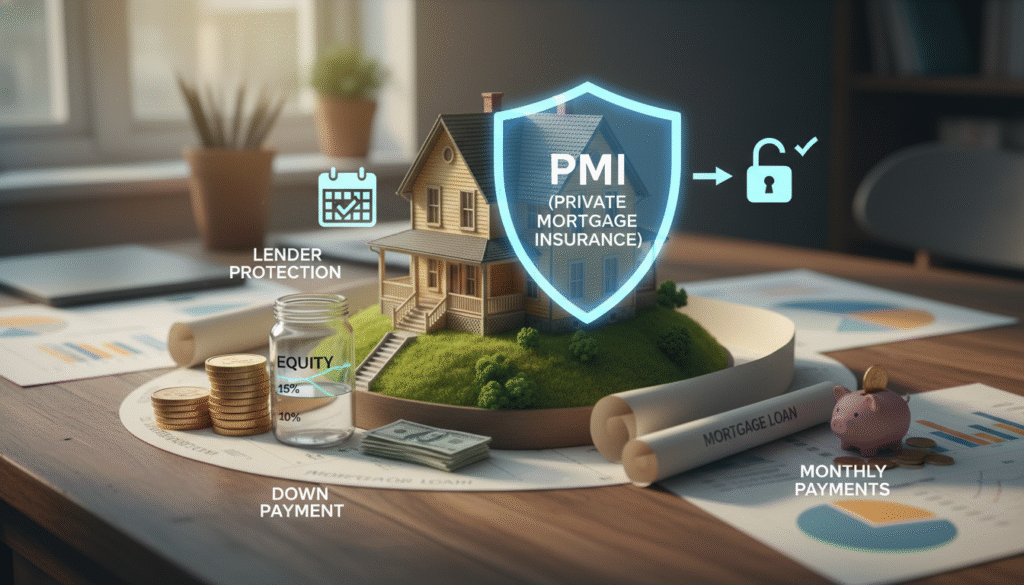
Private mortgage insurance (PMI) is an insurance policy required on conventional mortgages when you put down less than 20% of the home’s purchase price, or when you refinance and have less than 20% equity.
Here’s the part that trips people up: You pay for PMI but it protects the lender, not you. If a borrower defaults, PMI helps the lender recover part of the loan balance. It doesn’t prevent foreclosure, repair your credit, or step in to help you make payments.
So why does PMI exist at all? Because it allows lenders to say “yes” to buyers who don’t have a large down payment, something that’s increasingly common in today’s housing market.
Why Lenders Require PMI
From a lender’s perspective, a smaller down payment means more risk. If you buy a home with 5% or 10% down and prices fall, or life happens, the lender has less cushion.
PMI offsets that risk. In exchange, you get access to homeownership sooner, a conventional loan instead of waiting years to save 20%, and potential appreciation while you build equity.

How PMI Works in Real Life
PMI doesn’t arrive as a separate bill. It’s usually bundled quietly into your monthly mortgage payment. Most borrowers pay PMI monthly, though some lenders offer upfront or split-payment options.
When PMI Applies
PMI applies when you buy a home with less than 20% down or refinance while your loan-to-value (LTV) ratio remains above 80%. In these situations, lenders require PMI to reduce their risk, even if you have strong credit.
Where You’ll See It
You’ll typically see PMI listed on your Loan Estimate, on your Closing Disclosure, and as a separate line item in your monthly mortgage payment, making it easy to identify how much it’s adding to your housing costs.
How Much Does PMI Cost?
This is the question everyone cares about, and the answer is: it depends. Most PMI costs fall between roughly 0.3% and 2% of the loan amount per year. Where you land in that range depends on a few factors:
What Affects Your PMI Rate
Several factors influence your PMI rate, including your credit score (higher scores typically mean lower PMI), the size of your down payment (more down usually reduces the cost), the loan amount, and the loan type, with adjustable-rate mortgages often carrying higher PMI costs than fixed-rate loans.
Types of PMI You Might Encounter
Borrower-Paid PMI (Most Common)
Borrower-paid PMI, the most common option, is added directly to your monthly mortgage payment, with the cost decreasing as your equity grows and becoming removable once you reach the required equity threshold. This approach keeps your interest rate lower, but your monthly payment stays higher until PMI is eliminated.
Lender-Paid PMI
Despite the name, you’re still paying for it, just in a different way. With this structure, PMI is baked into a higher interest rate, so there’s no separate PMI line item on your monthly payment, and it often can’t be removed even after you reach 20% equity. This approach can make sense if you plan to refinance or sell relatively soon, but it may cost more over time if you keep the loan long term.
Single-Premium PMI
This option is less common but still offered in some cases. The PMI cost is paid upfront at closing, or sometimes rolled into the loan, which means there are no monthly PMI payments afterward. While this approach increases your upfront costs, it lowers your monthly payment and can work well for buyers who have extra cash and want a cleaner, more predictable monthly budget, though it isn’t always the most flexible option if your plans change later.
Different PMI Payment Structures (What You’ll Actually See)
PMI isn’t one-size-fits-all. Depending on your lender and loan terms, you may encounter monthly PMI, which is the most common and easiest to remove later; upfront PMI, which raises closing costs but lowers monthly payments; split PMI, where part is paid upfront and part monthly; or rate-based PMI, where the cost is hidden inside a higher interest rate.
When comparing loans, don’t just ask whether PMI applies. Ask how it’s structured, how much it really costs over time, and how easily it can be removed once you build enough equity.
Pros and Cons of PMI for Borrowers
Pros
It can make homeownership possible sooner by allowing smaller down payments, and in many cases it’s temporary and removable. For some buyers, paying PMI may even be cheaper than waiting years to save 20% while home prices and rents continue to rise.
Cons
PMI increases your monthly housing costs and offers no direct protection to you as the borrower. It can slow other affordability goals like saving or investing, and if it’s poorly structured, it can end up costing more over the long term.
How to Calculate PMI

PMI is calculated as a percentage of your loan amount, and that percentage depends on your risk profile as a borrower.
Step 1: Find Your Loan Amount
You need all of this information: home price, down payment and then can calculate loan amount (home price minus down payment). For example, home price: $350,000, down payment: $35,000 (10%), and loan amount: $315,000.
Step 2: Estimate Your PMI Rate
Mostly, PMI rates fall between 0.3% and 2% annually.
Where you land depends on credit score, down payment size, and loan type (fixed vs. adjustable).
Let’s assume a 0.6% PMI rate.
Step 3: Calculate Annual PMI
Multiply the loan amount by the PMI rate. For example: $315,000 × 0.006 = $1,890 per year.
Step 4: Convert to Monthly PMI
Divide the annual amount by 12. For example: $1,890 ÷ 12 = $157.50 per month.
That’s the number you’ll usually see folded into your monthly mortgage payment.
Where to Find the Exact Number
You don’t have to guess forever. Your Loan Estimate (the document lenders give you early in the process) will show your exact PMI rate, how long PMI is expected to last, and whether it’s monthly, upfront, or split. If the PMI cost feels unclear, ask the lender to walk you through the math. A good lender won’t rush this part.
One Important Reminder
PMI isn’t static. As your balance drops and your equity grows, PMI becomes removable. So when you calculate PMI, don’t just ask “What does it cost?” also ask “How long will I be paying it?”
PMI vs. Other Mortgage Insurance
With conventional loans, PMI is required when you put less than 20% down, but it can be removed once you build enough equity, either through payments or home value appreciation. This makes PMI temporary for many borrowers.
With FHA loans, mortgage insurance is structured differently as Mortgage Insurance Premiums (MIP). MIP is required regardless of down payment and includes both an upfront premium and an annual premium. Depending on your down payment size, MIP often lasts 11 years or even the life of the loan.
VA loans don’t charge monthly mortgage insurance at all. Instead, they use a one-time VA funding fee, which may be waived for certain eligible borrowers. After that fee, there’s no PMI or ongoing insurance cost, making VA loans especially affordable for qualified veterans and service members.
When and How PMI Goes Away
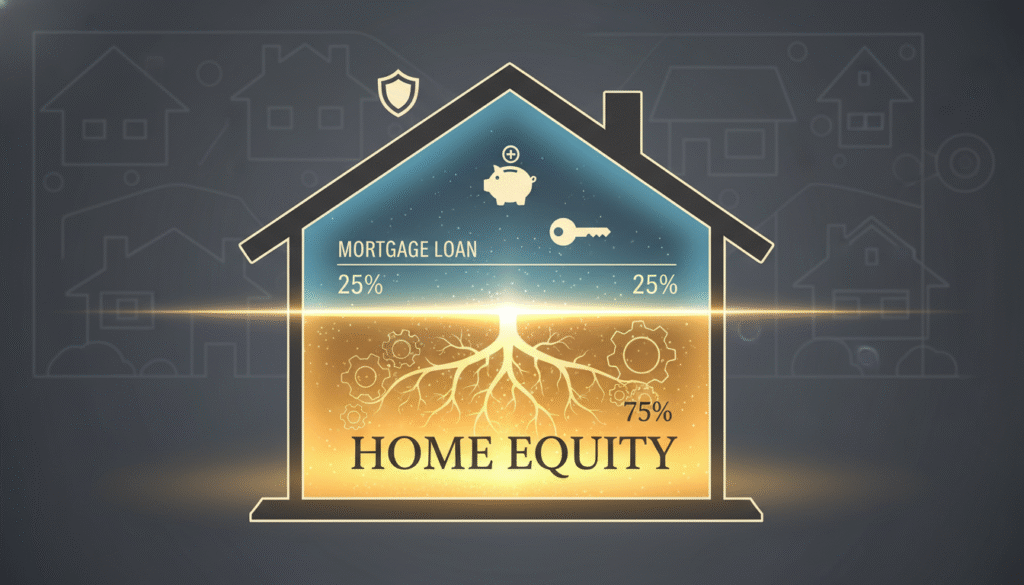
Here’s the good news: PMI isn’t permanent. You can request PMI removal once your loan balance reaches 80% of the home’s original value, as long as you’re current on your payments and meet your lender’s requirements, which sometimes include a new appraisal. Even if you don’t request removal, lenders are required to automatically cancel PMI when your balance reaches 78% of the original value, assuming your payments are up to date. And if your home’s value rises significantly, you may hit those thresholds sooner than expected.
How to Avoid PMI (or Pay Less of It)

There are several common strategies for managing or minimizing PMI. Putting 20% down is the cleanest solution, but it isn’t always realistic. Improving your credit score before applying can lower PMI costs, and lender-paid PMI, can be worth comparing. Some first-time buyer programs also offer reduced PMI, and making extra principal payments early can help you reach 80% loan-to-value faster. In many cases, paying PMI for a short period is less expensive than waiting years to buy, especially if home prices or rents continue to rise during that time.
Is PMI Worth It?
This is where nuance matters. PMI isn’t “good” or “bad.” It depends on each situation.
PMI may be worth it if:
- Waiting would push you out of the market
- Rents are rising faster than PMI costs
- You plan to stay long enough to remove it
- Home values in your area are appreciating
PMI may not be worth it if:
- It pushes your monthly payment into stress territory.
- You’re stretching your budget just to qualify.
- You expect to move quickly.
A Quick PMI Self-Check
Before you decide, pause and ask yourself a few honest questions. Can you comfortably afford the payment with PMI included? How long will it realistically take you to reach 20% equity? And are you buying because it truly fits your life right now, or because you feel rushed by the market or outside pressure? Clear answers almost always beat perfect timing.
The Bottom Line
Private mortgage insurance exists to protect lenders, but when used intentionally, it can still work in your favor. PMI can help you buy sooner, open doors that waiting for a 20% down payment might delay, and eventually disappear as you build equity. The key is understanding its cost, planning for removal, and making sure it fits your broader financial picture, not just today’s excitement.