Mutual funds are one of the most accessible and popular investment options, especially for those looking to diversify their portfolios without needing to actively manage individual investments. Whether you’re just starting your investing journey or looking to build on your existing knowledge, understanding how mutual funds work and why they’re so widely used will help you make more informed decisions.
This article will explore what mutual funds are, how they function, the key benefits and risks associated with them, and why investors continue to rely on them for long-term financial growth.
What Are Mutual Funds?

A mutual fund is an investment vehicle that pools money from multiple investors to invest in a diversified portfolio of assets, such as stocks, bonds, or money-market instruments. These funds are managed by professional fund managers who make the investment decisions on behalf of the investors.
One of the key benefits of mutual funds is diversification. By pooling resources, mutual funds allow investors to hold a broad range of assets within a single investment. This helps reduce risk because your money isn’t tied to a single security. For example, if one stock in the fund’s portfolio performs poorly, other stocks or bonds may still perform well, helping to offset potential losses.
How Do Mutual Funds Work?
When you invest in a mutual fund, you’re purchasing shares in the fund. The value of those shares is determined by the Net Asset Value (NAV), which represents the total value of the fund’s assets divided by the number of shares outstanding. The NAV fluctuates daily, as it reflects the current value of the fund’s underlying investments.
Mutual funds allow you to earn returns in three ways: through dividends, capital gains, and an increase in the fund’s NAV. For example, if a mutual fund holds stocks that pay dividends, those dividends are passed on to investors. Similarly, if the fund sells securities at a profit, capital gains are distributed to investors. If the value of the investments in the fund rises, the NAV increases, raising the value of your shares.
Types of Mutual Funds
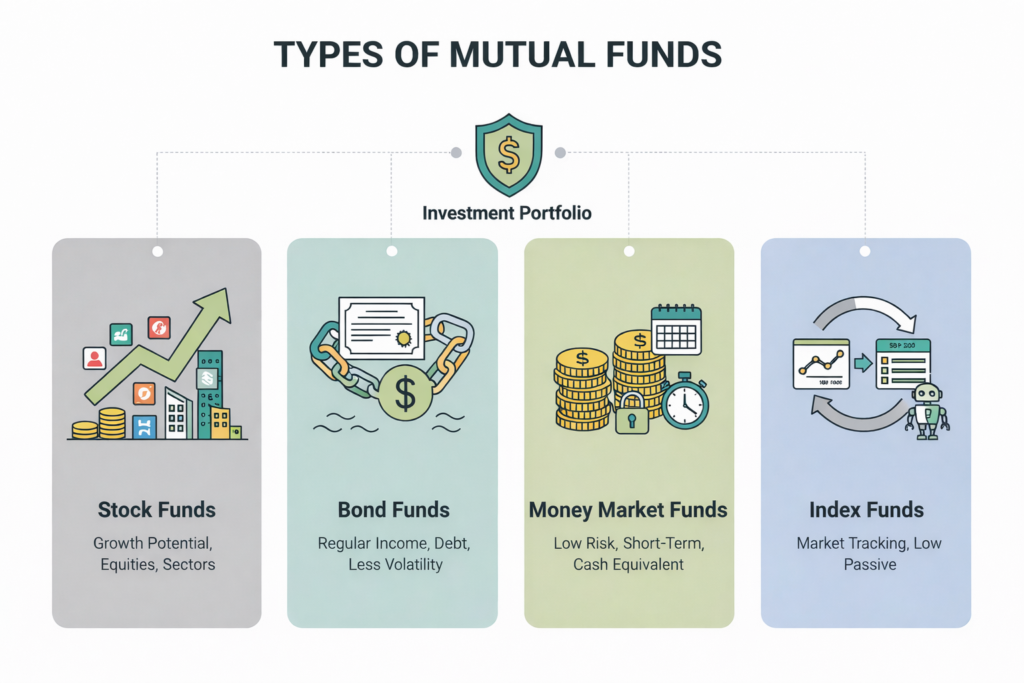
Stock Funds
These funds invest primarily in stocks. They aim for long-term growth and are generally riskier than bond funds but offer higher potential returns.
Bond Funds
These funds focus on investing in bonds and aim to provide steady income through interest payments. Bond funds tend to be less volatile than stock funds, making them a good option for conservative investors seeking more stability.
Money Market Funds
Money market funds invest in short-term, low-risk securities, such as Treasury bills or commercial paper. These funds are typically used to preserve capital and provide liquidity, although their returns are lower than those of stock or bond funds.
Index Funds
These funds are a type of stock fund that seeks to replicate the performance of a specific market index, such as the S&P 500. They’re generally passively managed and offer lower fees compared to actively managed funds.
Each type of mutual fund has its own set of investment objectives and risk levels, making it crucial to choose a fund that aligns with your financial goals and risk tolerance.
Why Do People Buy Mutual Funds?
There are several reasons why mutual funds are so popular with investors, especially for those looking for a hands-off investment approach.
Professional Management
One of the biggest advantages of mutual funds is that they’re managed by professionals who are skilled in selecting and managing investments. This is especially beneficial for those who don’t have the time or expertise to manage their own investments.
Diversification
Mutual funds provide built-in diversification, which is essential for managing risk. By investing in a variety of securities, funds spread out the risk, helping to smooth returns over time. Diversification is often considered one of the most important strategies in investing.
Low Minimum Investment
Many mutual funds have relatively low minimum investment requirements, making them accessible for a wide range of investors, even those just starting out with a limited amount of capital.
Liquidity
Mutual funds are typically liquid, meaning you can buy or sell shares at the fund’s NAV at the end of each trading day. This provides investors with flexibility and access to their money when needed.

Costs of Mutual Funds
Investing in mutual funds comes with certain fees that can impact your returns over time. One of the most important fees to consider is the Expense Ratio. This is an annual fee that covers the costs of managing the fund. Actively managed funds generally have higher expense ratios compared to passively managed funds, such as index funds, because they require more hands-on management.
Some mutual funds may also charge sales loads: a commission fee paid when you buy or sell shares in the fund. These fees can be significant, so it’s essential to look for no-load funds to avoid unnecessary costs.
Another type of fee is the 12b-1 fee, which covers the marketing and distribution costs of the fund. While not all funds charge this fee, it’s something to consider when evaluating a fund’s total cost.
Understanding these costs is crucial for evaluating the true value of a mutual fund and how they may affect your long-term investment returns.
Mutual Funds vs. ETFs: What’s the Difference?
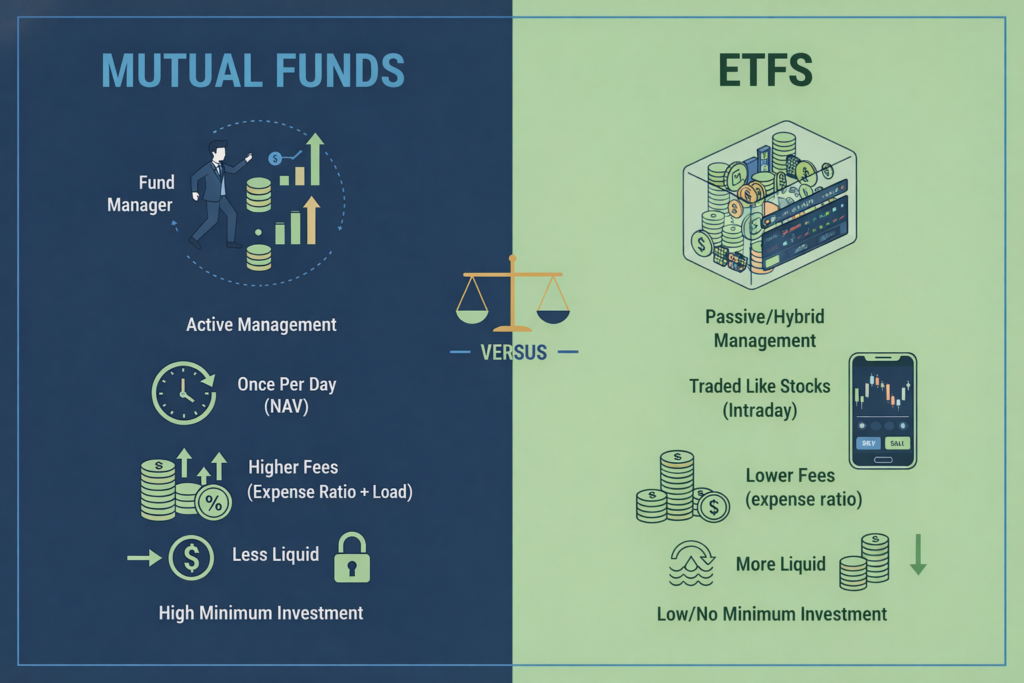
While mutual funds and Exchange-Traded Funds (ETFs) both offer diversification and professional management, there are key differences between the two:
Trading Flexibility
Mutual funds are priced at the end of the trading day, while ETFs can be bought and sold throughout the day on the stock exchange, just like individual stocks.
Management Style
Mutual funds can be actively or passively managed, depending on the fund’s strategy. Most ETFs are passively managed, tracking a specific index, which typically results in lower fees.
Fees
ETFs generally have lower fees compared to actively managed mutual funds, making them an attractive option for cost-conscious investors.
Investment Minimums
Mutual funds often require a minimum investment amount, whereas ETFs can be purchased in smaller quantities, such as a single share, making them more accessible to investors with limited capital.
Risks of Investing in Mutual Funds
Like any investment, mutual funds come with risks. The value of a mutual fund’s shares can fluctuate based on market conditions, the performance of its underlying assets, and the investment decisions made by the fund manager. It’s essential to understand these risks and evaluate your risk tolerance before investing in any mutual fund.
- Market risk: The value of a mutual fund can decline due to market downturns or volatility, particularly for stock funds, which are more sensitive to market conditions.
- Interest rate risk: This is especially important for bond funds. Rising interest rates can lead to a decline in the value of existing bonds, which may negatively affect bond funds.
- Management risk: If the fund manager makes poor investment decisions, it can negatively impact the fund’s performance.
How to Invest in Mutual Funds

Step 1: Choose the Right Fund
Identify your investment goals and risk tolerance to select the right mutual fund. Whether you want growth, income, or stability, there’s a fund type for you.
Step 2: Open an Account
You can invest in mutual funds through a brokerage account, IRA, or directly with a mutual fund company.
Step 3: Make Your Investment
After selecting your fund, you can invest by purchasing shares, making sure to understand any minimum investment requirements.
Step 4: Monitor Your Investment
Keep track of your fund’s performance to ensure it continues to meet your financial goals. Review your portfolio periodically and make adjustments as needed.
Final Thoughts
Mutual funds offer a convenient way for investors to diversify their portfolios, gain professional management, and access a wide range of assets. They provide many advantages, but they also come with risks and costs that need to be carefully considered.
By understanding the basics of mutual funds, including their types, benefits, and costs, you’ll be better equipped to make informed decisions and select the right mutual fund for your financial goals. Whether you’re just starting your investment journey or refining your strategy, mutual funds can be a powerful tool in building long-term wealth.