


Purchasing a manufactured home can be an affordable and flexible housing option, especially for first-time homebuyers. If you’re considering a manufactured home, the FHA loan (Federal Housing Administration loan) is one of the most accessible ways to secure financing. Known for its low down payment requirements, flexible credit score criteria, and affordable rates, the FHA loan has helped countless individuals and families achieve homeownership.
In this article, we’ll break down everything you need to know about FHA loans for manufactured homes, including eligibility requirements, property rules, loan limits, and how to qualify for an FHA-backed loan. Whether you’re looking to buy a new manufactured home, a used mobile home, or both home and land, understanding how FHA loans work will help you make an informed decision.
What Is an FHA Loan for Manufactured Homes?
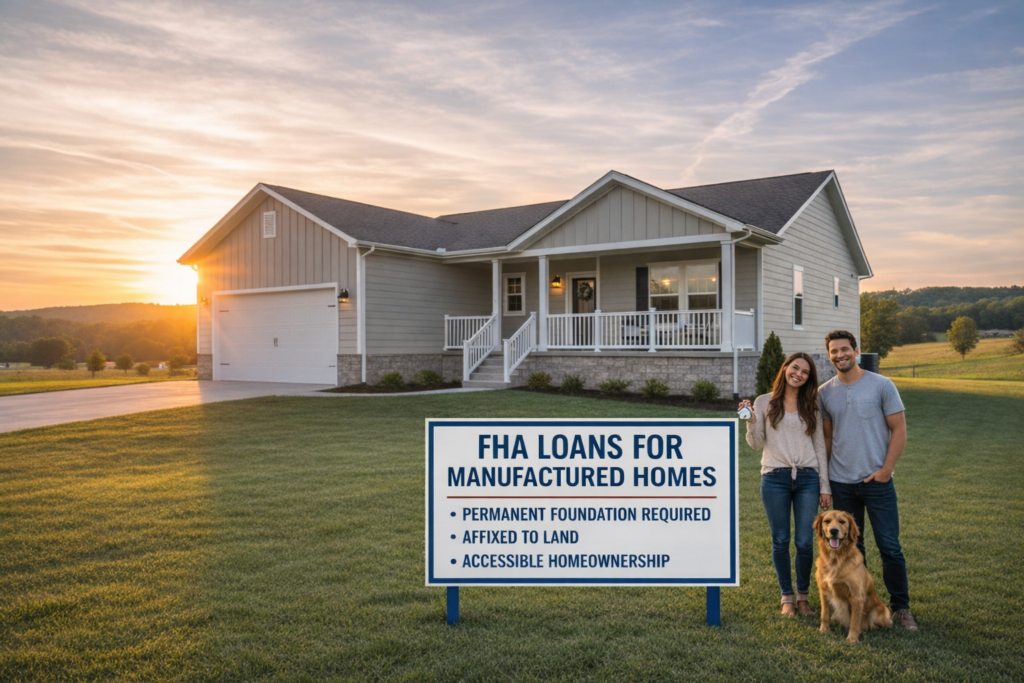
An FHA loan is a government-backed mortgage designed to make homeownership more accessible to buyers who may not qualify for conventional loans. Specifically, FHA loans for manufactured homes allow homebuyers to finance the purchase of a mobile or manufactured home with lower down payments and more lenient credit score requirements.
FHA loans are available for homes that meet the HUD construction standards and are placed on a permanent foundation. These loans can be used to finance either the home itself or both the home and the land on which it sits, offering flexibility to homebuyers who want to own both the structure and the property.
Eligibility Requirements for FHA Loans on Manufactured Homes
Before you can qualify for an FHA loan, you need to meet specific eligibility criteria.
Credit Score
The minimum credit score for an FHA loan for a manufactured home is typically 500. If your credit score is between 500 and 579, you’ll need to make a 10% down payment. If your score is 580 or higher, you can take advantage of the 3.5% down payment option. For first-time buyers with limited credit history, the FHA loan offers a great opportunity to access financing with a relatively low credit score.
Down Payment
As mentioned, the FHA loan requires a down payment as low as 3.5% for those with a credit score of 580 or higher. For example, if the price of your manufactured home is $150,000, your down payment would only be $5,250 with the minimum 3.5% requirement.
Debt-to-Income (DTI) Ratio
The FHA considers your debt-to-income ratio when evaluating your loan application. This ratio compares your total monthly debt payments to your gross monthly income. For an FHA loan, the maximum allowable DTI is typically 43%, though some lenders may allow for higher ratios under certain circumstances, such as a large down payment or a strong credit score.
Permanent Foundation
The home must be placed on a permanent foundation in order to qualify for FHA financing. This is one of the key differences between manufactured homes and modular homes. Modular homes are often already built to permanent standards, but manufactured homes require additional work to ensure that they’re securely anchored to a foundation.
HUD Certification
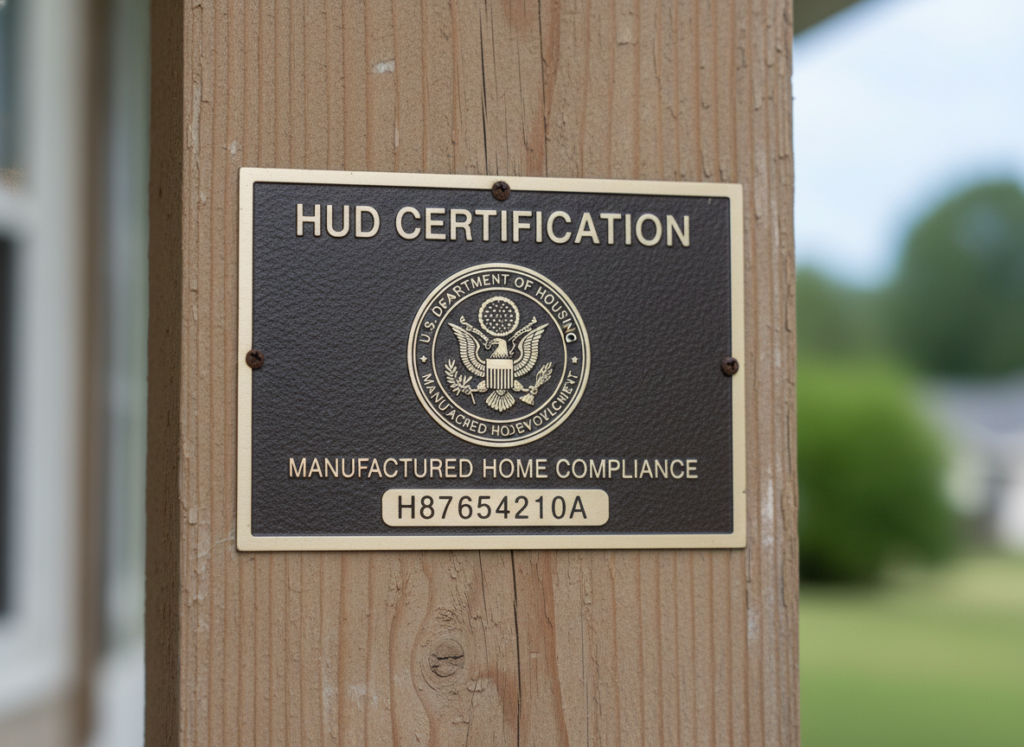
For a manufactured home to be eligible for FHA financing, it must have the appropriate HUD tags and data plates. These certifications indicate that the home was built according to HUD construction standards. It’s important to verify that your home meets these requirements before applying for an FHA loan.
Property Requirements
The property on which the manufactured home sits must meet certain criteria. For example, the home must be classified as real property and the land must be titled in the buyer’s name. The property must also pass a HUD inspection to ensure that it meets safety standards.
How FHA Loans for Manufactured Homes Work

Once you meet the eligibility criteria, you can move forward with the process of applying for an FHA loan. The loan process for manufactured homes follows similar steps to applying for any other mortgage, but with some additional considerations due to the nature of the property. Here are the essential steps to follow:
Select an FHA-Approved Lender
The first step is to choose an FHA-approved lender. These lenders are authorized by the government to provide FHA-backed loans. You’ll need to check with the lender to ensure they offer manufactured home loans, as not all FHA lenders specialize in this area.
Home Appraisal and Inspection
The FHA requires a home appraisal to determine the value of the home. The appraiser will ensure that the home meets HUD’s construction standards and that it’s in good condition. A foundation inspection is also required to ensure the home is securely affixed to the property.
Application and Documentation
When applying for an FHA loan, you’ll need to submit necessary documentation, such as proof of income, tax returns, and credit score. Your lender will assess your debt-to-income ratio and other financial factors to determine your eligibility.
Approval and Closing
If your application is approved, you’ll move to the closing stage. During this stage, you’ll review the loan terms, sign the necessary paperwork, and pay closing costs, which typically range from 2% to 5% of the loan amount.
Types of FHA Loans for Manufactured Homes: Title I vs. Title II
Title I FHA Loans
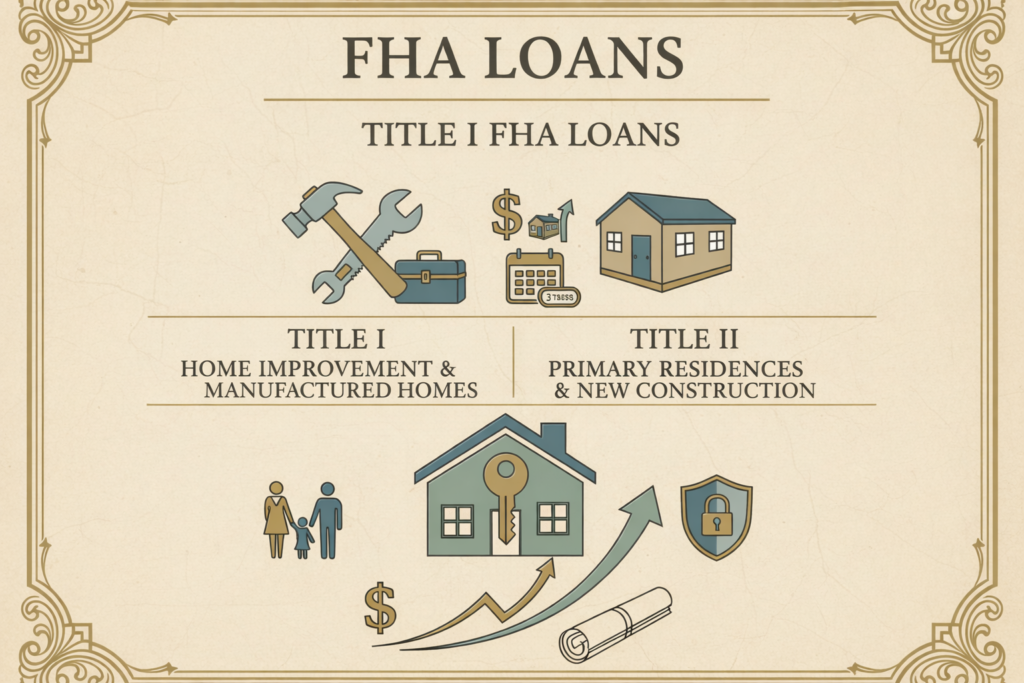
Title I loans are used for personal property (the home itself, not the land) financing. These loans are typically used when the manufactured home isn’t being purchased with land, such as when a buyer already owns land and wants to place a manufactured home on it. Title I loans are available for both new and used homes, and the maximum loan limit is lower compared to Title II loans.
Title II FHA Loans
Title II loans are for real property financing, meaning they can be used to purchase both the home and the land. These loans have higher loan limits compared to Title I loans and are available for both new and existing manufactured homes. If you plan to buy a home and the land together, a Title II loan is likely your best option.
Loan Limits for FHA Manufactured Home Loans
FHA loan limits vary by location and depend on the type of loan (Title I or Title II). The loan limits set by the FHA can change annually, so it’s important to check the current limits in your area. For Title I loans, the limit typically ranges from $20,000 to $92,000 for a single-unit home. For Title II loans, limits can go up to $1,000,000 or more, depending on the property location and type of home.
Pros and Cons of FHA Loans for Manufactured Homes
Pros:
- Low down payment: You can purchase a home with just 3.5% down if you meet the credit score requirements.
- Flexible credit score requirements: FHA loans are more forgiving on credit scores, making homeownership more accessible for those with less-than-perfect credit.
- Affordable mortgage rates: FHA-backed loans typically offer competitive interest rates.
Cons:
- Mortgage insurance premiums (MIP): FHA loans require both an upfront MIP and annual MIP, which can increase the total cost of the loan.
- Property requirements: The manufactured home must meet HUD construction standards, and the home must be placed on a permanent foundation.
- Depreciation: Manufactured homes may not appreciate in value as much as traditional site-built homes, which could affect resale value.
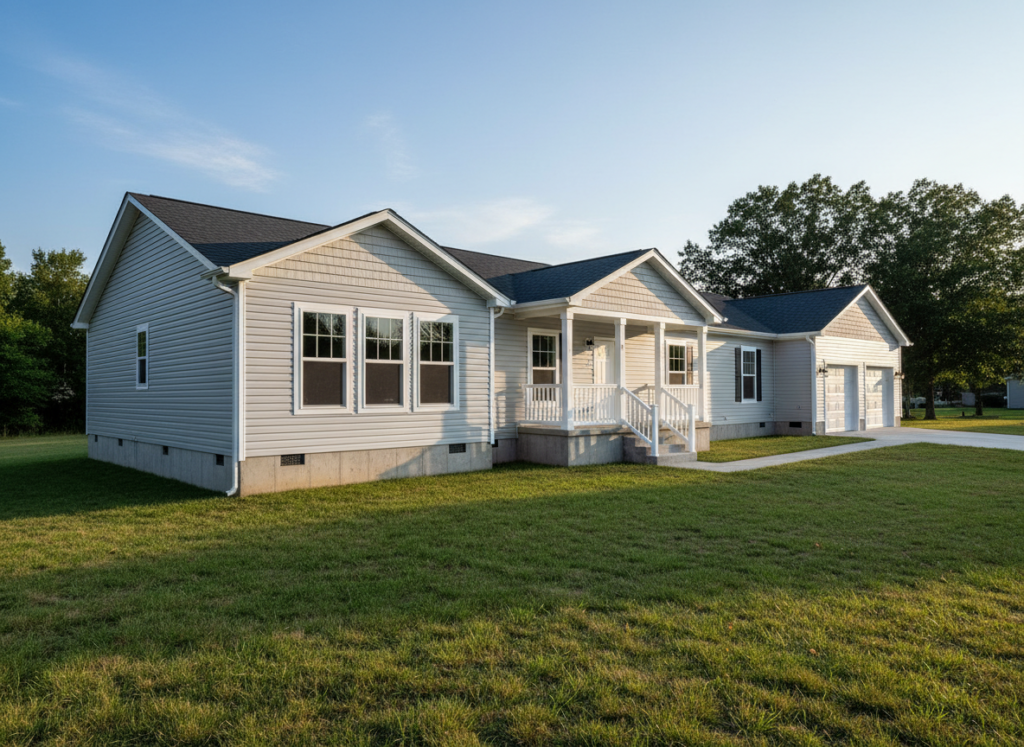
Final Thoughts: FHA Loans for Manufactured Homes Are a Viable Option
FHA loans for manufactured homes offer an excellent opportunity for first-time homebuyers and those with less-than-perfect credit to achieve homeownership. With low down payments, flexible credit score requirements, and affordable financing, FHA loans can help make manufactured homes a viable and accessible option.
However, it’s important to be aware of the additional costs, such as mortgage insurance premiums, and the property requirements for FHA loans. By understanding these factors and considering the long-term implications of owning a manufactured home, you can make an informed decision that fits your financial situation.
Before applying, consult with an FHA-approved lender to discuss your eligibility and learn more about how an FHA loan for a manufactured home can help you achieve your homeownership goals.
Related Articles
FHA Loans for Mobile Homes: Requirements, Property Rules, Loan Limits, and How to Qualify

