


When it comes to investing, many people find it challenging to manage individual stocks or bonds effectively. This is where investment funds come in, offering a simple and effective way for investors to pool their money and gain exposure to a diversified portfolio. If you’re interested in learning how investment funds work, how they can benefit you, and the types available, you’ve come to the right place.
In this article, we’ll explain what investment funds are, the different types of funds available, the benefits of using them, and how you can choose the right one for your financial goals. Whether you’re new to investing or looking to diversify your portfolio, understanding investment funds is key to building long-term wealth.
What is an Investment Fund?
An investment fund is a collective pool of capital gathered from multiple investors to purchase a portfolio of assets, such as stocks, bonds, real estate, or other securities. The goal of an investment fund is to allow individuals to diversify their holdings and gain access to investment opportunities that might be out of reach if they were investing on their own.
In simple terms, by investing in an investment fund, you’re pooling your money with others to gain exposure to a broad range of assets, which helps reduce risk through diversification.
Investment funds are managed by professional fund managers who decide on the investments and strategies for the fund based on the fund’s objectives, whether that’s long-term capital growth, income generation, or a combination of both.
How Investment Funds Work

Investment funds pool money from a group of investors to create a diversified portfolio of assets. These funds are typically categorized into actively managed and passively managed funds:
Actively Managed Funds
In actively managed funds, professional fund managers actively select securities to invest in with the goal of outperforming a market index (like the S&P 500). These funds typically charge higher fees due to the active management and research involved.
Passively Managed Funds
These funds, such as Index Funds and Exchange-Traded Funds (ETFs), are designed to mirror the performance of a specific market index. Instead of actively selecting stocks, these funds passively follow the index, making them more cost-effective with lower fees.
Investment funds can be open-ended or closed-ended:
Open-End Funds
Open-end funds issue and redeem shares at the net asset value (NAV) at the end of each trading day. The number of shares in the fund can increase or decrease based on demand.
Closed-End Funds
These funds issue a fixed number of shares that are traded on the stock market. The price of a closed-end fund can fluctuate based on market conditions, unlike open-end funds, where the price is set by the NAV.
Types of Investment Funds
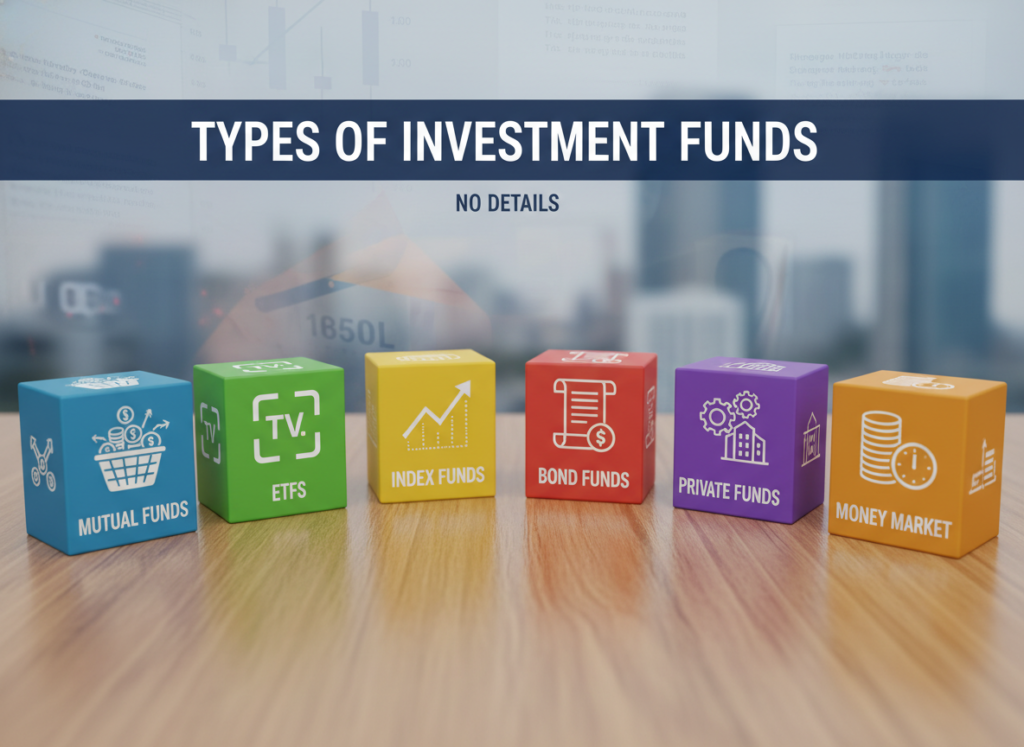
There are several types of investment funds, each offering unique features and investment strategies. Understanding these types will help you make an informed decision about which fund is best for your financial objectives.
Mutual Funds
Mutual funds are open-end funds that pool money from many investors to invest in a diversified portfolio of securities. They’re actively or passively managed and are ideal for investors who want professional management and diversification. Investors buy shares in the mutual fund at the end of the trading day at the NAV price.
Exchange-Traded Funds (ETFs)
ETFs are similar to mutual funds in that they offer diversification, but they’re passively managed and traded like individual stocks on an exchange. ETFs typically have lower fees than mutual funds and are more liquid, allowing investors to buy and sell shares throughout the trading day.
Index Funds
Index funds are a type of passive fund that aims to replicate the performance of a specific market index (for example, the S&P 500). They offer low fees and are designed for long-term growth through broad market exposure.
Bond Funds
Bond funds invest in bonds (debt securities) issued by governments, municipalities, or corporations. They’re ideal for investors looking for steady income with lower risk compared to stocks. These funds can be actively or passively managed.
Private Equity Funds
These funds invest in private companies: companies that aren’t publicly traded on the stock market. Private equity funds often target high-growth industries and may require larger investments and have higher risk. They’re typically available only to accredited investors.
Money Market Funds
Money market funds invest in short-term debt securities and provide a relatively low-risk investment option. While the returns are typically lower than other fund types, they’re ideal for individuals looking for liquidity and safety for their funds.
Benefits of Investing in Investment Funds

Diversification
By pooling money with other investors, investment funds allow you to invest in a wide range of assets. This diversification helps spread risk and reduce the potential for loss, particularly if one asset class or individual stock performs poorly.
Professional Management
Many funds are managed by experienced fund managers who research and select investments on behalf of the investors. This means you don’t have to spend time picking individual stocks or bonds, allowing you to focus on other aspects of your life.
Access to a Variety of Assets
Investment funds allow you to invest in asset classes that may otherwise be hard to access, such as real estate, international markets, or emerging industries. This gives you exposure to a broader range of investment opportunities, helping you align your portfolio with your financial goals.
Liquidity
ETFs and mutual funds are relatively liquid, meaning you can buy and sell your shares easily. This gives you the flexibility to access your money when needed.
Tax Efficiency
Certain investment funds, particularly index funds and ETFs, are tax-efficient, meaning they have fewer taxable events compared to actively managed funds. This can help you keep more of your returns.
Risks of Investment Funds
Market Risk
Investment funds that invest in stocks (equity funds) or bonds (bond funds) are subject to market fluctuations. If the market goes down, your fund’s value may also decline.
Management Fees
Actively managed funds tend to have higher management fees compared to passive funds. These fees can eat into your overall returns over time, so it’s important to understand the costs associated with the funds you’re investing in.
Liquidity Risk
Some funds, like private equity or real estate investment funds, may have low liquidity. This means it could be difficult to sell your shares quickly or get your money out without a penalty or delay.
Concentration Risk
Some funds focus on specific sectors or regions, which can lead to concentration risk. If a sector or region performs poorly, your fund’s performance may suffer significantly.
How to Choose the Right Investment Fund
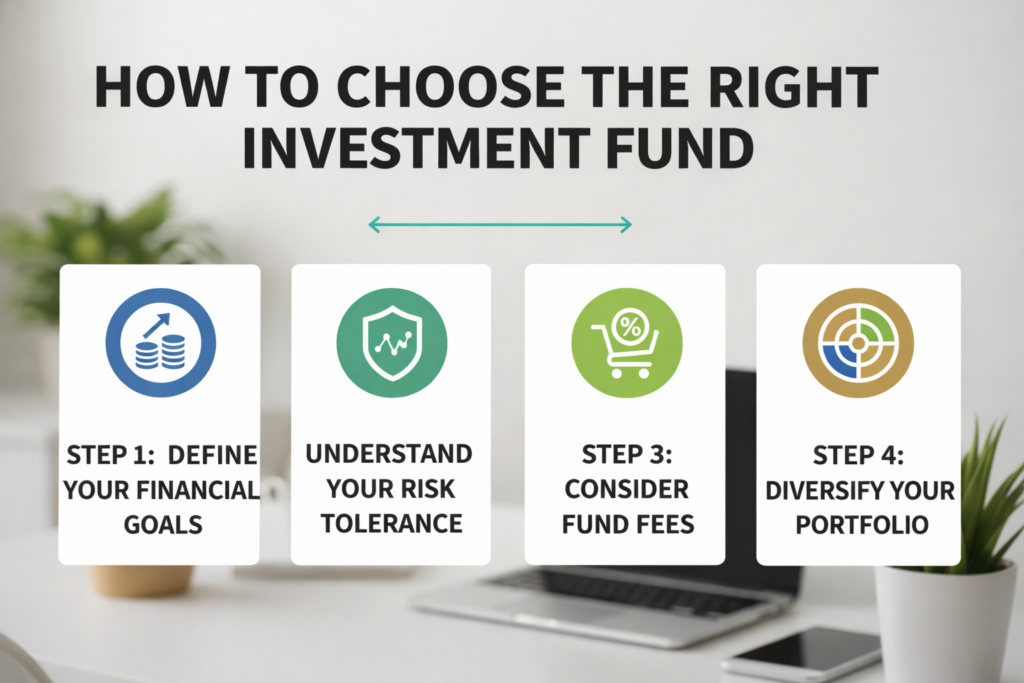
Step 1: Define Your Financial Goals
Determine whether you’re looking for long-term growth, steady income, or capital preservation. Funds like equity funds are suited for growth, while bond funds provide more stable returns.
Step 2: Understand Your Risk Tolerance
Make sure the funds you choose match your risk profile. Equity funds carry more risk but offer higher potential returns, while bond funds are more stable with lower returns.
Step 3: Consider Fund Fees
Pay attention to the expense ratios and other fees associated with the funds. Lower fees generally mean better returns over the long term, especially with passive funds like ETFs and index funds.
Step 4: Diversify Your Portfolio
Look for a mix of funds that can help you achieve a balanced portfolio. A combination of equity funds, bond funds, and money market funds can help mitigate risk while aiming for growth.
Final Thoughts: Investment Funds Are Key to Successful Portfolio Building
Investment funds offer a convenient and effective way to build a diversified investment portfolio, whether you’re saving for retirement, buying a home, or funding other financial goals. They provide access to a wide variety of asset classes and offer the benefits of professional management, tax efficiency, and diversification.
By understanding the different types of funds and the associated risks and benefits, you can make informed decisions and create a strategy that aligns with your financial goals. Whether you’re a beginner looking to start investing or an experienced investor seeking to diversify your portfolio, investment funds can help you achieve long-term financial success.