



Navigating the tax system can be daunting, but understanding IRS Form 1040 is a critical step for filing your taxes correctly. This form is used to report your income, calculate taxes owed, claim deductions and credits, and determine whether you’re due for a refund. If you’re wondering how to approach this form and avoid common mistakes, you’ve come to the right place. In this article, we’ll break down what IRS Form 1040 is, who needs to file it, and step-by-step instructions for completing it.
What Is IRS Form 1040?
Form 1040 is the standard form used by individual taxpayers to file their annual income tax return with the Internal Revenue Service (IRS). It’s one of the most common forms filed by both employees and self-employed individuals. The form serves as a summary of all your income, the taxes you owe, any deductions you’re eligible for, and any tax credits you can claim. It’s the foundation for calculating your tax liability, or the amount you owe, and determining if you’re entitled to a refund. Completing the 1040 form correctly is essential for accurate tax filing and avoiding penalties.
Who Must File IRS Form 1040?
Not everyone needs to file a Form 1040. The requirement depends on your income, age, and filing status. Here are general guidelines to help you understand who must file:
- Single taxpayers under the age of 65 must file if they earn $12,550 or more.
- Married couples filing jointly must file if they earn $25,100 or more, provided both spouses are under 65.
- Head of Household filers under 65 must file if they earn $18,800 or more.
- If you’re self-employed, have other taxable income, or if you qualify for specific credits or deductions, you may also need to file, even if your income is below the standard threshold.
Even if you don’t meet the requirements, it’s still beneficial to file if you want to claim any tax credits or get a refund for overpaid taxes (like from withholding or estimated payments).
Understanding the Components of IRS Form 1040

Personal Information
The first section asks for your name, address, and Social Security number. If applicable, this section also includes your spouse’s and dependents’ information.
Income
This section is where you report all your income. It includes your wages (reported on W-2 forms), self-employment income (reported on Schedule C), interest income, dividends, and capital gains. Be sure to list all sources of income to avoid underreporting.
Adjustments to Income
You can report specific expenses that lower your taxable income, such as contributions to retirement accounts (like IRAs) or student loan interest payments.
Deductions
You can either claim the standard deduction (a set amount) or itemize your deductions (for example, mortgage interest, medical expenses). For most people, the standard deduction is the easiest option, but if you have significant deductible expenses, itemizing might give you a larger deduction.
Tax and Credits
In this section, you’ll calculate your total tax based on your taxable income. You’ll also apply any available tax credits, like the Child Tax Credit or the Earned Income Tax Credit (EITC), which can reduce your overall tax bill.
Other Taxes
You may need to pay additional taxes, such as the self-employment tax, or the alternative minimum tax (AMT). This section ensures all applicable taxes are added.
Refund or Amount Owed
Once your tax liability is calculated, this section will show if you’re due for a refund or if you owe taxes. If you owe, the IRS will provide instructions for payment. If you’re owed a refund, you can select how to receive it (for example, direct deposit or check).
How to Complete IRS Form 1040
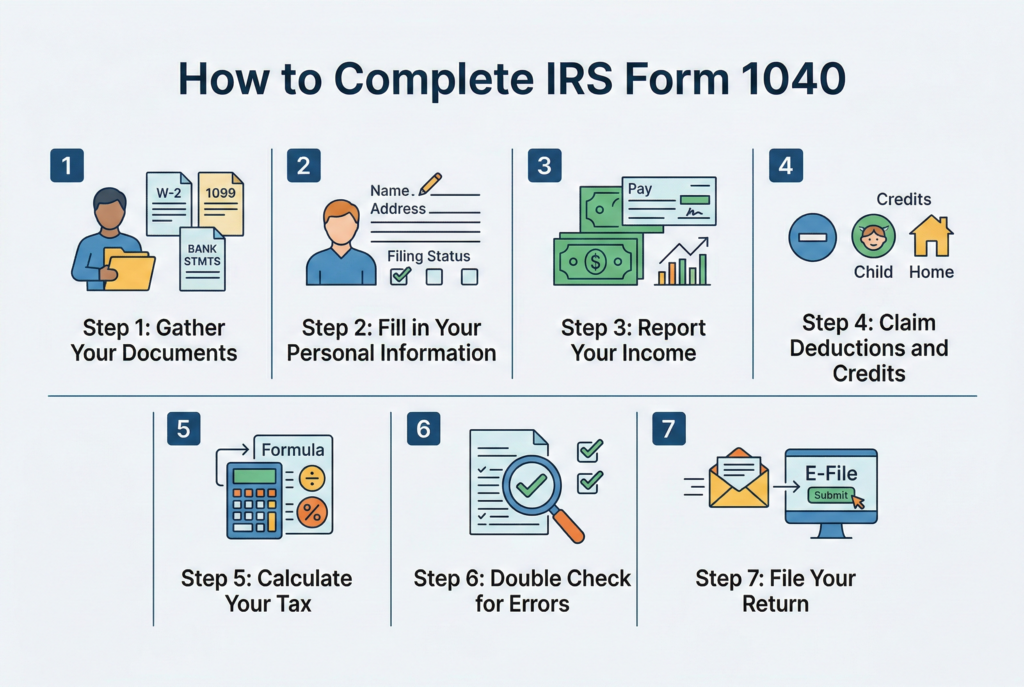
Gather Your Documents
Collect all your income documents like W-2s, 1099 forms, and receipts for deductible expenses. This will help you fill out the income and deductions sections.
Fill in Your Personal Information
Provide your name, address, and Social Security number. Make sure this is accurate to avoid delays.
Report Your Income
Enter your income from wages, self-employment, investments, and any other taxable income.
Claim Deductions and Credits
Choose whether to take the standard deduction or itemize. Apply any tax credits you’re eligible for, such as for children or education expenses.
Calculate Your Tax
Using the IRS tables or tax software, calculate the amount of tax you owe based on your taxable income.
Double Check for Errors
Mistakes can delay your refund or cause penalties. Review your form thoroughly before submitting.
File Your Return
You can file your return electronically or by mail. Electronic filing is quicker and generally leads to faster refunds.
Types of IRS Form 1040
The IRS offers several versions of Form 1040, depending on your specific needs:
- Form 1040 is the most common version used by individual taxpayers.
- Form 1040-SR is designed for seniors (age 65 and older) and features larger text and a more user-friendly layout.
- Form 1040-NR is for non-resident aliens who need to report their U.S.-based income.
- Form 1040-X is used to amend a previously filed return. If you make a mistake on your original return or need to claim overlooked deductions, this is the form you’ll need.
How to Avoid Common Mistakes
When filing your 1040, it’s easy to make mistakes that could delay your refund or cause penalties. Common mistakes include entering incorrect Social Security numbers, omitting income sources, and selecting the wrong filing status. Double-check all information, especially your income sources, to ensure you aren’t missing anything. Also, verify your deductions to ensure you’re claiming everything you’re eligible for.
If you aren’t sure how to proceed or have complicated income sources, consider using tax software or hiring a tax professional to ensure everything is done accurately.
When to Seek Help

If your tax situation is complicated, such as if you’re self-employed, have multiple sources of income, or are dealing with tax credits, it may be worth seeking professional help. A tax professional can help ensure your return is accurate and guide you through more complex situations, like maximizing tax credits or handling unusual income sources.
Conclusion
Understanding IRS Form 1040 is essential for filing your taxes correctly and avoiding mistakes that could lead to penalties or missed refunds. By following the steps outlined above and paying attention to the details, you can confidently complete your tax return. If necessary, take advantage of tax software or consult a tax professional to ensure everything is done accurately.
Related Articles
Tax Brackets Explained: How the Income Tax System Really Works

