


Understanding insurance premiums is crucial to managing your finances and ensuring you’re paying a fair price for the protection you need. Whether it’s auto insurance, home insurance, health insurance, or life insurance, knowing how premiums are calculated and what influences their cost can help you make more informed decisions and save money. This article breaks down the details of insurance premiums, explains how they are calculated, explores the different types of premiums, and offers tips to lower your insurance costs.
What Are Insurance Premiums?
An insurance premium is the amount you pay to an insurance company in exchange for coverage against specific risks. The premium ensures that you’re financially protected in the event of damage, loss, or injury, depending on the type of insurance you have. Premiums are typically paid on a recurring basis (for example, monthly, quarterly, or annually) to keep your insurance policy active. The amount you pay varies based on several factors, which are determined by the insurance company when calculating the cost of your policy.
At its core, the premium reflects the value of the coverage provided by the insurer. The more comprehensive the coverage and the higher the risk, the more you can expect to pay. The key to managing premiums effectively is understanding what goes into their calculation and taking steps to optimize your coverage for the best possible price.
How Are Insurance Premiums Calculated?
Insurance premiums are calculated based on several factors that assess your personal risk as a policyholder. Each type of insurance uses different criteria to determine what you’ll pay, but there are common factors across all policies.
Key Factors That Influence Insurance Premiums

Type of Insurance
The first factor in calculating an insurance premium is the type of insurance you are purchasing. Auto insurance, for example, is priced differently from home insurance or life insurance because each carries different risk factors. For instance, auto insurance premiums are influenced by your driving history and the type of vehicle you drive, while home insurance premiums are determined by factors like the location and condition of your home.
Personal Information
For many insurance types, personal factors play a crucial role in determining the premium. Age, gender, health, and occupation can all impact your premium. For example, younger drivers tend to pay more for auto insurance because they are statistically more likely to be involved in accidents. Similarly, health insurance premiums are influenced by your age, tobacco usage, and health condition, with older individuals or those with pre-existing conditions typically facing higher premiums.
Risk Assessment
Insurance companies assess the risk that you, as a policyholder, pose. The higher the risk, the higher the premium. For example, if you live in an area prone to natural disasters, like hurricanes or earthquakes, home insurance premiums will be higher due to the increased likelihood of a claim. Similarly, if you have a history of frequent claims or have had several accidents, your auto insurance premiums will be higher as insurers view you as a higher-risk driver.
Coverage Limits and Deductibles
The amount of coverage you select will directly affect your premium. Higher coverage limits mean higher premiums. Additionally, the deductible, which is the amount you pay out-of-pocket before your insurance kicks in, also plays a role in your premium calculation. Generally, the higher your deductible, the lower your premium will be. This is because you’re agreeing to cover more of the cost in the event of a claim.
Claims History
Your claims history is a significant factor in determining your premium. Insurers reward individuals with a clean claims history by offering lower premiums, as they’re considered lower-risk policyholders. Conversely, if you have a history of making frequent claims, your premiums will likely be higher.
Underwriting Process
Insurers use actuaries, who apply statistical models and data analytics to assess risk and determine the appropriate premium for a given policy. These professionals use data from past claims, historical trends, and other factors to calculate the most accurate premium price for both the insurer and the policyholder.
Different Types of Insurance Premiums
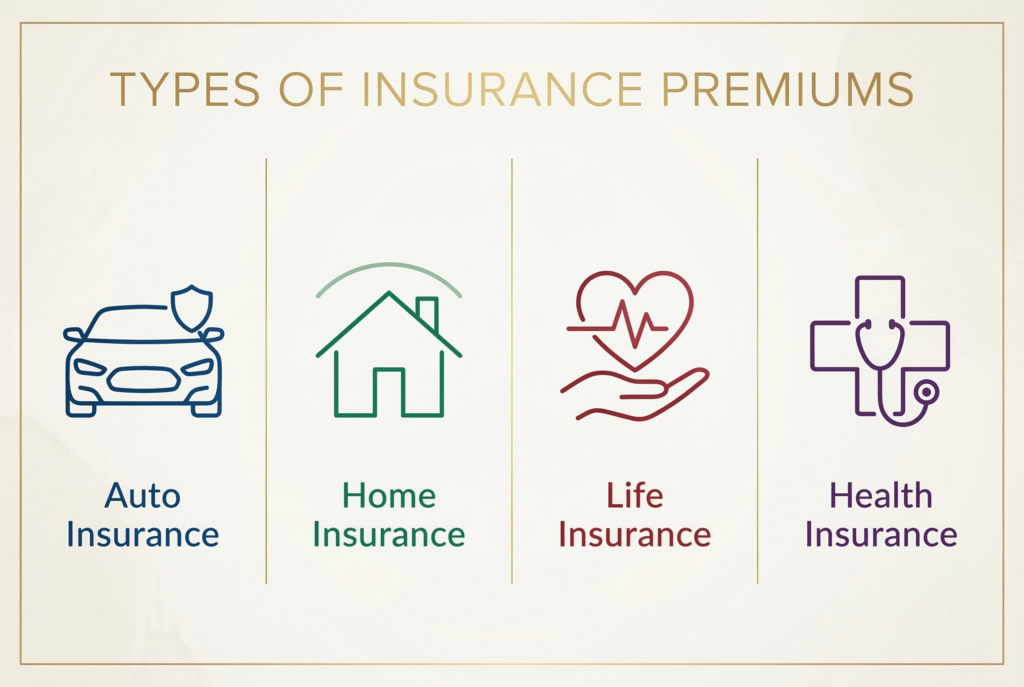
Auto Insurance Premiums
Auto insurance premiums are influenced by various factors including your driving record, the make and model of your car, location, and even credit score. High-risk drivers, for instance, will pay higher premiums due to a greater likelihood of accidents. Vehicle type also matters: luxury cars or sports cars tend to cost more to insure than sedans because of higher repair or replacement costs.
Home Insurance Premiums
Home insurance premiums are determined by the location of your property, the condition of your home, and the coverage limits you choose. Homes located in areas that are prone to natural disasters or theft will typically have higher premiums. If your home is older and needs more maintenance, it might also increase your premium because it could be riskier to insure.
Life Insurance Premiums
Life insurance premiums depend heavily on age, health, lifestyle choices (such as smoking), and occupation. Young, healthy individuals typically pay much lower premiums than older individuals or those with existing medical conditions. The type of life insurance you choose also matters; term life insurance is generally more affordable than whole life insurance, which includes an investment component and provides lifelong coverage.
Health Insurance Premiums
Health insurance premiums are impacted by age, location, and tobacco use. In countries like the United States, the Affordable Care Act (ACA) regulates health insurance premiums and ensures that insurers cannot discriminate based on pre-existing conditions, but age and location still play a major role in pricing. People in urban areas with higher healthcare costs tend to pay higher premiums than those in rural areas.
How to Lower Your Insurance Premiums

1. Shop Around and Compare Quotes
One of the easiest ways to lower your insurance premiums is to shop around. Different insurers offer different rates, so comparing quotes can help you find the best deal. Online comparison tools make it easier than ever to get multiple quotes in a short amount of time.
2. Take Advantage of Discounts
Most insurance companies offer a variety of discounts that can help you lower your premiums. For example, bundling multiple policies (like auto and home insurance) can save you a significant amount. Safe driver discounts, multi-policy discounts, and even loyalty discounts for long-term customers are other ways to reduce your premiums.
3. Raise Your Deductibles
If you’re willing to take on more risk, raising your deductible can help lower your premiums. However, make sure the higher deductible is affordable in case you need to make a claim.
4. Maintain a Good Credit Score
Your credit score plays a role in determining premiums for auto and home insurance. Insurers often offer lower premiums to individuals with better credit scores, as they’re viewed as less risky. If you haven’t already, consider working on improving your credit score by paying bills on time and reducing debt.
5. Adjust Coverage to Match Your Needs
Regularly review your insurance policies to ensure that you’re not over-insured. For example, if your car is older and has less value, you might consider adjusting your auto coverage to a lower level of protection. Similarly, with home insurance, if the value of your home decreases, you may not need as much coverage, which could help lower your premium.
The Role of Actuaries in Premium Calculation

Actuaries are professionals who use statistical data and mathematical models to assess risk. They play a crucial role in determining how much insurance premiums should be. By analyzing large sets of data, actuaries can predict the likelihood of a claim and set premiums that reflect the level of risk associated with a policyholder. This ensures that premiums are fair and aligned with the coverage being provided.
Insurance Premium vs Deductible
It’s important to understand the relationship between insurance premiums and deductibles. While your premium is the amount you pay regularly to maintain coverage, your deductible is the amount you must pay out-of-pocket before your insurance coverage kicks in. There is often a trade-off: if you choose a higher deductible, your premium will typically be lower, and vice versa. Finding the right balance between your deductible and premium is key to managing your insurance costs effectively.
Conclusion: Understanding and Managing Your Insurance Premiums
Insurance premiums are a necessary part of life that ensure financial protection in the event of unexpected circumstances. Understanding how these premiums are calculated and knowing how to manage them effectively can help you make smarter financial decisions. By shopping around, taking advantage of discounts, and adjusting your coverage, you can reduce your premiums without sacrificing the protection you need.
Understanding the factors that influence your insurance premiums and staying proactive in managing your policies can lead to significant savings over time. Keep reviewing your coverage, maintain a good credit score, and be strategic about your premiums to ensure you’re getting the best deal possible while staying adequately protected.
