


In a world where identity theft and fraud are increasing concerns, it’s crucial to safeguard your financial data. One effective method to protect your personal information is through a credit freeze. This tool prevents unauthorized access to your credit report, ensuring that your credit information remains secure. But what exactly is a credit freeze? How does it work? And when should you use one? In this article, we’ll explain everything you need to know about credit freezes, including their benefits, how to set one up, and when it’s the right choice for you.
What Is a Credit Freeze?
A credit freeze, also called a security freeze, is a measure you can take to restrict access to your credit report. When you freeze your credit, lenders, creditors, and other entities can’t access your report to approve new credit applications in your name. This can effectively block identity thieves from opening accounts or taking out loans in your name.
Importantly, a credit freeze doesn’t affect your existing credit accounts. It simply prevents new credit from being opened under your name without your authorization. You can still use your existing credit cards and loans, and your credit score won’t be impacted by the freeze. The freeze only prevents new inquiries into your credit, making it a proactive tool against fraud.
How Does a Credit Freeze Work?

Placing a credit freeze is relatively simple. When you initiate a freeze, the credit bureaus will restrict access to your credit report by blocking any lenders or creditors from reviewing it.
Here’s how it works:
- Step 1: You must contact the three major credit bureaus: Equifax, Experian, and TransUnion, to request a freeze on your credit.
- Step 2: Each bureau will ask for personal information to verify your identity and then set up a PIN or password for security. Keep this PIN in a safe place, as you’ll need it later to unfreeze your credit.
- Step 3: Once the freeze is in place, your credit report will be locked, and no one (including identity thieves) can access it without your permission.
If you need to apply for credit, you can temporarily unfreeze your credit. This can be done online, over the phone, or in person, and you can choose to unfreeze it for a specific time frame.
Why Should You Use a Credit Freeze?
If Your Personal Information Was Exposed
If your data was compromised in a data breach or you suspect your personal details may have been stolen, freezing your credit prevents criminals from opening new accounts in your name. This is one of the primary reasons many people opt for a credit freeze.
If You Don’t Plan on Applying for Credit
If you aren’t planning to apply for a loan, a credit card, or a mortgage anytime soon, freezing your credit can offer peace of mind knowing that your credit report is safe from unauthorized access.
For Extra Protection Against Fraud
If you’re taking extra steps to secure your personal finances or are wary of rising identity theft, a credit freeze can be a proactive measure in protecting your credit. It stops potential fraudsters from using your information to open new accounts without your knowledge.
When Should You Use a Credit Freeze?
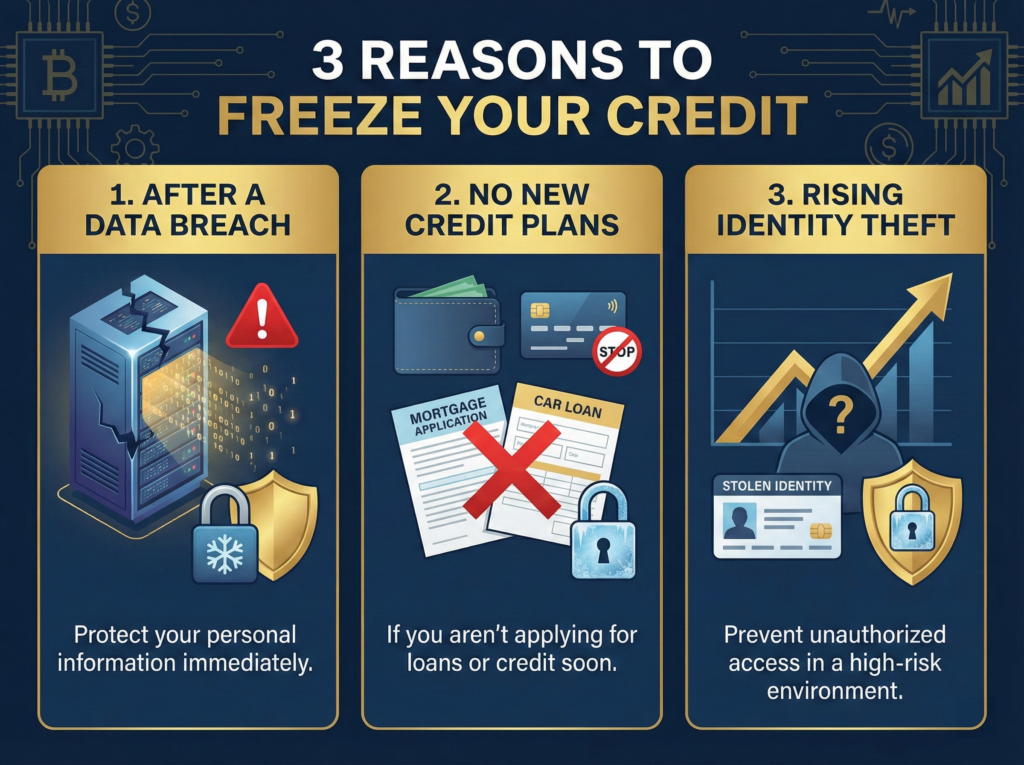
There are certain situations when placing a credit freeze is particularly beneficial. One of the main scenarios is after a data breach. If your personal information was exposed in a breach, criminals could potentially use it to open new accounts or apply for loans in your name. In such cases, a credit freeze provides immediate protection.
Another reason to consider a credit freeze is if you aren’t planning to apply for any new credit. For example, if you aren’t looking to purchase a new car, home, or apply for a credit card, freezing your credit will add an extra layer of security without inconveniencing you. Additionally, placing a freeze on your credit is also helpful if you’re worried about rising rates of identity theft and want to prevent any unauthorized access to your personal data.
Benefits and Limitations of a Credit Freeze
Credit freezes offer several key benefits. First, they prevent unauthorized individuals from accessing your credit report, significantly lowering the chances of new identity theft. Additionally, credit freezes are free and can be easily managed by you. They also provide peace of mind, knowing that your credit is secured.
However, there are also limitations. While a credit freeze prevents new accounts from being opened in your name, it doesn’t protect against fraud on existing accounts. If someone already has access to your credit card or loan details, a freeze won’t stop them from making unauthorized charges. Additionally, a credit freeze doesn’t prevent other forms of fraud, such as tax fraud or medical fraud.
Another limitation is that if you need to apply for credit or loans, you’ll have to unfreeze your credit, which can take a little time. This can be inconvenient if you need to apply for credit quickly.
How to Freeze Your Credit
Freezing your credit is simple and can be done online or over the phone with the three major credit bureaus:
- Equifax: Visit the Equifax website, create an account, and place a credit freeze. You’ll need to create a PIN and follow the verification steps.
- Experian: Go to the Experian website and freeze your credit. A PIN will also be required, and they’ll guide you through the process.
- TransUnion: Similarly, visit the TransUnion website to place a freeze. You’ll need personal information and a PIN for added security.
After placing the freeze, make sure to keep track of your PIN securely and follow up with the bureaus to ensure the freeze is activated. You’ll receive confirmation, and your credit report will be locked.
When Should You Unfreeze Your Credit?

You may need to unfreeze your credit if you plan to apply for credit or loans, such as a mortgage or personal loan. Unfreezing your credit is simple: either temporarily for a specific period or permanently if you no longer wish to keep the freeze active. Each of the credit bureaus allows you to thaw your credit quickly via their website, app, or by phone. It can take a few hours to a few days for the freeze to be fully lifted, so plan ahead if you know you’ll need credit access.
Conclusion: Is a Credit Freeze Right for You?
A credit freeze is an effective and easy way to protect yourself from identity theft and unauthorized access to your credit report. It’s a proactive measure that adds a strong layer of security to your personal information. By freezing your credit, you prevent fraudsters from opening new accounts in your name, which reduces the risk of financial loss.
While a credit freeze won’t protect against existing account fraud or non-credit fraud, it’s still one of the most important tools you can use to ensure financial security. If you aren’t planning to apply for credit in the near future, consider freezing your credit as part of a broader identity protection strategy. With a credit freeze in place, you’ll have greater peace of mind knowing your credit is safe.
Related Articles
Understanding Banking Security Basics to Safeguard Your Finances
