


In an increasingly digital world, finance automation has become a game-changer for businesses looking to improve efficiency, reduce human error, and stay competitive. By automating repetitive and time-consuming financial tasks, companies can optimize their operations, minimize costs, and focus on strategic growth. This guide explores the benefits of finance automation, offers key strategies for integrating automation into your business, and provides actionable insights to streamline your financial processes.
What Is Finance Automation?
Finance automation refers to the use of technology to perform financial tasks that traditionally required manual intervention. This can range from simple tasks like invoicing and expense tracking to more complex processes such as financial forecasting and regulatory compliance monitoring. Automation tools leverage technologies like Artificial Intelligence (AI), Machine Learning (ML), Robotic Process Automation (RPA), and cloud-based systems to enhance the speed, accuracy, and efficiency of financial operations.
As businesses grow and financial data becomes more complex, automation allows finance teams to reduce administrative workloads, mitigate errors, and provide real-time financial insights. This shift not only streamlines daily operations but also enhances decision-making by giving leaders access to data-driven reports and forecasts.

Key Benefits of Finance Automation
Increased Efficiency and Time Savings
One of the most significant advantages of finance automation is the ability to automate repetitive tasks such as accounts payable (AP), accounts receivable (AR), and payroll processing. With automation, these processes can be completed faster and more accurately, which frees up valuable time for finance teams to focus on more strategic initiatives. For instance, automating invoice matching and payment scheduling can reduce the time spent on manual entry, allowing businesses to close their books faster.
Improved Accuracy and Reduced Human Error
Manual financial processes are prone to human error, such as incorrect data entry or missed payments, which can lead to compliance issues or financial discrepancies. Automation tools, however, minimize these risks by using algorithms to handle complex calculations, data entry, and reporting tasks. As a result, businesses can improve the accuracy of their financial reports, minimize the chances of costly mistakes, and ensure that their financial data is always up-to-date and reliable.
Cost Reduction and Scalability
Implementing finance automation reduces administrative overhead by eliminating the need for manual labor and minimizing the risk of costly errors. Furthermore, automation allows businesses to scale without adding complexity. As the volume of financial transactions increases, automation tools can handle the added workload without requiring a proportional increase in human resources. This scalability makes automation an attractive investment for businesses of all sizes, from startups to large corporations.
Enhanced Decision-Making and Financial Insights
With automation, businesses gain access to real-time financial data and AI-powered dashboards that provide valuable insights. This enables more data-driven decision-making across departments, whether it’s for cash flow management, investment decisions, or financial forecasting. Automation tools can analyze trends, flag potential issues, and generate financial reports instantly, allowing leadership teams to act on information quickly and confidently.
Improved Compliance and Reduced Risk
Finance automation ensures that business operations are aligned with financial regulations and tax laws. By using automated tools to track transactions, generate reports, and monitor compliance, businesses can reduce the risk of violations or missed deadlines. This is particularly important for businesses operating in industries with strict regulations, such as banking and insurance. Automation also ensures that businesses stay up to date with changing compliance requirements, reducing the risk of fines or legal challenges.
Key Strategies for Implementing Finance Automation
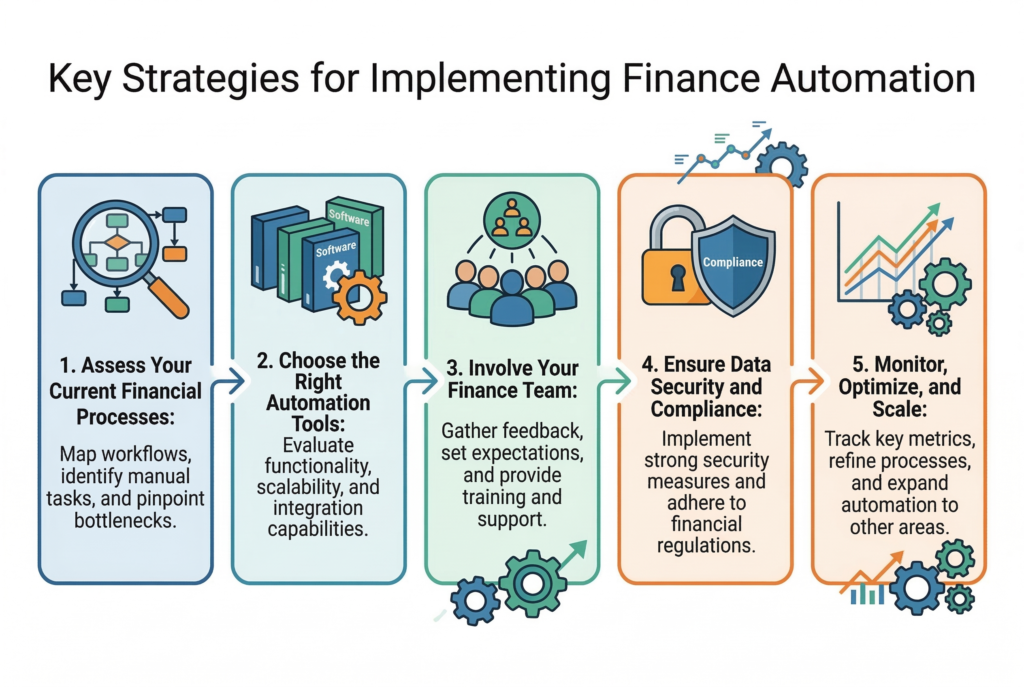
1. Assess Your Current Financial Processes
The first step in implementing automation is to assess your existing financial processes. Identify tasks that are time-consuming, repetitive, or prone to error, and prioritize them for automation. Common areas for automation include invoicing, expense management, payroll, and financial reporting. By understanding which processes can be automated, you’ll be able to make more informed decisions about which tools to implement.
2. Choose the Right Automation Tools
Once you’ve identified the areas to automate, it’s crucial to select the right tools for your business needs. There are a variety of automation platforms available, each catering to different aspects of finance operations. Some of the most commonly used tools for finance automation include:
- Accounts Payable and Receivable Automation: Tools like Tipalti or Bill.com streamline invoice processing and payment scheduling.
- Expense Management: Software like Expensify or Concur helps manage and track employee expenses, reducing the time spent on approvals and reimbursements.
- Payroll Automation: Platforms like ADP or Gusto automate payroll calculations, tax filings, and benefits management, ensuring timely and accurate payments.
When choosing automation tools, consider factors such as integration with existing systems, customization options, and scalability. Look for platforms that offer AI-powered features and data integration capabilities for seamless workflows.
3. Involve Your Finance Team
Successful finance automation isn’t just about adopting the right tools; it’s also about ensuring your team is on board. Automation may disrupt established workflows, so it’s essential to engage your finance team early in the process. Provide training and support to ensure they are comfortable using the new systems. Upskilling your employees to work alongside automation tools will increase adoption rates and improve overall efficiency.
Additionally, clear communication is key to overcoming any resistance to change. Address any concerns your team may have about job displacement and emphasize that automation is designed to reduce their workload and enable them to focus on higher-value tasks.
4. Ensure Data Security and Compliance
As financial data is increasingly handled by automated systems, data security becomes a top priority. It’s important to choose automation tools that adhere to data protection regulations and incorporate cybersecurity measures. Ensure that your systems are protected by encryption, multi-factor authentication, and other security protocols to safeguard sensitive financial information. Regularly review your data protection policies to ensure that automation tools comply with current regulatory standards, such as GDPR or SOX compliance.
5. Monitor, Optimize, and Scale
Once automation tools are implemented, it’s important to continually monitor their performance and optimize them for better results. Use the analytics and reporting capabilities of your automation platform to track efficiency, identify bottlenecks, and assess whether the system is meeting its intended goals. Regularly assess and adjust the tools to ensure they continue to deliver value as your business grows.
Challenges of Finance Automation

While finance automation offers many benefits, it isn’t without its challenges. The most common challenges businesses face include:
- Integration issues: Automating financial processes requires integrating new tools with existing systems, which can sometimes be complex and require additional resources.
- Employee resistance: Some employees may resist automation, fearing job displacement or unfamiliar technology. Overcoming this resistance requires proper training and transparent communication.
- Security risks: As more financial data is automated, businesses must invest in robust cybersecurity measures to protect sensitive information and ensure compliance with regulations.
Real-World Examples of Finance Automation
Numerous businesses have successfully implemented finance automation tools to streamline operations and improve efficiency. For example, TD Ameritrade uses AI-powered automation to process large volumes of transactions, reducing manual data entry and improving reporting accuracy. Aon Italy leveraged RPA technology to automate accounts payable, resulting in faster processing times and improved operational efficiency.
Conclusion: Embrace Finance Automation for Future Growth
The adoption of finance automation technologies is essential for businesses looking to stay competitive in today’s fast-paced market. By automating routine financial tasks, businesses can reduce costs, improve efficiency, and empower their finance teams to focus on strategic decision-making.
Implementing finance automation requires careful planning, the right tools, and a commitment to ongoing training and optimization. As AI, machine learning, and cloud-based systems continue to evolve, finance automation will play an increasingly important role in shaping the future of financial operations. By embracing these technologies today, you can ensure your business is prepared for the challenges and opportunities of tomorrow.
