


Financial stability rarely comes from a single decision. It develops through consistent habits practiced month after month. Many people attempt budgeting with strong motivation, yet abandon it when results don’t appear quickly or when life becomes busy. The challenge usually isn’t intelligence or effort. It’s sustainability.
Sustainable financial habits require realistic planning, behavioral awareness, and flexibility. A well structured budget supports daily living while strengthening long term security. When budgeting aligns with real income, expenses, and priorities, it becomes a reliable framework rather than a temporary experiment.
Below are nine practical budgeting tips designed to build sustainable financial habits that support both present needs and future goals.
1. Start With Clear Financial Awareness
Sustainable habits begin with clarity. Before adjusting spending, review at least three months of bank and credit card statements. Identify recurring obligations, variable expenses, and discretionary purchases.
This process may feel uncomfortable, yet transparency replaces uncertainty with measurable information. Many individuals overestimate how much they save or underestimate how much they spend. Accurate data creates a realistic starting point. Awareness strengthens decision making.
2. Base Your Budget on Consistent Net Income
One of the most common budgeting mistakes is building a plan around gross income. Taxes, insurance premiums, retirement contributions, and payroll deductions significantly reduce available funds.
Use reliable take home pay as the foundation. If income fluctuates due to bonuses, commissions, or freelance work, calculate a conservative monthly average based on lower earning months. Additional income above that baseline can be directed toward savings or debt reduction. Planning conservatively prevents stress during leaner months.
3. Separate Fixed, Variable, and Future Expenses
A simple structure increases sustainability. Organizing expenses into three broad categories reduces complexity and improves clarity.
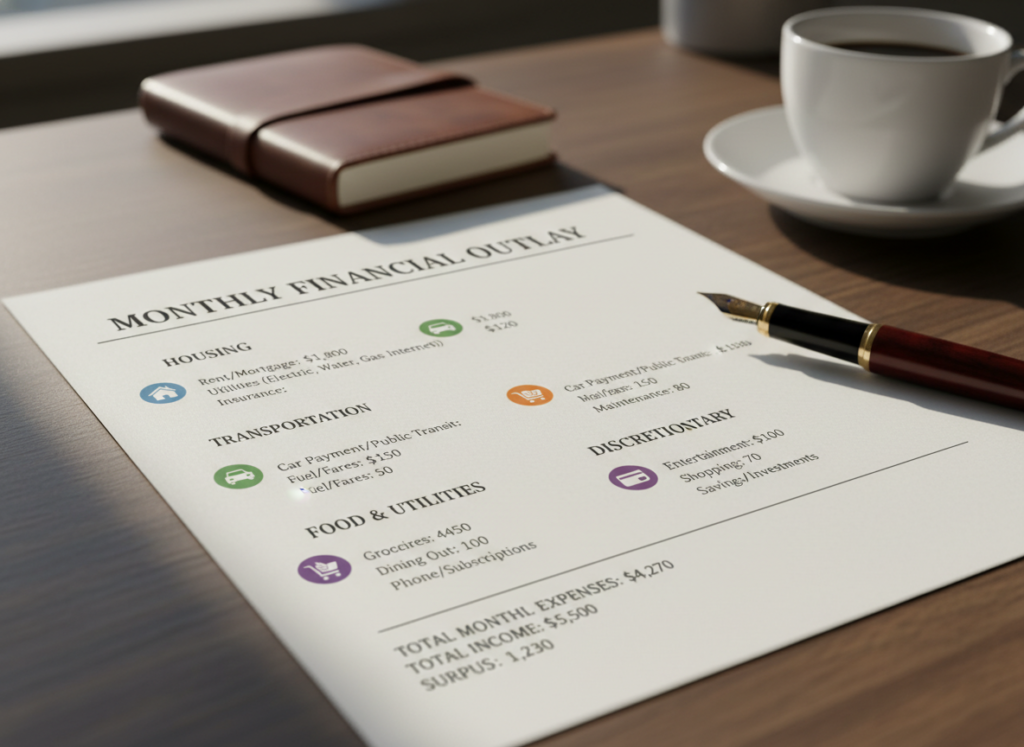
Fixed expenses include housing, utilities, insurance, and minimum debt payments. Variable expenses include groceries, transportation, dining, and personal spending. Future oriented categories include savings, retirement contributions, emergency funds, and sinking funds. This framework helps ensure that daily living costs are covered while progress toward long term goals continues.
4. Build an Emergency Fund Gradually
Emergency savings are foundational to financial resilience. Without a cushion, unexpected events such as medical expenses, job loss, or urgent repairs can create severe stress. Begin with a small milestone, such as saving one month of essential expenses. Then gradually expand toward three to six months. This process may take time, but incremental progress builds confidence. Having a financial reserve in place eases anxiety and reduces the need to rely on high interest credit during unexpected situations.
5. Plan for Irregular but Predictable Costs

Many budgets collapse because irregular expenses aren’t included in monthly planning. Car repairs, annual insurance premiums, holiday travel, school fees, and home maintenance often feel unexpected, yet they occur consistently over time.
Creating sinking funds smooths these costs. Estimate annual totals and divide them into manageable monthly contributions. When the expense arrives, the money is already available. Preparation transforms disruption into routine management.
6. Automate Savings and Key Payments
Automation strengthens consistency. Setting up automatic transfers to savings accounts, retirement plans, and debt payments reduces reliance on willpower. When contributions occur automatically, progress continues even during busy periods. Automation supports long term habits by minimizing decision fatigue. In the long run, small automated contributions compound into meaningful growth. A well-designed financial system should operate smoothly, minimizing the need for constant manual effort or daily intervention.
7. Allow Room for Flexible Spending
Budgets built entirely on restriction often fail. Completely eliminating discretionary spending can create burnout. Sustainable habits require balance. Allocating a defined amount for dining, hobbies, entertainment, or personal purchases provides flexibility within structure. When individuals know they can spend within reasonable boundaries, they’re less likely to abandon the entire plan after one indulgent purchase. Maintaining balance makes financial habits easier to sustain over the long term.
8. Review and Adjust Regularly
Life circumstances evolve over time, and financial plans need to evolve with them. Income can rise or fall, housing costs may shift, healthcare expenses often increase, and family responsibilities can expand in ways that reshape priorities. Quarterly reviews allow adjustments before misalignment grows. During each review, assess spending trends, savings progress, and debt reduction. Make modifications as needed to reflect current realities. Regular evaluation prevents small issues from becoming larger financial setbacks.
9. Align Spending With Long Term Goals
Sustainable financial habits require direction. When budgeting feels disconnected from meaningful goals, motivation fades. Clarify what you’re working toward. This may include retirement security, home ownership, education funding, travel, or debt freedom.
When daily financial decisions connect to long term objectives, discipline feels purposeful rather than restrictive. Progress becomes visible in growing savings balances and declining debt. When financial choices are intentionally aligned with personal priorities, commitment becomes stronger and more consistent.
Key Principles That Support Sustainable Financial Habits
While the nine tips above provide structure, long term success also depends on mindset. Sustainable budgeting thrives when certain principles are consistently applied:
- Consistency matters more than perfection
- Small improvements compound over time
- Flexibility prevents burnout
- Preparation reduces financial stress
- Clear goals strengthen motivation
These principles transform budgeting from a short term effort into an ongoing lifestyle practice.

The Role of Behavioral Awareness
Financial decisions are influenced by emotion as much as logic. Stress, celebration, social comparison, and fatigue can affect spending patterns. Recognizing these influences strengthens sustainability. For example, impulse spending may increase during stressful periods at work. Subscription services may accumulate gradually without notice. Awareness allows targeted corrections without dismantling the entire budget. Developing sustainable habits requires acknowledging behavioral patterns rather than ignoring them.
Long Term Impact of Sustainable Budgeting
When budgeting becomes consistent and aligned with lifestyle, financial stability improves steadily. Gradually, emergency savings begin to grow, high interest debt steadily declines, retirement contributions increase, and credit scores gradually improve as consistent habits take effect.
Beyond numbers, sustainable financial habits reduce anxiety. Financial clarity improves sleep quality, decision making, and overall well being. Stability provides freedom to make career choices, relocate, or pursue opportunities with greater confidence. Sustainable habits create resilience. Resilience supports adaptability during economic changes, market fluctuations, or personal transitions.
Why Sustainability Matters More Than Short Term Intensity

Some individuals attempt aggressive budgeting strategies that cut expenses dramatically for short periods. While this approach may produce quick results, it often leads to burnout. Long-term financial health depends on repeatable actions. A moderate, consistent plan maintained for years typically produces stronger results than extreme measures abandoned after months. Sustainable financial habits prioritize longevity. They allow room for enjoyment while maintaining progress toward future goals.
Conclusion
Building sustainable financial habits requires clarity, realistic planning, behavioral awareness, and flexibility. The nine budgeting tips outlined here emphasize consistency over intensity and preparation over reaction.
By basing your budget on reliable net income, organizing expenses thoughtfully, preparing for irregular costs, automating savings, and aligning spending with long term goals, you create a framework that supports stability rather than stress.
Financial success develops gradually. Small, disciplined actions repeated consistently build resilience and confidence. When budgeting becomes a sustainable habit rather than a temporary challenge, long term financial security becomes achievable and maintainable.
Related Articles
A Practical Guide to Build a Budget That Matches Your Lifestyle
