

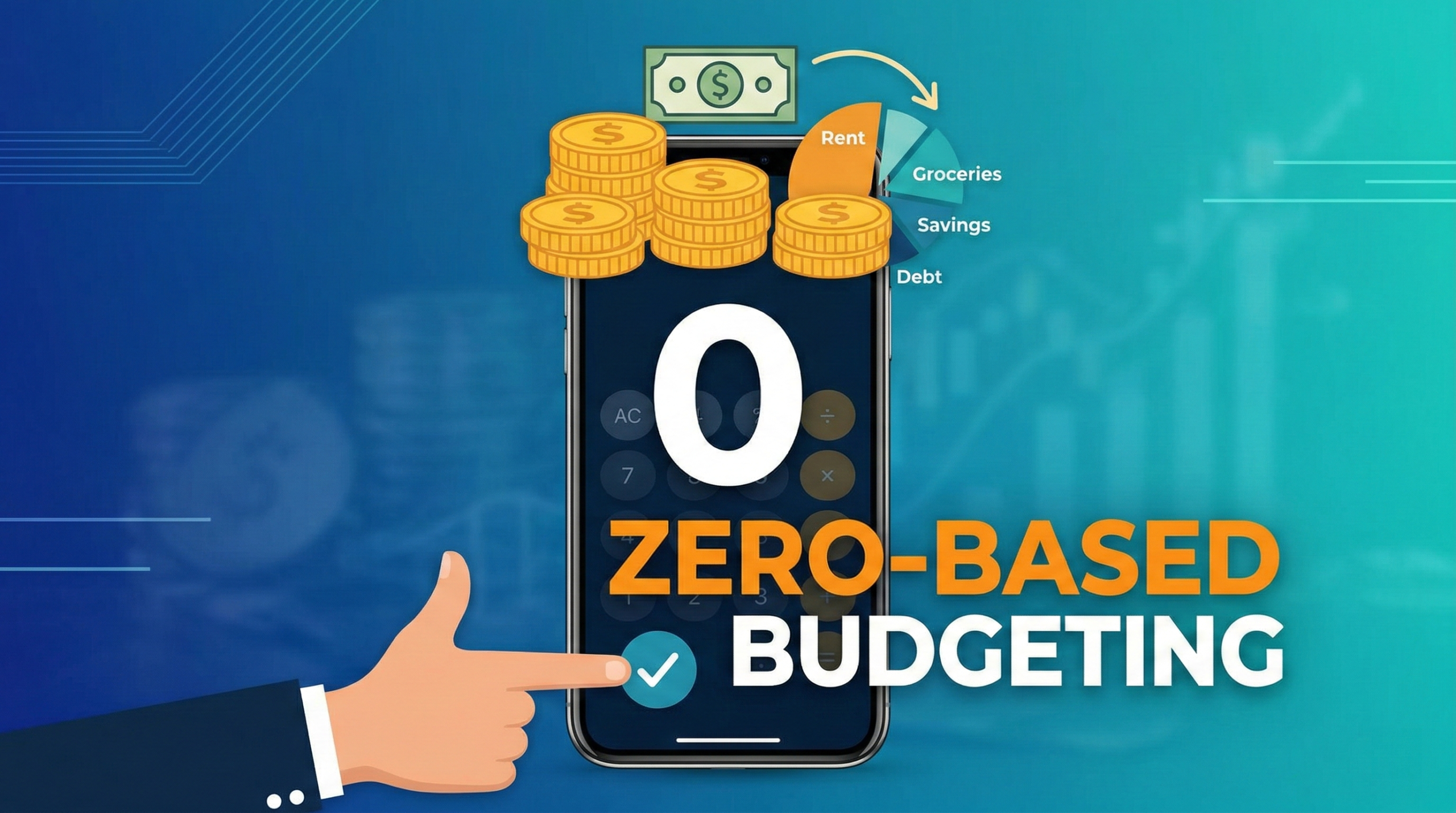
Managing your finances can often feel overwhelming, especially when you’re trying to find the best way to allocate your income. Zero-Based Budgeting (ZBB) offers a powerful solution for controlling every dollar you earn, ensuring that no money goes unaccounted for. This method not only helps you take control of your finances but also forces you to evaluate each expense to ensure it aligns with your financial goals. In this guide, we’ll break down what Zero-Based Budgeting is, how it works, and why it’s one of the best methods to ensure financial success and growth.
What Is Zero-Based Budgeting (ZBB)?
Zero-Based Budgeting is a budgeting method where you assign every dollar of your income to a specific purpose at the beginning of the month, so that when the month ends, your balance is zero. This means you have to plan for every expense, including savings, investments, and debt repayment, right from the start.
Unlike traditional budgeting, where you simply track your expenses and adjust your budget as needed, ZBB requires you to start from scratch each month. No dollar is left unaccounted for. This method forces you to justify every expense, making sure your money is being used efficiently toward your most important financial priorities.
How Does Zero-Based Budgeting Work?
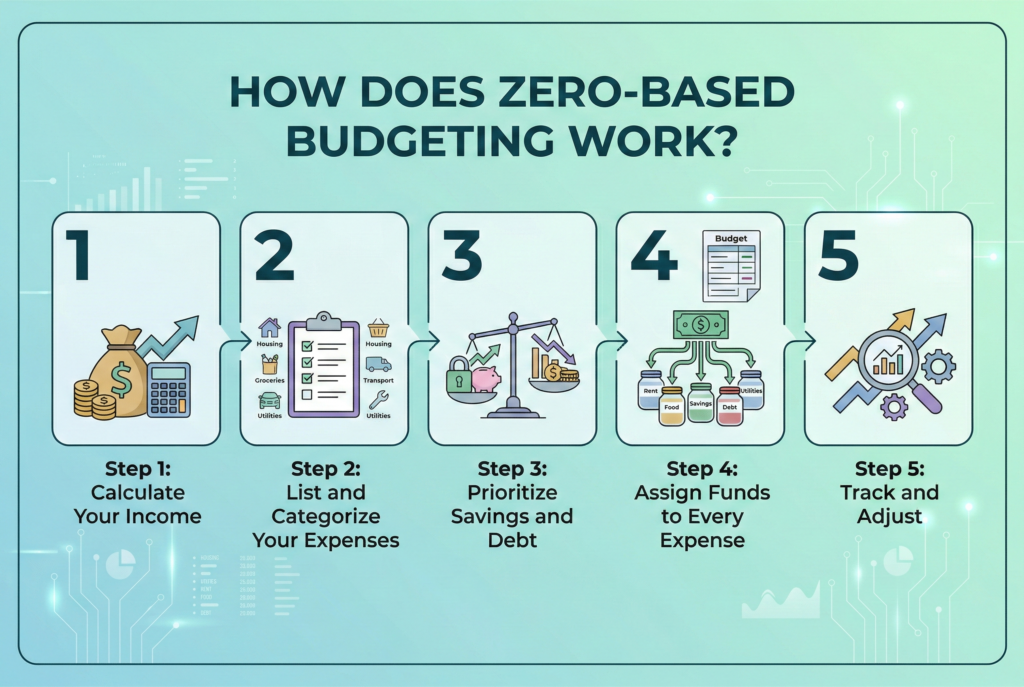
Calculate Your Income
Start by determining the total amount of income you receive each month, including your salary, side hustle income, freelance earnings, and any other sources of revenue.
List and Categorize Your Expenses
Write down all your regular monthly expenses. These could include fixed expenses like rent or utilities, and variable expenses like groceries, transportation, and entertainment. This helps you understand where your money is going.
Prioritize Savings and Debt
Before budgeting for non-essential expenses, allocate funds for savings and debt repayment. This could include contributions to an emergency fund, retirement accounts (like a 401(k) or IRA), and paying off any high-interest debt.
Assign Funds to Every Expense
Allocate the remaining money to each category of your expenses. The goal is to ensure that by the end of the month, your income is fully assigned to something meaningful. If there’s leftover money, reassign it to areas like additional savings or debt repayment.
Track and Adjust
Review your spending at the end of the month. If you exceeded your budget in one category, adjust it in the following month to make improvements. This constant evaluation and adjustment make ZBB a powerful tool for controlling finances.
Why Zero-Based Budgeting Works
The key strength of Zero-Based Budgeting lies in its intentionality. Every dollar has a purpose, which minimizes wasteful spending.
1. Complete Financial Awareness
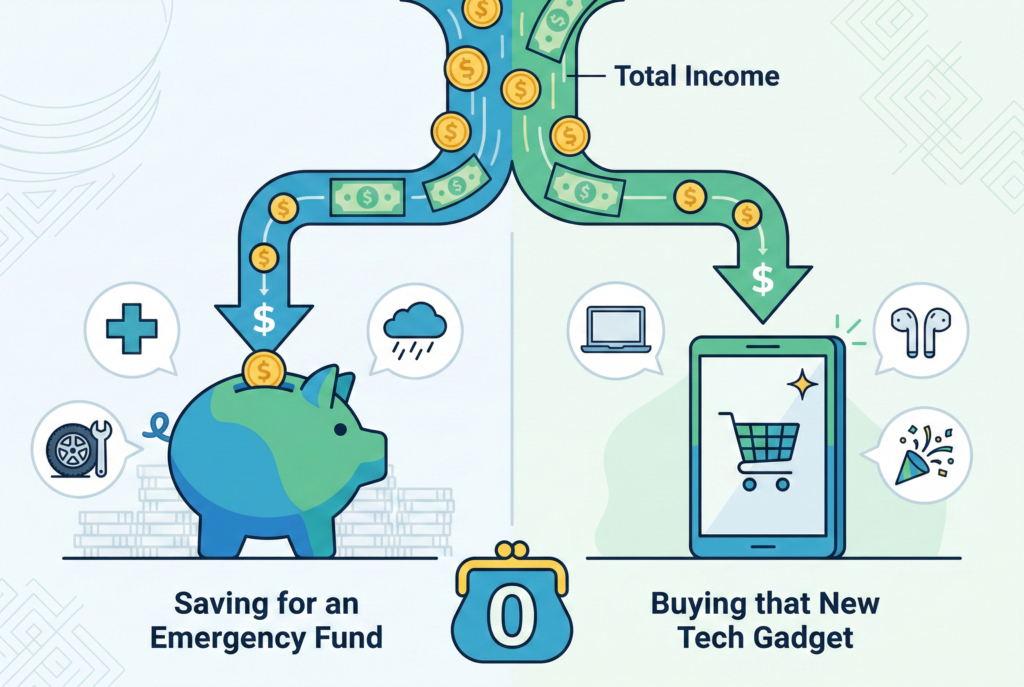
ZBB forces you to be fully aware of your financial situation every month. By having to justify every expense, you develop a better understanding of where your money is going, and you can make more intentional choices. Whether it’s deciding between saving for an emergency fund or buying that new tech gadget, ZBB ensures that your spending reflects your financial priorities.
2. Greater Control Over Spending
With Zero-Based Budgeting, you’re in complete control. Since you allocate every dollar to a specific purpose, you ensure that no money is wasted on things you don’t need. This method forces you to re-evaluate your spending habits, which can help you cut unnecessary costs and save more for your long-term goals.
3. Helps You Meet Financial Goals
When you assign a portion of your income to savings and debt repayment, you’re actively working toward building financial security. ZBB allows you to set realistic goals for saving and investing, and it ensures you make consistent progress toward achieving them. Whether you’re saving for retirement, a down payment on a house, or a vacation, ZBB can help you reach those goals faster.
Advantages and Disadvantages of Zero-Based Budgeting
Advantages
- Maximizes control over your money: ZBB ensures that no dollar goes unaccounted for, giving you a higher level of control over your finances.
- Promotes financial discipline: This budgeting method forces you to think critically about each expense, promoting financial discipline and better decision-making.
- Encourages smart savings and debt repayment: By making savings and debt repayment a priority, ZBB encourages you to put your financial goals first.
Disadvantages
- Time-consuming: Allocating every dollar of your income to specific categories can be time-consuming, especially when you’re first starting.
- Challenging with irregular income: If you have variable income, such as from freelance work or commission-based jobs, ZBB can be challenging to implement consistently without adjustments.
- Requires continuous monitoring: ZBB demands that you track and adjust your budget regularly, which can feel overwhelming for people with busy schedules.

Is Zero-Based Budgeting Right for You?
Zero-Based Budgeting can be an excellent tool for anyone looking to take control of their finances and make intentional decisions about how they spend their money. It’s particularly useful for people with stable, predictable incomes who want to make sure that their money is being allocated efficiently. However, for those with fluctuating incomes, such as freelancers or gig workers, ZBB may require more frequent adjustments to accommodate income variability.
If you’re willing to put in the time and effort to track every dollar and consistently evaluate your spending habits, ZBB can be incredibly effective in helping you achieve your financial goals. The key is to start small and gradually build a system that works for you.
Final Thoughts: Take Control of Your Financial Future
Zero-Based Budgeting is a powerful tool that helps you control your money, prioritize savings, and avoid wasteful spending. By ensuring that every dollar has a specific purpose, you’ll be able to make more informed financial decisions and work toward your long-term goals. While it may take some time and effort to get started, the rewards of financial discipline and control will pay off in the long run. With consistent effort and careful planning, you can build a secure financial future and make smarter choices for your money.
