

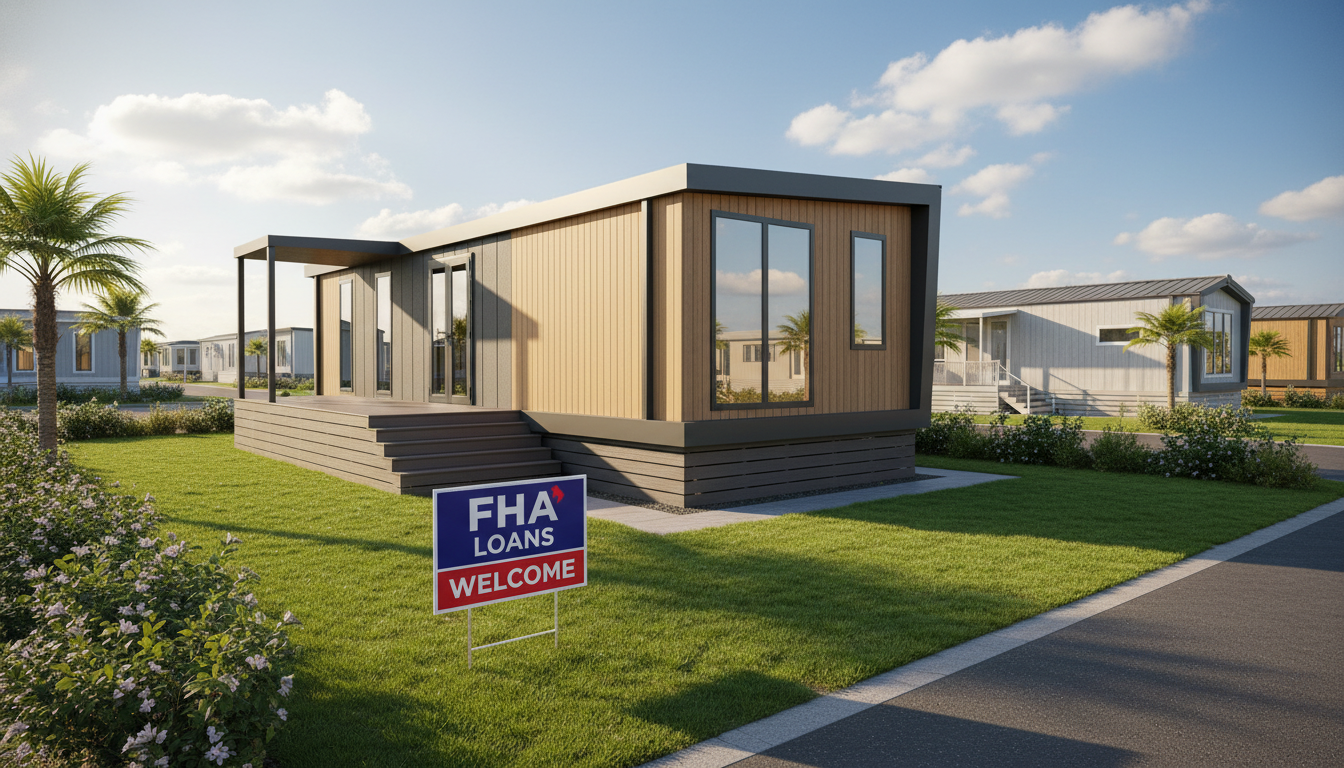
Purchasing a mobile home can be an affordable alternative to traditional homeownership, but securing financing for a mobile home often comes with unique challenges. Fortunately, FHA loans (Federal Housing Administration loans) are a popular option for financing mobile homes and manufactured homes, providing low down payments, flexible credit requirements, and competitive interest rates.
If you’re considering purchasing a mobile home, FHA loans can help make homeownership a reality. This guide will walk you through the requirements, property rules, loan limits, and how to qualify for an FHA loan for mobile homes.
What is an FHA Loan for Mobile Homes?
An FHA loan is a government-backed mortgage designed to make homeownership more accessible, especially for individuals with lower credit scores or limited savings. The FHA insures these loans, which reduces the risk for lenders and allows them to offer better terms, such as lower down payments and more lenient credit score requirements.
FHA loans for mobile homes apply to both new and used mobile homes that meet certain HUD (Housing and Urban Development) construction standards. Additionally, mobile homes financed with an FHA loan must be placed on a permanent foundation to qualify.
FHA loans can be used for the purchase of mobile homes on land (real property), or mobile homes in a park (personal property, which doesn’t include land).
FHA Loan Requirements for Mobile Homes

To qualify for an FHA loan for mobile homes, you must meet specific eligibility requirements. Understanding these requirements will ensure you’re prepared for the loan application process.
Credit Score
- To qualify for an FHA loan with the minimum 3.5% down payment, you must have a credit score of 580 or higher.
- If your credit score is between 500 and 579, you can still qualify, but you’ll need to make a 10% down payment.
- A higher credit score improves your chances of getting a better interest rate.
Down Payment
The FHA requires a down payment of at least 3.5% if your credit score is 580 or higher. For example, if your mobile home costs $150,000, you would need to pay at least $5,250 upfront. If your credit score is between 500 and 579, you must make a 10% down payment.
Debt-to-Income Ratio (DTI)
The FHA considers your debt-to-income ratio (DTI) when evaluating your eligibility. The maximum DTI allowed is generally 43%. This means your total monthly debt payments, including your mortgage, shouldn’t exceed 43% of your gross monthly income. If your DTI is higher, you may still qualify with a larger down payment or a higher credit score.
Property Requirements
The mobile home must be placed on a permanent foundation to qualify for an FHA loan. The foundation ensures the home is securely affixed to the property, making it more stable and less likely to be moved.
HUD Certification
To be eligible for FHA financing, your mobile home must meet HUD’s construction standards. The home must be built after 1976, and it must have the appropriate HUD tags and data plates to prove it was constructed according to HUD regulations.
Income Requirements
There is no specific income limit for FHA loans for mobile homes, but you must show that you have a reliable source of income. Lenders will assess your ability to repay the loan, based on your income and credit history.
How FHA Loans for Mobile Homes Work

Step 1: Find an FHA-Approved Lender
You must apply for an FHA loan through an FHA-approved lender. These lenders are authorized by the FHA to offer government-backed mortgages. You can check the HUD website or contact your bank to find out if they offer FHA loans for mobile homes.
Step 2: Loan Application
Once you’ve found a lender, you’ll need to complete a loan application. You’ll need to provide personal information, such as proof of income, bank statements, and your credit score.
Step 3: Home Appraisal and Inspection
An FHA-approved appraiser will assess the value of the mobile home and ensure that it meets HUD standards. The appraiser will also verify that the home is placed on a permanent foundation and is in good condition.
Step 4: Approval and Closing
If your loan application is approved, you’ll go through the closing process, where you sign the mortgage documents and finalize the sale. Closing costs typically range from 2% to 5% of the loan amount, which you’ll need to pay at the time of closing.
FHA Loan Limits for Mobile Homes
The loan limits for FHA loans can vary depending on the location of the mobile home and whether you’re financing just the home or both the home and land.
Title I loans (for mobile homes without land): The maximum loan amount for a mobile home without land is usually $92,904.
Title II loans (for mobile homes with land): FHA loan limits for a mobile home and land package can go up to $1,000,000 or more in high-cost areas.
You can check your local loan limits by contacting an FHA-approved lender or visiting the HUD website.
Pros and Cons of FHA Loans for Mobile Homes

Pros:
- Low down payment requirements (as little as 3.5%).
- Flexible credit requirements, making it easier for those with lower credit scores to qualify.
- Competitive interest rates, often lower than conventional loan options.
- Possibility to finance both the mobile home and the land (with Title II loans).
- Mortgage insurance can be less expensive than private mortgage insurance (PMI) for conventional loans.
Cons:
- Mortgage insurance premiums (MIP): FHA loans require both an upfront mortgage insurance premium (UFMIP) and annual MIP, which can add to the overall cost of the loan.
- Property restrictions: The mobile home must meet specific HUD standards and be placed on a permanent foundation.
- Loan limits: FHA loans have maximum loan limits that may not cover high-cost areas or large homes.
Final Thoughts: FHA Loans Make Homeownership More Accessible for Mobile Homes
FHA loans provide an excellent opportunity for first-time homebuyers and individuals with limited credit history to purchase mobile homes with lower down payments and competitive interest rates. These loans offer a more accessible pathway to homeownership than conventional loans, especially for those who may struggle to qualify for traditional mortgage products.
Before you apply, ensure that your mobile home meets FHA property standards, and consult with an FHA-approved lender to explore your options. With the right preparation, you can secure financing for your new home and move forward with the dream of homeownership.
