

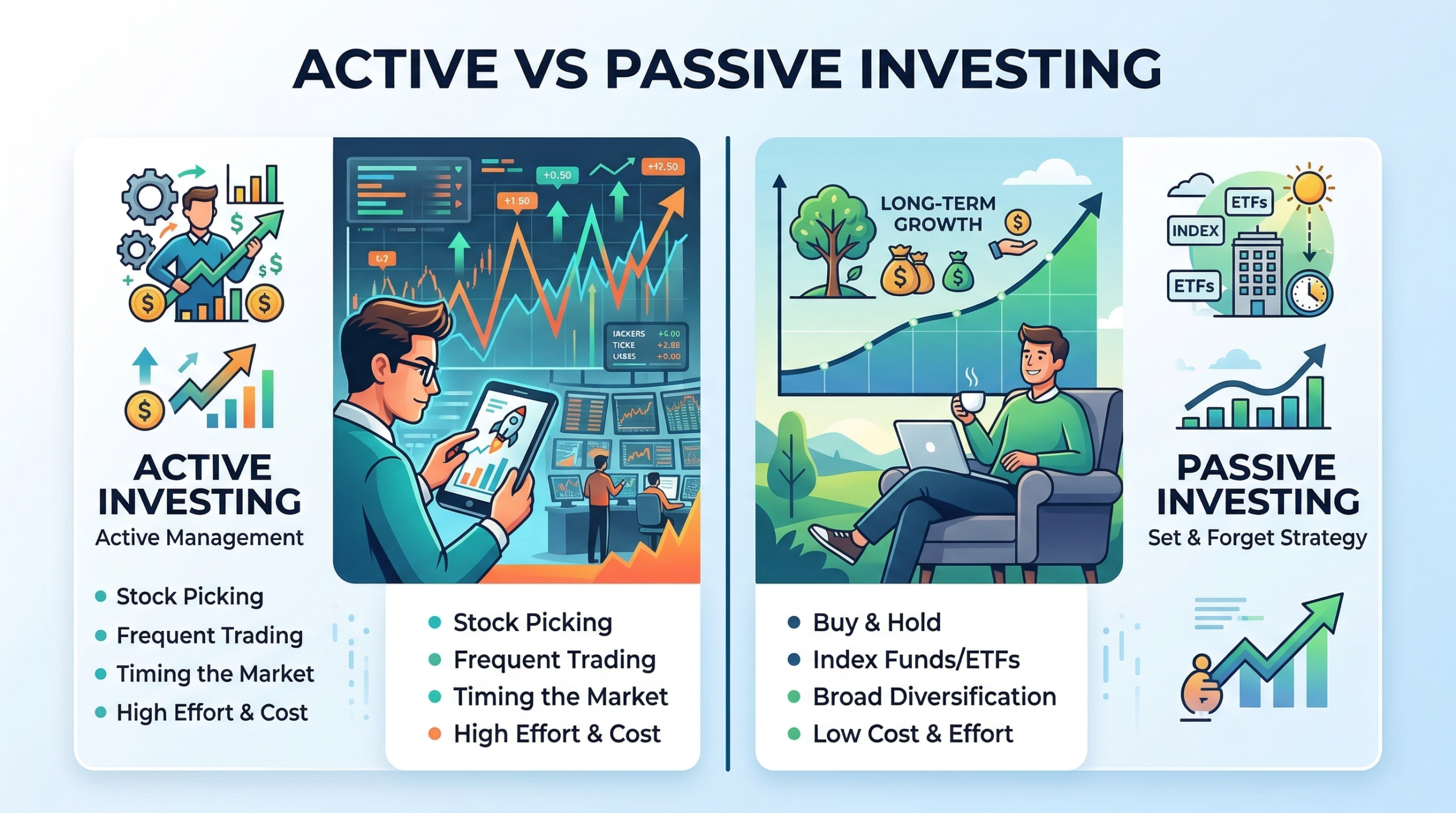
Choosing between active investing and passive investing is one of the most common decisions investors face when building a portfolio. Both approaches can play a role in long-term wealth building, but they work in very different ways. One aims to outperform the market through research, timing, and security selection, while the other focuses on matching market performance with lower costs and less trading.
What Active Investing Means
Active investing is an approach where a portfolio manager, advisor, or individual investor tries to beat the market by selecting specific investments. The goal is to outperform a benchmark, such as the S&P 500, rather than simply follow it.
This strategy often involves researching companies, analyzing financial statements, monitoring economic trends, and deciding when to buy or sell. Active investors may look for undervalued stocks, sectors they believe will outperform, or market opportunities created by short-term volatility.
Active investing can happen through mutual funds, hedge funds, separately managed accounts, or self-directed brokerage accounts. In each case, the key idea is the same: the investor or manager is making intentional decisions in an effort to generate returns above the broader market.
What Passive Investing Means

Passive investing takes a different approach. Instead of trying to beat the market, it aims to track the performance of a market index or asset class as closely as possible. The most common examples are index funds and ETFs that follow benchmarks such as the S&P 500, total stock market indexes, bond indexes, or international market indexes.
With passive investing, the portfolio changes mainly when the underlying index updates or periodic rebalancing occurs, with minimal trading based on short-term market views. This makes the strategy more rules-based and less reliant on forecasting. For many investors, the key benefit is simplicity. A passive fund provides broad market exposure without the need to pick individual stocks or constantly monitor performance.
The Core Difference Between Active vs Passive Investing

The biggest difference between active vs passive investing is the objective. Active investing tries to outperform the market, while passive investing tries to match it.
That difference affects nearly everything else. Active strategies usually involve more research, more frequent trading, and higher management involvement. Passive strategies tend to emphasize lower costs, broader diversification, and long-term consistency.
Another major distinction is how each approach handles market efficiency. Active investors believe there are opportunities to find mispriced investments or make smarter decisions than the market as a whole. Passive investors generally accept that consistently beating the market is difficult and that low-cost market exposure is often the more reliable path over time.
How Active Investing Works in Practice
In practice, active investing often involves making judgment calls based on market analysis or investment philosophy. A fund manager might overweight certain sectors, avoid others entirely, or move part of a portfolio into cash when conditions look uncertain.
Some active managers focus on growth stocks, others on value investing, dividend income, macroeconomic trends, or special situations. The approach can vary widely, but it always relies on human decision-making. This can create opportunities for stronger performance in certain periods. A talented manager may outperform during market dislocations or by avoiding weak investments. At the same time, active decisions can also backfire. Incorrect calls, poor timing, or overly concentrated bets can lead to underperformance.
How Passive Investing Works in Practice
Passive investing is more straightforward. A passive fund holds the investments in a given index in proportions that are meant to reflect that index. If the benchmark changes, the fund adjusts. Otherwise, there’s little need for constant trading.
This structure makes passive investing more predictable in terms of process. Investors know the fund isn’t trying to outguess the market or shift aggressively based on short-term forecasts. Instead, it follows a set benchmark and lets market returns drive results.
For someone building a retirement portfolio or long-term investment account, that simplicity can be a major advantage. It reduces decision fatigue and makes it easier to stay invested through market ups and downs.
Pros of Active Investing
One of the biggest advantages of active investing is the potential to outperform. Skilled managers may identify opportunities that broad market indexes overlook, especially in less efficient areas of the market such as small-cap stocks, niche sectors, or certain bond categories.
Active investing also offers flexibility. A manager can respond to changing conditions, reduce exposure to certain risks, or adjust the portfolio when valuations appear stretched. In theory, this adaptability may help during periods of market stress.
Another benefit is customization. Individual investors or advisors using an active approach can tailor holdings to specific goals, tax considerations, income needs, or risk preferences. That can be useful for high-net-worth investors or those with more complex financial plans.
Cons of Active Investing
The biggest drawback of active investing is that it’s hard to do well consistently. Beating the market occasionally is possible. Doing it repeatedly over long periods is much more difficult.
Costs are another major issue. Actively managed funds usually have higher expense ratios than passive funds because they require research teams, trading activity, and more hands-on management. Higher fees can reduce returns over time, especially if performance doesn’t justify the added cost.
There’s also manager risk. An active strategy depends heavily on the judgment and skill of the person or team making decisions. Even a strong track record doesn’t guarantee future success. A manager who performed well in one market environment may struggle in another. Frequent trading may also create tax inefficiencies in taxable accounts, depending on the strategy and vehicle used.

Pros of Passive Investing
The most widely recognized advantage of passive investing is cost efficiency. Passive funds usually have lower expense ratios because they don’t require constant analysis or active trading. Over decades, lower costs can make a meaningful difference in portfolio growth.
Another major strength is diversification. Many passive funds provide exposure to hundreds or even thousands of securities, which helps reduce company-specific risk. Investors can build a diversified portfolio with relatively few funds.
Passive investing is also easier to stick with. Because the strategy is simple and rules-based, investors may be less tempted to chase trends or react emotionally to short-term market movements. That behavioral advantage can be just as important as the investment structure itself. There’s also greater transparency. Investors usually know exactly what benchmark the fund is tracking and what role it serves in the portfolio.
Cons of Passive Investing
Passive investing has its limitations. The most obvious is that it can’t outperform the market by design, if the benchmark declines, the fund will typically decline as well.
There is also no built-in defensive strategy. Passive funds don’t shift to cash or avoid overvalued sectors unless the index itself changes, leaving investors fully exposed during downturns.
Another concern is index concentration. If a few large companies dominate the index, the fund may become more concentrated than expected. While passive investing is efficient and simple, it isn’t personalized. Investors seeking tax optimization, custom exclusions, or tactical adjustments may find it too rigid.
Which Strategy Is Better for Most Investors?
For many long-term investors, passive investing tends to be the more practical core strategy. Lower costs, broad diversification, and simplicity make it especially attractive for retirement accounts and long-term wealth building.
That doesn’t mean active investing has no place. Some investors prefer using active funds in parts of the market where they believe skilled managers can add value. Others use active strategies for a portion of their portfolio while keeping the majority in passive funds.
In other words, this isn’t always an all-or-nothing decision. A blended approach can make sense. An investor might use passive funds for core U.S. stock and bond exposure, then add an active strategy in a more specialized area. The better strategy depends on the investor’s goals, time horizon, confidence in manager selection, fee sensitivity, and willingness to monitor results over time.
Factors to Consider Before Choosing
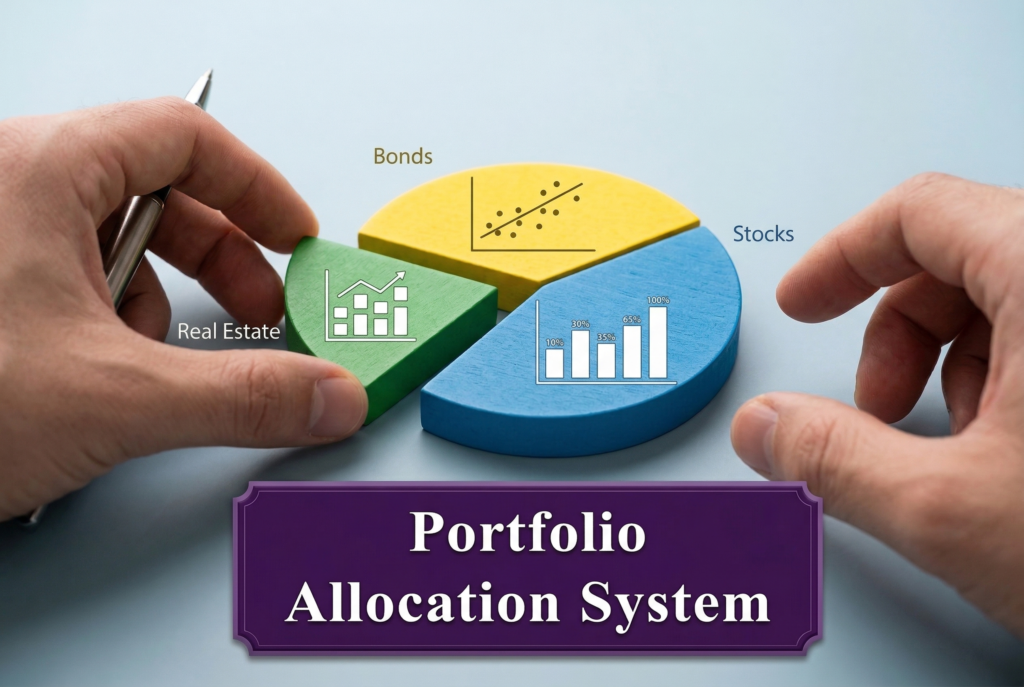
Before choosing between active and passive investing, consider a few key questions. Do you prefer simplicity or customization? Are you willing to pay higher fees for potential outperformance? Do you want a hands-off approach, or are you comfortable regularly evaluating managers and results?
Your account type also matters. In taxable accounts, tax efficiency can be especially important. Risk tolerance is another factor, as some active strategies may be more concentrated or behave differently from the market.
Most importantly, think about behavior. The best investment strategy isn’t only the one that looks strongest on paper. It’s the one you can follow consistently through changing market conditions.
Conclusion
The debate around active vs passive investing comes down to how you want to pursue returns, manage costs, and build your portfolio over time. Active investing offers flexibility, customization, and the possibility of outperforming the market, but it also comes with higher fees and a greater risk of underperformance. Passive investing emphasizes lower costs, diversification, and long-term consistency, which is why it has become the default choice for many investors. Neither strategy is universally better in every situation. The right answer depends on your financial goals, risk tolerance, and ability to stay committed to your plan through all types of market conditions.
