


When it comes to managing your finances and securing your future, choosing the right financial advisor is crucial. But did you know that not all financial advisors are created equal? The key difference between a fiduciary and a non-fiduciary financial advisor can have a significant impact on your financial outcomes.
This article will break down what fiduciary and non-fiduciary financial advisors are, the legal responsibilities they carry, and how those differences could cost or save you money in the long run. Whether you’re saving for retirement, managing investments, or planning for big life milestones, understanding these distinctions will help you make a more informed decision.
What is a Fiduciary Financial Advisor?

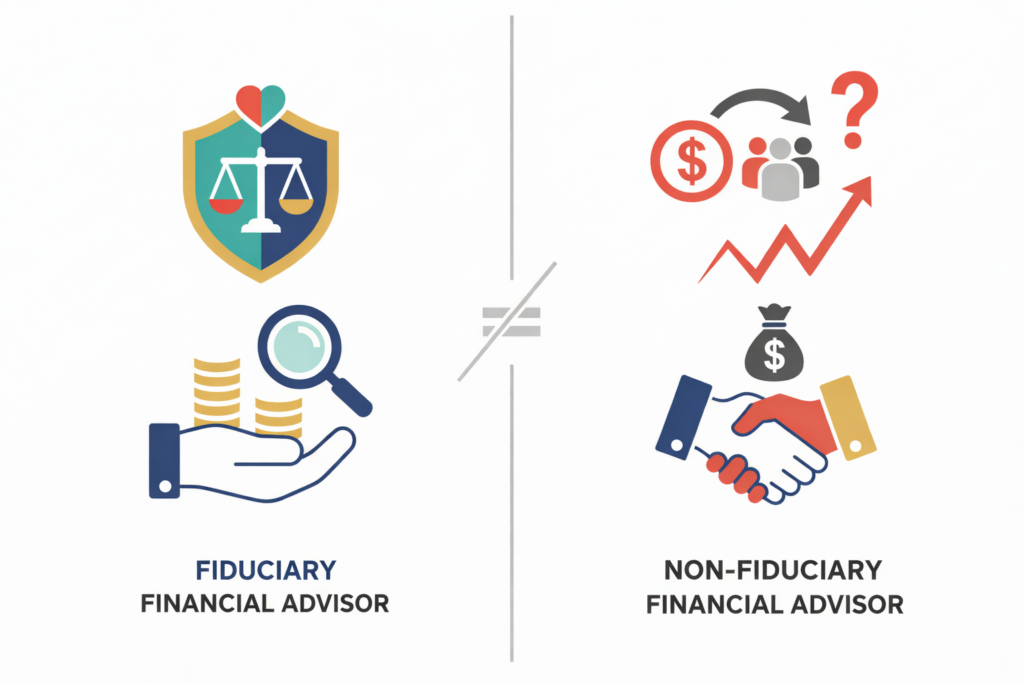
A fiduciary financial advisor is legally bound to act in the best interest of their clients at all times. This fiduciary duty isn’t just a moral obligation, it’s a legal one. Fiduciaries are required to put your financial interests ahead of their own, avoiding any conflicts of interest that might arise.
Key points about fiduciary financial advisors:
- Legally required to act in your best interest: Fiduciaries must prioritize your financial well-being over any other considerations, including their own profits.
- Transparency and full disclosure: Fiduciaries are obligated to be transparent about how they’re compensated and must disclose any potential conflicts of interest.
- Fee-only structure: Many fiduciaries operate on a fee-only basis, which means they earn fees directly from their clients rather than commissions from the products they sell. This model reduces the risk of biased recommendations based on commission incentives.
The biggest advantage of working with a fiduciary is the trust and peace of mind that comes from knowing your advisor is legally obligated to act in your best interest. However, these advisors tend to charge higher fees, which can be a consideration for some clients.
What is a Non-Fiduciary Financial Advisor?

In contrast, a non-fiduciary financial advisor isn’t bound by the same legal obligations to act in your best interest. Many financial advisors, including brokers and insurance agents, fall under this category. While they may provide valuable services, they aren’t required to avoid conflicts of interest.
Non-fiduciary financial professionals may earn commissions on the products they sell, which means their recommendations could be influenced by their potential earnings, rather than solely focusing on what’s best for you. While some non-fiduciary advisors may still offer quality advice, they might not provide the same level of impartiality as fiduciaries.
Fiduciary vs Non-Fiduciary: Key Differences
To help clarify the distinctions, here’s a quick breakdown of the main differences between fiduciary and non-fiduciary financial advisors:
Aspect | Fiduciary advisor | Non-fiduciary advisor |
|---|---|---|
Legal obligation | Must act in the client’s best interest | May recommend products that benefit them more |
Compensation | Fee-only or fee-based (no commissions) | Commission-based or fee-based |
Transparency | Full disclosure of fees and potential conflicts | May not fully disclose compensation or conflicts |
Accountability | Legally bound to uphold fiduciary duty | Less stringent accountability |
When to Choose a Fiduciary Over a Non-Fiduciary
The decision to work with a fiduciary or non-fiduciary advisor largely depends on your financial situation and goals.
Complex Financial Needs
If you’re dealing with complex financial planning, such as retirement planning, estate planning, or tax strategies, a fiduciary is often the better choice. Their legal obligation to act in your best interest ensures that your long-term financial health is the priority.
Larger Investments or Long-Term Goals
Fiduciaries are especially beneficial when you’re planning for large life milestones like buying a home, saving for your child’s education, or managing substantial retirement savings. Their advice can help you build a strategy that aligns with your long-term goals.
If you’re seeking unbiased recommendations, choosing a fiduciary ensures that your advisor’s incentives are aligned with your financial goals, offering you a greater sense of security about their advice.
Benefits and Drawbacks of Fiduciary Advisors
Benefits
Fiduciaries are legally required to put your interests first, which means you can expect unbiased, transparent advice that helps you achieve your financial goals. They also offer a wide range of services, including holistic financial planning, tax strategies, and investment management.
Drawbacks
The major drawback of fiduciary advisors is their cost. Due to their fee-only structure, their services often come with higher fees compared to commission-based advisors. However, the added cost can be worth it when considering the value of unbiased advice.
Benefits and Drawbacks of Non-Fiduciary Advisors
Benefits
Non-fiduciary advisors may offer lower upfront costs, especially those who work on a commission basis. They often provide flexible options and may have access to a broader range of investment products, some of which offer higher potential returns.
Drawbacks
However, these advisors aren’t bound to act in your best interest, which could lead to potential conflicts of interest. For example, a non-fiduciary advisor might recommend investments that pay them higher commissions, even if those products aren’t the most beneficial for you.
How to Determine if an Advisor is a Fiduciary
It’s crucial to ensure that your financial advisor is a fiduciary before working with them. Here’s how to check:
- Ask directly: Don’t hesitate to ask your potential advisor if they are a fiduciary. A trustworthy advisor should be transparent about their obligations.
- Check certifications: Look for certifications like Certified Financial Planner™ (CFP®) or Registered Investment Advisor (RIA). These certifications often indicate that the advisor operates under fiduciary standards.
- Research: You can also search for your advisor on the SEC website to verify their fiduciary status and see if they have any disciplinary records.
Final Thoughts: Why It Matters
Choosing the right financial advisor is about trust.
A fiduciary financial advisor is legally bound to act in your best interest, which can provide you with peace of mind knowing that your advisor’s incentives align with your long-term financial goals. On the other hand, a non-fiduciary advisor may still offer valuable advice but could be influenced by factors that might not serve your best interest.
No matter which path you choose, make sure you understand the responsibilities and motivations of the person advising you. This clarity could be the key to saving or costing your money in the long run.
Related Articles
Top U.S. Financial Advisory Firms 2025: Trusted Picks to Manage Your Wealth Effectively
