


Most Americans don’t just want to stop working. They want to take back control of their own time. Maybe the long commute wears you out, office pressures leave you drained, or you just want a life that puts meaning and flexibility first. No matter what’s driving you, one key fact ties you to others with the same goal:
Leaving the 9–5 is possible, but it takes a clear and practical plan.
This framework helps you take every step to achieve financial independence in a straightforward and practical way. If you want to freelance, consult, launch an online business, or just have more stability, you can consider this guide to prevent stress, exhaustion, or money worries.
Why Many People Dream of Leaving, But Few Take the Leap
Quitting a stable job isn’t just a financial decision. Many people stay in roles that no longer fit because the familiar feels safer than the unknown, they’re unsure how to earn on their own. Others worry that starting a business is too risky or don’t recognize which of their existing skills could realistically generate income.
This plan is designed to address those challenges by breaking the process into clear, manageable steps that fit into everyday life. It’s built to work even if you’re starting from scratch, carrying debt, or balancing family responsibilities.
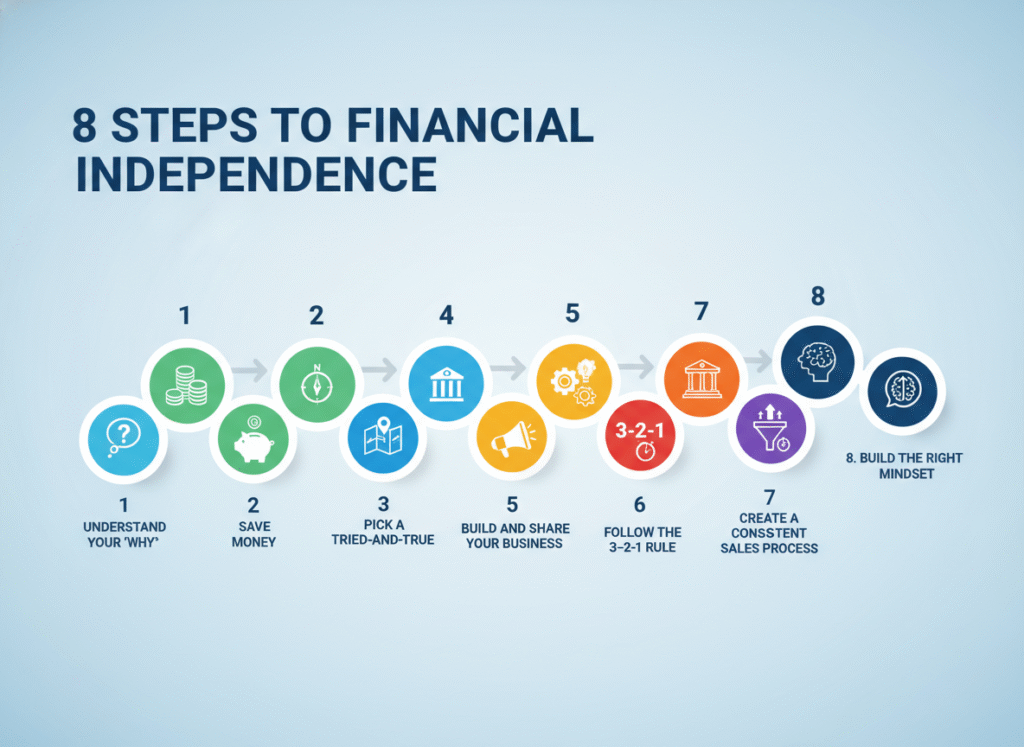
Step 1: Understand Your “Why” and Make It a Specific Goal
Clarity is what turns good intentions into real progress. Before making any big financial or career changes, it helps to step back and ask why you’re doing this in the first place, what financial freedom means to you, what kind of life you want to build, and which parts of your current job you’re no longer willing to compromise on.
Some people are driven by emotional reasons like freedom, flexibility, or recovering from burnout. Others are motivated by practical goals such as earning more income, spending time with family, or gaining autonomy. Both approaches are valid, but your reason is what keeps you focused, and your goal is what moves you forward.
Once you identify your reason, turn it into a clear, measurable goal. “I want more freedom” is vague, but “I want to earn $5,000 per month outside my job within the next year so I can leave confidently” creates direction, accountability, and momentum.
Step 2: Save Money Before Leaving Your Job
Being independent begins with having stability. You need to plan out your transition before you take the big step.
Financial Checklist
- Save 6–12 months’ worth of living costs
- Stick to a practical monthly budget
- Figure out your health insurance plan before quitting
- Set up a way to keep saving for retirement
- Pay off high-interest debt as fast as possible
- Track your cash flow to avoid surprises
Why Does This Matter?
Money problems can drain your creativity, slow your progress, and cloud your decisions. Having a financial safety net removes fear and lets you approach your next move with purpose instead of panic.
What’s Trending Today
A lot of Americans now ease into new ventures by trying part-time jobs or hybrid setups while their business grows. You don’t have to take a big leap; you can take smaller, more manageable steps.
Step 3: Pick a Tried-and-True Side Gig or Business Idea

Many people give up because they choose the wrong way to earn money. The goal isn’t to start from scratch, but to follow a reliable plan that requires little upfront capital, builds on skills you already have, can generate real income, and leaves room to grow over time.
Top business ideas for beginners in 2024 and 2025:
- Freelancing: writing, graphic design, admin work, advertising, tech support, and more.
- Coaching or consulting: helping with careers, fitness, parenting, business, money, and other topics.
- Digital items: like templates, guides, workshops, or downloadable files.
- Online help: running ads, managing social platforms, or email campaigns.
- Turning your skills into income: like bookkeeping, HR tasks, IT support, or data analysis.
Remember, pick what you’re good at, not just what’s popular. Plus, your niche doesn’t need to be what you love the most. It needs to address a problem people will pay you to solve.
Step 4: Test Your Idea with Actual Market Research
Before investing your time or money, answer one critical question: “Will anyone actually pay for this?” Skipping this step is one of the most common reasons ideas fail. The goal is to validate demand early, before you commit serious resources.
You can test an idea quickly by researching questions people ask in your niche on Reddit, YouTube, and Google, and by reviewing competitors to see what they charge and where gaps exist. You can also create a simple landing page, offer a trial version of your service, or post a small ad or social media update to gauge interest. If no one responds, refine the idea and test again. In contrast, if people engage, you have a signal that it’s worth building.
Step 5: Build and Share Your Business, Even If It Isn’t Perfect
You don’t need a website, a fancy logo, or polished branding to get started. What you actually need are clients. Landing your first paying client builds confidence, creates momentum, and proves that what you’re offering has real value.
To begin, focus on just one simple way to reach people. That might mean sharing helpful content on a single social media platform, sending thoughtful direct messages on LinkedIn, appearing as a guest on podcasts, offering free introductory sessions, or asking friends and former coworkers for referrals. That is the way that most successful entrepreneurs apply.
Step 6: Follow the 3–2–1 Rule to Decide When You Can Quit
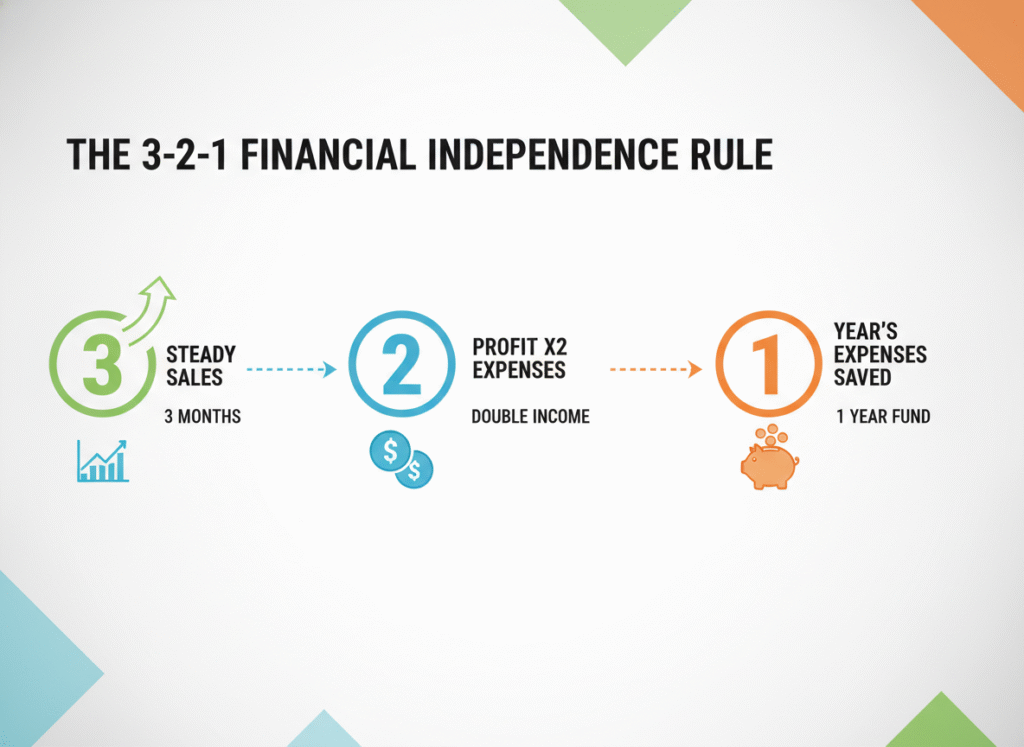
The 3–2–1 Financial Independence Rule:
- 3 → You’ve had steady sales for 3 months.
- 2 → Your business brings in double what you spend each month.
- 1 → You’ve saved a full year’s worth of expenses.
If you can meet at least two of these, you’re in a solid position to make the switch. This approach cuts out fear and lowers the risk of scrambling back to a job later. Guessing isn’t the way to decide when to leave your job, so this rule helps you know if you’re ready.
Step 7: Create a Consistent Sales Process (Not Just One-Time Customers)
To leave your job for good, you need steady and predictable income. That stability comes from having a simple, repeatable system for attracting and serving clients.
A basic client system starts by getting noticed through channels like content, SEO, partnerships, or paid ads. From there, you offer something free and useful, such as a checklist, guide, PDF, or workshop, to start building trust. Plus, automated emails help nurture those relationships over time, leading naturally into selling your service through calls, applications, or direct offers.
Once someone becomes a client, delivering clear, high-value work is essential, followed by encouraging repeat business, referrals, or additional services. When this system is in place and working consistently, your income becomes more reliable and capable of growing over time.
Step 8: Build the Right Mindset to Stay Free for the Long Haul
Essential Mindset Qualities
Long-term success requires the right mindset as much as the right strategy. Plans won’t always go perfectly, so adaptability is important. Focusing on helping others and providing real value keeps your work relevant, while self-control with money prevents lifestyle upgrades from erasing your progress. Next, you should stay committed to growth by learning new skills around money, business, and life, and viewing early mistakes as lessons.
What’s Happening Now
People who mix different income sources like services, digital products, and investments reach financial stability quicker and stay free longer.
Your Guide to True Financial Freedom

Leaving the 9–5 world isn’t about taking wild chances. It’s a step-by-step process that relies on clear goals, stable finances, proven skills, steady promotion, efficient systems, and thinking long-term.
When you approach this journey, and with purpose financial freedom doesn’t just become an option, it becomes achievable.
You don’t need to take risky bets, wait around for the “perfect moment,” or even invent something revolutionary. What you need is a solid plan and the bravery to take the first step.
Are You Ready to Start Your Path to Freedom?
Are you ready to take the first step toward freedom? If you’re feeling held back by fear, uncertainty, finances, or skill gaps, that’s completely normal. Share what’s standing in your way, and we’ll work through it together, because real freedom starts with action.
Related Articles
The FIRE Movement Explained: How People Retire in Their 30s with Smart Money Strategies
