


Life is busy. People are trying to balance work, family, bills, and still enjoy their weekends, so managing a complicated investment portfolio can feel like another full-time job. That’s often when people stumble across something called a Fund of Funds and wonder: Is this the easier way to invest or just another confusing finance term?
What Is a Fund of Funds (FoF)?
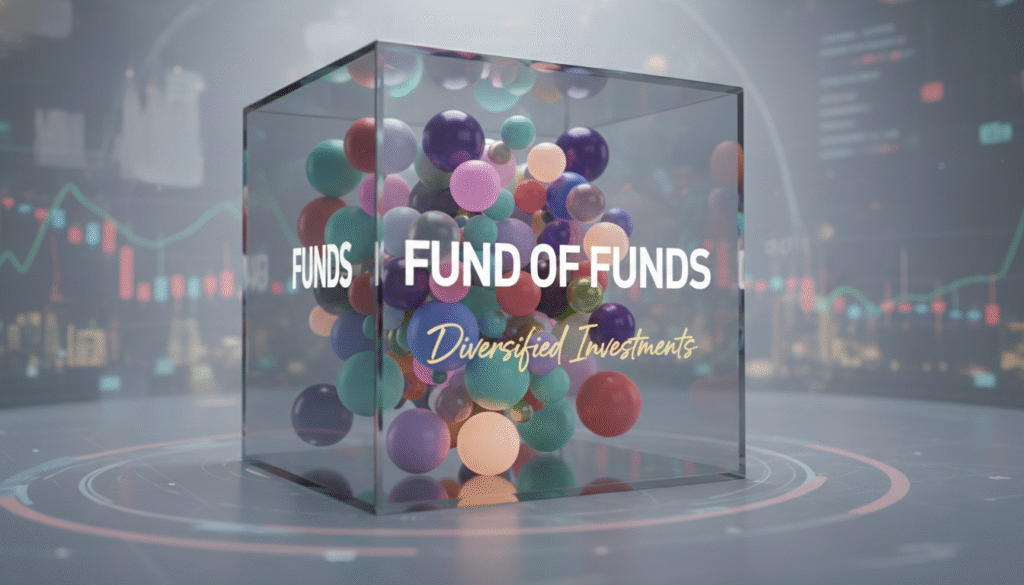
A Fund of Funds (FoF) is exactly what it sounds like: a single investment fund that invests in other funds. Think of it like this: Instead of picking every ingredient yourself, you’re buying a well-planned meal prepared by someone whose entire job is choosing the right ingredients, and adjusting the recipe when needed.
With one investment, you can end up owning pieces of dozens (sometimes hundreds) of underlying investments across different markets, sectors, or even countries.
How a Fund of Funds Works (Behind the Scenes)
When you invest in a Fund of Funds (FoF), you’re putting money into a single fund that quietly spreads your investment across multiple mutual funds, ETFs, or other pooled investments. Each of those underlying funds already holds its own mix of stocks, bonds, or alternative assets, giving you built-in diversification from the start.
On top of that, a professional manager monitors and adjusts the overall mix over time. This creates layered diversification, which means diversification within each individual fund and across multiple funds, designed to smooth out risk and simplify decision-making so you don’t have to manage each investment yourself.

Common Types of Fund of Funds You’ll See
| Asset allocation FoFs | These spread money across major asset classes like stocks, bonds, and sometimes real assets like gold.They’re often used by investors who want balance without constantly rebalancing themselves. |
|---|---|
| ETF-based FoFs | These invest primarily in ETFs instead of actively managed mutual funds because they are more cost-efficient, more transparent, and popular with investors who like a passive approach. |
| International FoFs | Designed to give you exposure to global markets without opening overseas accounts or dealing with currency logistics. |
| Thematic or specialized FoFs | These focus on specific ideas like ESG investing, technology or innovation, and alternative assets. They’re more niche, and usually better as a portion of a portfolio, not the whole thing. |
Why Some Investors Love Fund of Funds
- Simplicity: Just one fund, one dashboard, and fewer decisions to make.
- Built-In diversification: Instead of betting on a few investments, your risk is spread across many layers.
- Professional oversight: You aren’t relying on a single manager’s opinion, there are multiple managers involved across the underlying funds.
- Less emotional investing: Because adjustments happen behind the scenes, you’re less tempted to panic-sell or constantly tinker.
The Trade-Offs You Should Know About
Higher Costs
With FoFs, you’re paying fees at both levels: the FoF itself and the underlying funds it holds. Even when each fee seems small on its own, those costs compound over time and can quietly reduce your returns.
Less Transparency
It’s harder to see every single stock you own when there are multiple layers involved.
Potential for Over-Diversification
When diversification goes too far, returns can lose some punch. FoFs often favor simplicity and smoother performance instead of swinging for maximum upside.
When a Fund of Funds Makes Sense

A Fund of Funds (FoF) may be a good fit if you want broad diversification without managing multiple investments, prefer a hands-off and low-maintenance approach, are investing for the long term, and don’t want to rebalance or monitor the markets constantly.
It can be especially appealing for busy professionals, couples managing joint finances, and investors who value structure and simplicity over constant optimization.
When a Fund of Funds Might Not Be Ideal
You may want to look elsewhere if you’re highly sensitive to fees, enjoy building and managing your own portfolio, want maximum control over your asset allocation, or prefer ultra-low-cost index investing. FoFs are designed for convenience and delegation, not deep customization or hands-on control.
FoF vs. Doing It Yourself: A Simple Way to Decide
Ask yourself one honest question: “Do I want to manage this, or do I want it handled for me?”
If you enjoy researching funds, rebalancing, and optimizing costs, a DIY approach may win. If you want something that quietly works in the background while you focus on life, a FoF can be a reasonable compromise.
Modern Trends Shaping Fund of Funds (2024–2025)
A few key trends are reshaping the Fund of Funds (FoF) landscape. Many providers are shifting toward ETF-based FoFs to reduce costs, while placing a stronger emphasis on transparency so investors can clearly see what they own and how fees are structured. At the same time, there’s growing demand for global diversification, reflecting investors’ desire for exposure beyond U.S. markets.
Together, these changes are driving the rise of simplified “one-fund” solutions designed for long-term investors who want broad diversification without complexity. As a result, FoFs are evolving to better compete with low-cost index investing. They’re aiming to narrow fee gaps while preserving their core advantage: convenience and simplicity.
The Bottom Line
A Fund of Funds helps people to reduce complexity, spread risk, and stay invested without constant effort. For many people, that peace of mind is worth the trade-offs.
The smartest investment is often the one you can stick with calmly, consistently, and without second-guessing every market headline. If that sounds like you, a Fund of Funds might actually make a lot of sense.
