


Real estate investing, particularly rental property investing, can be an excellent way to build long-term wealth, generate passive income, and diversify your investment portfolio. For beginners, the idea of entering the real estate market can seem daunting, but with the right knowledge, strategy, and tools, you can start your journey to financial success today.
In this guide, we’ll walk you through the basics of rental property investing, explain the different property types, and provide you with a simple strategy to get started. Whether you’re looking to invest in long-term rentals, short-term rentals, or turnkey properties, this guide will give you the confidence and knowledge to begin your real estate investment journey.
What Is Rental Property Investing?
Rental property investing involves purchasing real estate properties with the intent to rent them out to tenants for a consistent income. As a property investor, you can earn rental income, benefit from property appreciation, and even enjoy tax advantages. Over time, rental properties can become a valuable asset, providing both immediate cash flow and long-term wealth growth.
There are several strategies to consider when investing in rental properties. Whether you want to buy properties to hold long-term, flip them for quick profits, or even explore short-term rental options like Airbnb, the possibilities are endless. The key to success is having a clear understanding of your goals, your budget, and your investment strategy.

Types of Rental Properties
The type of rental property you choose to invest in plays a huge role in your overall strategy and financial outcomes.
1. Long-Term Rentals
Long-term rentals are the most traditional form of rental property investment. You purchase a property and rent it out to tenants for a set period, usually 12 months or more. These properties provide steady, predictable income and can be a great way to build long-term wealth.
Benefits of long-term rentals include:
- Stable cash flow: Monthly rent payments provide a predictable income stream.
- Tenant stability: You can reduce turnover rates with longer leases, saving on advertising and management costs.
- Appreciation: Over time, the value of the property may increase, providing you with potential capital gains when you sell.
2. Short-Term Rentals
Short-term rentals, like those listed on Airbnb or Vrbo, have gained massive popularity in recent years. These properties are rented out to guests on a nightly or weekly basis, often in desirable locations like vacation spots or urban areas.
Benefits of short-term rentals include:
- Higher rental income: Depending on location, short-term rentals can charge much higher rates than traditional long-term leases.
- Flexibility: You have the flexibility to use the property when you aren’t renting it out.
- Increased demand: Popular tourist destinations can provide high demand for short-term rentals, ensuring a steady flow of guests.
3. Turnkey Properties
For beginners looking for an easier entry point, turnkey properties might be an appealing option. A turnkey property is fully renovated, sometimes already rented, and managed by a property management company. This means you can start earning income immediately without worrying about renovations or finding tenants. While this option may come with a higher upfront cost, it’s a less hands-on way to invest in rental property.
How Do Rental Properties Make Money?
1. Cash Flow
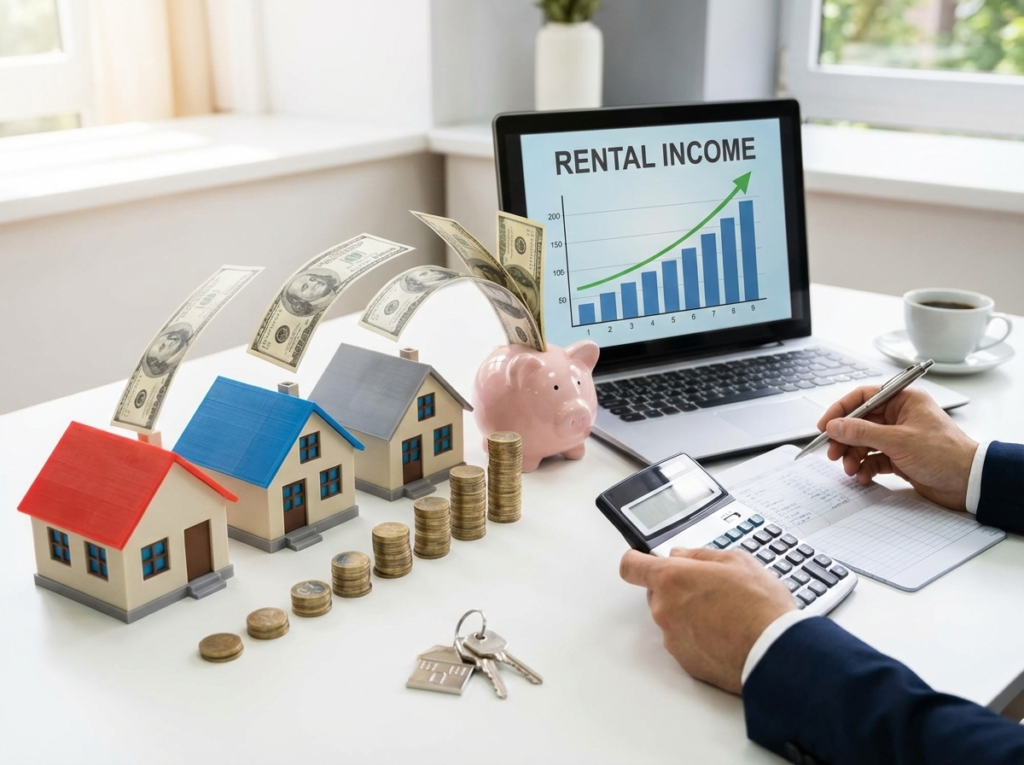
Cash flow is the money you make from your rental property after all expenses, such as mortgage payments, property taxes, insurance, and maintenance are paid. Ideally, your rental income should exceed these expenses, leaving you with a positive cash flow each month. Over time, as your mortgage is paid down and rental income increases, your cash flow can grow substantially.
2. Property Appreciation
One of the long-term benefits of rental property investing is property appreciation. This refers to the increase in a property’s value over time. While real estate markets can fluctuate, over decades, properties generally increase in value. When you decide to sell your property, you could make a substantial profit from the capital gains.
3. Passive Income
If you hire a property manager, rental property investing can provide you with a source of passive income. This means that while you may need to handle occasional maintenance issues or administrative tasks, your primary role is to receive income from rent while your property manager takes care of the rest.
4. Tax Benefits
Owning rental properties comes with significant tax advantages. You can deduct expenses related to maintaining and operating the property, including mortgage interest, property taxes, insurance premiums, and repairs. In addition, you may be able to depreciate the property itself, which can reduce your taxable income.
How to Start Investing in Rental Properties
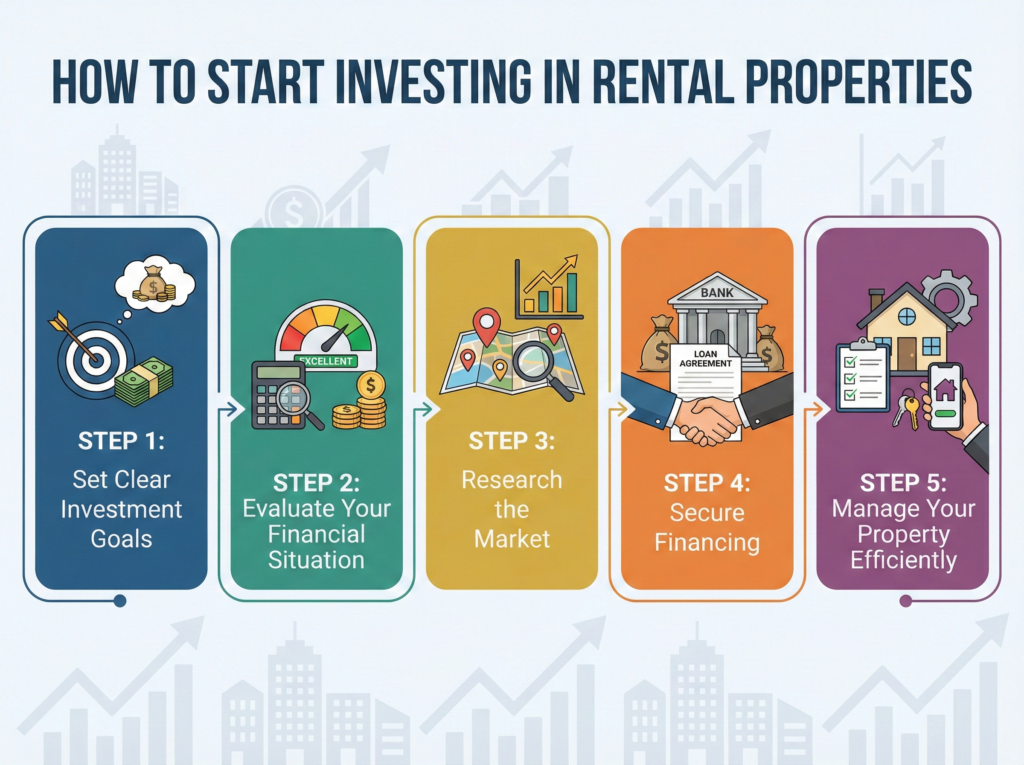
Step 1: Set Clear Investment Goals
Before purchasing your first rental property, it’s important to set clear, realistic investment goals. Are you looking for short-term profits, like flipping properties, or long-term growth through rental income and appreciation? Understanding your goals will help you choose the right type of property and investment strategy.
Step 2: Evaluate Your Financial Situation
Make sure you have the financial stability needed to invest in rental properties. Assess your savings, credit score, and ability to handle down payments, closing costs, and ongoing property expenses. Many lenders require a down payment of 20% or more for investment properties.
Step 3: Research the Market
Location is one of the most important factors when investing in rental properties. Research local markets to find areas with strong rental demand, rising property values, and low vacancy rates. Look for areas with good job growth, desirable schools, and plenty of amenities, as these factors can attract quality tenants and drive appreciation.
Step 4: Secure Financing
Explore financing options for your rental property purchase. You can get a traditional mortgage for investment properties, but keep in mind that the terms may be different from those of primary residence loans. Commercial loans, FHA loans, and hard money loans are also viable options, depending on your property type and financial situation.
Step 5: Manage Your Property Efficiently
Decide whether you will self-manage your property or hire a property management company. Managing a property yourself can save money, but it also involves more time and effort. If you’re new to property management, a professional management service may help ease the burden and provide expertise.
The Risks of Rental Property Investing

While rental property investing offers many benefits, it’s important to be aware of the risks involved:
- Market fluctuations: The real estate market can be unpredictable. Property values and rental rates may decrease during economic downturns, affecting your return on investment.
- Vacancies: If your property is vacant for an extended period, you may face loss of income and added maintenance costs.
- Tenant issues: Problematic tenants can damage your property, fail to pay rent, or violate lease agreements, resulting in legal fees and repairs.
- Maintenance costs: Ongoing repairs and maintenance can eat into your profits, especially if you’re managing the property yourself.
By carefully researching, planning, and budgeting for these risks, you can navigate potential pitfalls and ensure that your property investment remains profitable.
Conclusion: Is Rental Property Investing Right for You?
Rental property investing can be an excellent way to build long-term wealth, generate passive income, and diversify your financial portfolio. However, it requires careful planning, financial readiness, and an understanding of the market. By following the steps outlined in this guide, conducting thorough research, and managing your properties effectively, you can set yourself up for success in real estate investing.
Whether you’re looking to invest in long-term rentals, short-term rentals, or turnkey properties, the key is to start small, stay informed, and make strategic decisions. By committing to your investment goals and taking proactive steps, you’ll be on the path to financial independence through rental property investments.
