

Energy tax credits can help lower the cost of improving your home, but the rules aren’t always obvious. If you’re planning to install a heat pump, upgrade windows, add insulation, or invest in solar panels or battery storage, understanding the current federal incentives can help you make better decisions and avoid leaving money on the table. For households in the United States, these credits can reduce the after-tax cost of eligible upgrades, but qualification depends on the type of improvement, where the home is located, and when the property is placed in service.
What Are Energy Tax Credits?
Energy tax credits are federal tax incentives that reward certain home energy improvements and clean energy installations. For most homeowners, the two main credits are the Energy Efficient Home Improvement Credit and the Residential Clean Energy Credit. The first generally applies to improvements like qualifying doors, windows, insulation, home energy audits, central air conditioners, water heaters, furnaces, boilers, and certain high-efficiency heat pumps. The second generally applies to renewable energy systems such as solar panels, solar water heaters, geothermal heat pumps, small wind properties, fuel cells, and battery storage technology.
These credits don’t work like a store discount at the time of purchase. Instead, they’re claimed on your federal tax return for the year the qualifying property is placed in service. The IRS says taxpayers generally use Form 5695, Residential Energy Credits to calculate and claim these benefits.
How Energy Tax Credits Work
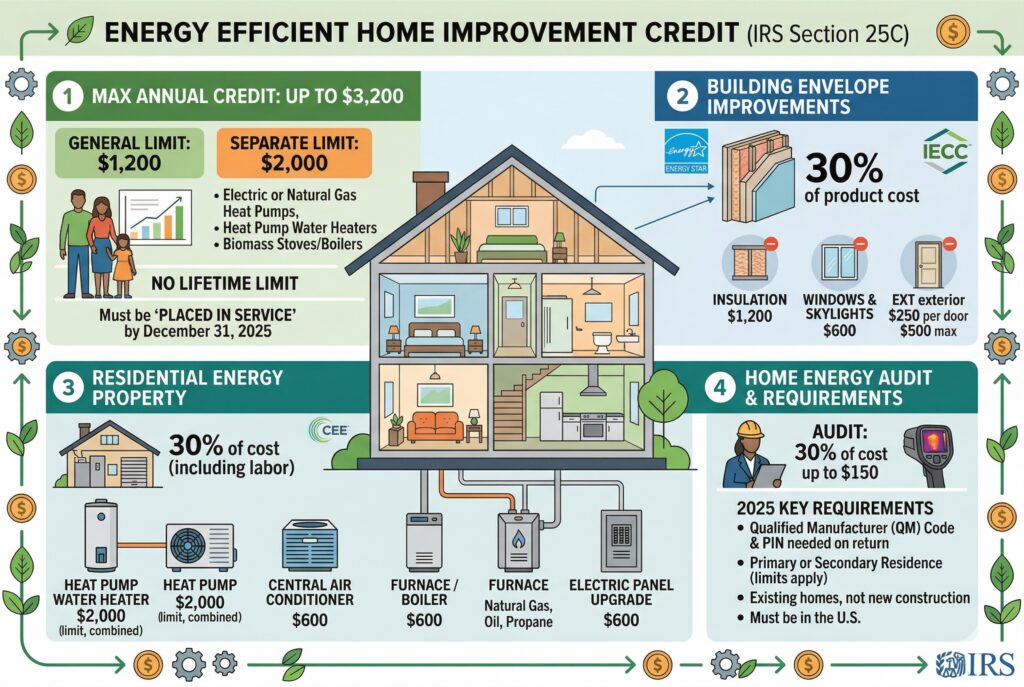
The Energy Efficient Home Improvement Credit equals 30% of certain qualified expenses, but it comes with annual caps. The IRS says the maximum annual credit is generally $1,200 for energy-efficient property costs and certain home improvements, with separate sub-limits such as $250 per exterior door, $500 total for doors, $600 for exterior windows and skylights, and $150 for a home energy audit. There is also a separate annual limit of $2,000 for qualified heat pumps, heat pump water heaters, biomass stoves, and biomass boilers.
The Residential Clean Energy Credit is structured differently. The IRS says it equals 30% of the costs of new, qualified clean energy property for your home installed from 2022 through December 31, 2025, and that the credit isn’t available for property placed in service after December 31, 2025. The IRS also notes there is generally no annual maximum or lifetime limit for this credit, although fuel cell property has a separate capacity-based limit.
That difference matters. If you’re comparing a heat pump with a rooftop solar system, the way the tax savings are calculated may be very different. In general, home efficiency credits have tighter annual caps, while clean energy credits can be much larger for expensive systems like solar.
Who Qualifies for Home Energy Tax Credits?
For the Energy Efficient Home Improvement Credit, the IRS says the home must be located in the United States, must be an existing home that you improve rather than a new home, and in most cases must be your primary residence. The IRS also says you generally can’t claim this credit if you’re a landlord or owner who doesn’t live in the home.

For the Residential Clean Energy Credit, eligibility is broader in some cases. The IRS says the property must be installed in a home located in the United States, and owners of second homes used as residences may also qualify. IRS guidance also says renters may be able to claim credits in some situations, and clean energy installations must generally be owned, not leased, by the taxpayer claiming the credit.
This is one of the biggest points homeowners miss. Not every credit applies to every property type, and the rules for a primary residence, a second home, and a rental property aren’t identical.
Which Upgrades May Qualify?
Under the Energy Efficient Home Improvement Credit, the IRS lists qualifying categories that may include exterior doors, windows, skylights, insulation, air sealing materials, home energy audits, certain high-efficiency central air conditioners, water heaters, furnaces, boilers, and qualifying electrical panel upgrades or related electrical components in some cases. Heat pumps and qualifying biomass equipment can receive the larger separate annual limit. To qualify, the property generally must meet specific efficiency standards.
Under the Residential Clean Energy Credit, the IRS says eligible property may include solar electric property, solar water heating property, small wind energy property, geothermal heat pump property, battery storage technology, and fuel cell property. The IRS instructions also say labor costs properly allocable to onsite preparation, assembly, or original installation, plus related piping or wiring, may count toward the credit for qualified clean energy property.
One detail that can surprise people is that not all roof-related spending qualifies just because solar is involved. IRS guidance says traditional roofing materials and structural components generally don’t qualify, though certain solar roofing products may qualify depending on how they function.
Easy Ways to Save More with Energy Incentives
The best way to maximize energy tax credits is to plan the project before you buy. Because the Energy Efficient Home Improvement Credit is capped annually, some homeowners may benefit from spacing projects across more than one tax year rather than doing every eligible improvement at once. That can matter if you’re considering a heat pump, new windows, and insulation in the same broader renovation plan. This is an inference based on the IRS’s annual caps and yearly claim structure.
It’s also smart to verify product eligibility before installation. The IRS says that for certain 25C property placed in service after December 31, 2024, the item must be produced by a qualified manufacturer, and the taxpayer must include the required product identification information on the tax return. IRS FAQ guidance further explains that PIN-related requirements expand for property placed in service in 2026.
You should also check for rebates and state or local incentives in addition to federal tax credits. The Department of Energy says consumers may be able to combine tax credits with rebates or other savings programs, and it points people to federal and state incentive resources for available programs. The exact interaction can vary, so it’s worth reviewing program rules before assuming every incentive stacks the same way.
How to Claim Energy Tax Credits
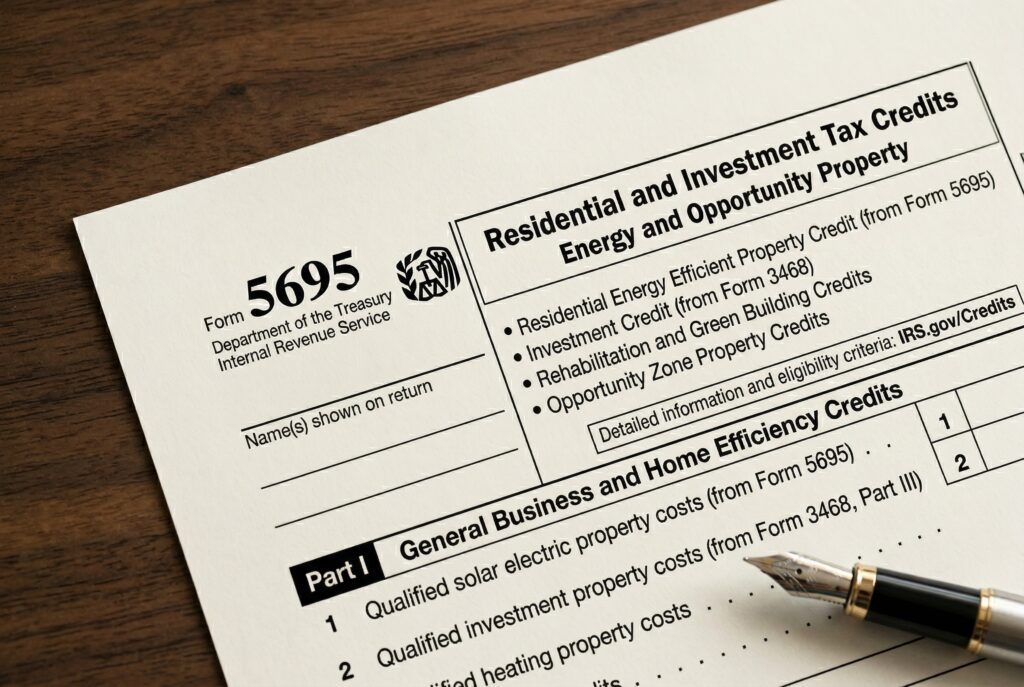
To claim these federal incentives, the IRS says you generally file Form 5695 with your tax return for the year the property was placed in service. That timing matters. A purchase made in one year but not installed and placed in service until later may belong on a different return year than many taxpayers expect. Keeping invoices, manufacturer documentation, audit reports, and installation records is important in case you need to support the claim.
For a home energy audit, the IRS says the audit must include a written report and inspection identifying significant and cost-effective improvements, and the report must be prepared and signed by a qualified home energy auditor with the required identifying information and certification details.
Conclusion
Energy tax credits can make major home upgrades more affordable when you understand which credit applies, what property qualifies, and how the timing rules work. For many households, the biggest opportunities come from the Energy Efficient Home Improvement Credit for upgrades like heat pumps, insulation, windows, and home energy audits, or the Residential Clean Energy Credit for solar panels, battery storage, and other renewable energy systems.
The smartest approach is to verify eligibility before installation, keep detailed records, and claim the credit correctly on Form 5695. Done carefully, these home energy incentives can help reduce your tax bill while also lowering long-term energy costs and improving the comfort and efficiency of your home.
