


Dealer financing is one of the most common ways people pay for a car, especially when they want a convenient, one-stop buying process. Instead of finding an auto loan on their own before visiting a dealership, buyers apply for financing through the dealer and review loan offers as part of the purchase. That can save time, but it can also make the deal more complicated if you don’t understand how the financing side works.
What Dealer Financing Means
Dealer financing is a car loan arranged through a dealership rather than directly through a bank, credit union, or online lender. In many cases, the dealership isn’t the lender itself. Instead, it acts as the middleman between the buyer and one or more financing sources.
When you fill out a credit application at the dealership, the dealer typically sends your information to lenders it works with. Those lenders review your credit profile, income, debt, and other details, then return loan offers that may include different interest rates, repayment terms, and approval conditions.

The dealership presents those options to you, and if you accept one, the car purchase and financing are completed together. From the buyer’s perspective, it can feel simple because the loan is handled during the same transaction as the vehicle sale. But convenience doesn’t always mean the financing terms are the best available.
How Dealer Financing Works
The process usually starts after you choose a vehicle or get close to choosing one. The dealer asks whether you’ll be paying cash, using outside financing, or financing through the dealership. If you choose dealer financing, you complete a credit application that includes personal, employment, and income information.
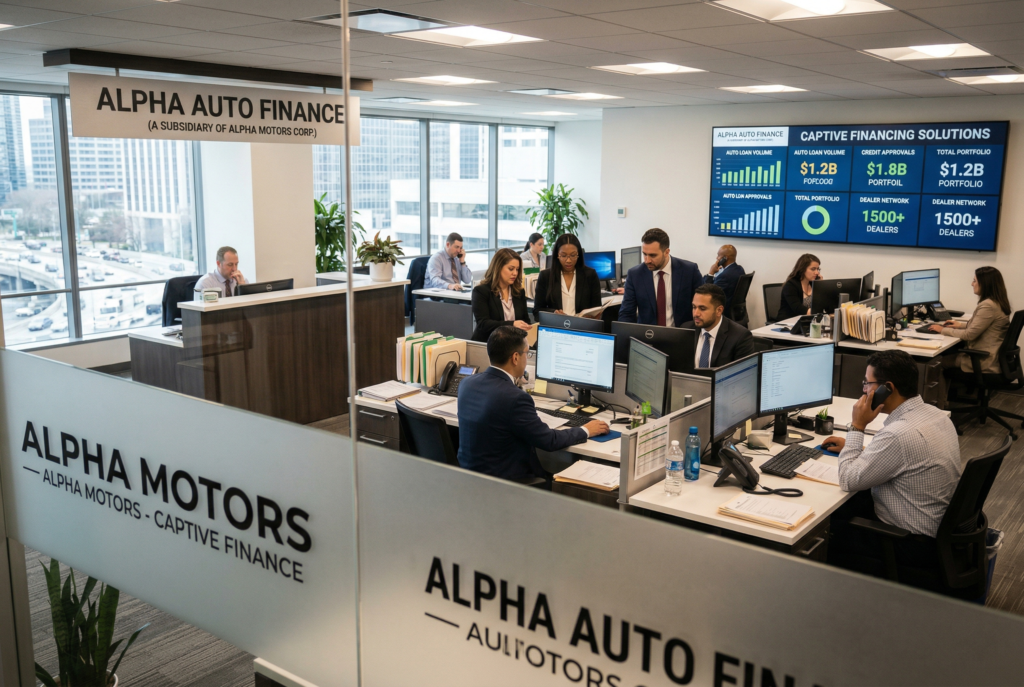
The dealership then submits that application to lending partners. Depending on the dealer, this may include banks, finance companies, credit unions, or the automaker’s captive finance arm. A captive finance company is a lender affiliated with the vehicle brand, such as a manufacturer-backed financing division.
Once lenders review the application, they may approve the buyer at one or more loan terms. The dealer then presents an offer, often including the APR, loan length, monthly payment, and any required down payment. If the buyer accepts, the paperwork is finalized and the loan becomes part of the vehicle purchase. This process can move quickly, which is one reason it appeals to many buyers. Still, a fast process can also make it easier to miss details, especially when the excitement of buying a car starts taking over.
Why Dealers Offer Financing in the First Place
Dealers offer financing because it helps them close sales and earn money beyond the price of the vehicle itself. Financing can make a car feel more affordable by shifting the conversation from total price to monthly payment. That can increase the chance that a buyer agrees to the purchase.
In many cases, dealerships also earn compensation from the financing arrangement. The lender may allow a markup over the approved buy rate, meaning the dealer can present a higher rate to the customer and keep part of the difference. Not every deal works exactly this way, but it’s one reason financing deserves close scrutiny.
Dealerships may also use financing promotions as a sales tool. Offers such as low-rate financing, cash-back incentives, or special deals for qualified buyers can make the dealership more competitive. These promotions can be valuable, but they should still be compared carefully with outside loan options.
The Difference Between Dealer Financing and Direct Auto Loans
With a direct auto loan, the buyer gets financing from a bank, credit union, or online lender before or outside the dealership process. This gives the buyer a clearer borrowing limit and often more control before shopping for a car.
With dealer financing, the loan is arranged at the dealership during the transaction. This can be more convenient, but it may also reduce transparency if the buyer focuses too much on speed and not enough on cost.
The key difference is control. Outside financing lets you arrive with a loan offer already in hand, which can strengthen your negotiating position. Dealer financing may offer convenience and promotional deals, but it requires more attention to loan details because the financing conversation is happening at the same time as the vehicle sale.
Pros of Dealer Financing
One major advantage of dealer financing is convenience. Buyers can choose a car and arrange financing in one place, often on the same day. That can be especially helpful for people who want a streamlined process or need a vehicle quickly.
Another benefit is access to multiple lenders through one application. Instead of applying separately to several institutions, the dealership may shop your application around for you. That can save time and produce more than one offer.
Some buyers may also benefit from promotional financing. Manufacturers sometimes advertise low-APR offers or special terms for qualified borrowers on new vehicles. When those promotions are legitimate and the buyer qualifies, they can be attractive. Dealer financing can also help buyers with limited lending relationships. Someone who doesn’t already bank with a credit union or hasn’t researched lenders may find it easier to start at the dealership.
Cons of Dealer Financing
The biggest downside is that dealer financing can cost more than buyers realize. If the dealer marks up the interest rate, the loan may be more expensive than an offer you could have found on your own. That makes comparison especially important.
Another drawback is that the financing discussion can become blended with the vehicle negotiation. When buyers are looking at trade-in value, purchase price, add-ons, warranties, and monthly payment all at once, it becomes harder to see where extra cost is being added.
There’s also the risk of focusing too much on monthly payment instead of total loan cost. A dealer can lower the monthly payment by stretching the loan over more years, but that may increase total interest paid and leave the buyer in debt longer than expected. Pressure is another issue. Car buying can already feel intense, and financing discussions can become even more stressful when buyers feel rushed to sign.

What Interest Rate and APR Really Mean in a Car Deal
When reviewing dealer financing, one of the most important numbers is the APR, or annual percentage rate. This reflects the cost of borrowing and helps you compare one loan offer with another. A lower APR generally means a cheaper loan, assuming other terms are similar.
The interest rate affects how much you’ll pay over time, but the repayment term matters too. A buyer may receive a low monthly payment on a long loan, yet still pay much more overall because interest is spread across more months.
This is why shoppers shouldn’t judge a loan only by whether the monthly payment feels manageable. The stronger comparison looks at the APR, total finance charge, loan length, and total amount repaid by the end of the loan.
Why Monthly Payment Can Be Misleading
A lower monthly payment often sounds like a better deal, but it can be misleading. Dealers know many buyers shop based on what fits into their month-to-month budget, so payment size becomes a powerful sales tool.
The problem is that almost any car can be made to look more affordable if the loan term is extended long enough. A longer term reduces the monthly payment, but it can also increase total interest cost and keep the buyer underwater on the car for longer. Being underwater means owing more than the vehicle is worth.
This matters because vehicles usually depreciate quickly. If the loan balance falls slowly while the car loses value, it becomes harder to trade in or sell the vehicle without rolling debt into the next loan.
How to Get the Best Dealer Financing Deal

The best way to get a strong dealer financing deal is to prepare before going to the dealership. Check your credit score, review your budget, and understand what monthly payment and total loan amount are truly affordable for you. It’s also smart to get preapproved for an auto loan from an outside lender before shopping. A preapproval gives you a benchmark. Even if you still finance through the dealer, you’ll have a reference point to compare rates and terms.
When you’re reviewing the loan, focus on the vehicle price first and financing second. Keeping those conversations separate makes it easier to spot inflated costs. Then compare the APR, loan term, total finance charge, and any fees. If the dealer can beat your outside offer, that may be worth considering. If not, your outside financing may be the stronger choice.
Who Might Benefit Most From Dealer Financing
Dealer financing can work well for buyers who qualify for a genuine promotional rate, value convenience, or want the dealer to match or beat a preapproved outside offer. It may also help people who prefer a simpler buying process and are prepared enough to compare terms confidently. It can be useful, but it works best when the buyer arrives informed. Convenience is valuable, but only when it doesn’t come at the cost of a weaker loan.
Conclusion
Dealer financing can be a convenient way to buy a car and arrange a loan in one place, but it isn’t always the cheapest option. It works by allowing the dealership to connect buyers with lenders, present loan offers, and complete the financing during the vehicle purchase.
That convenience can save time, and promotional offers may sometimes deliver real value. Still, buyers need to look closely at the APR, loan term, total cost, and any added products in the contract. The best way to get a strong deal is to compare outside financing first, keep the car price and loan discussion separate, and review every part of the agreement before signing.
