

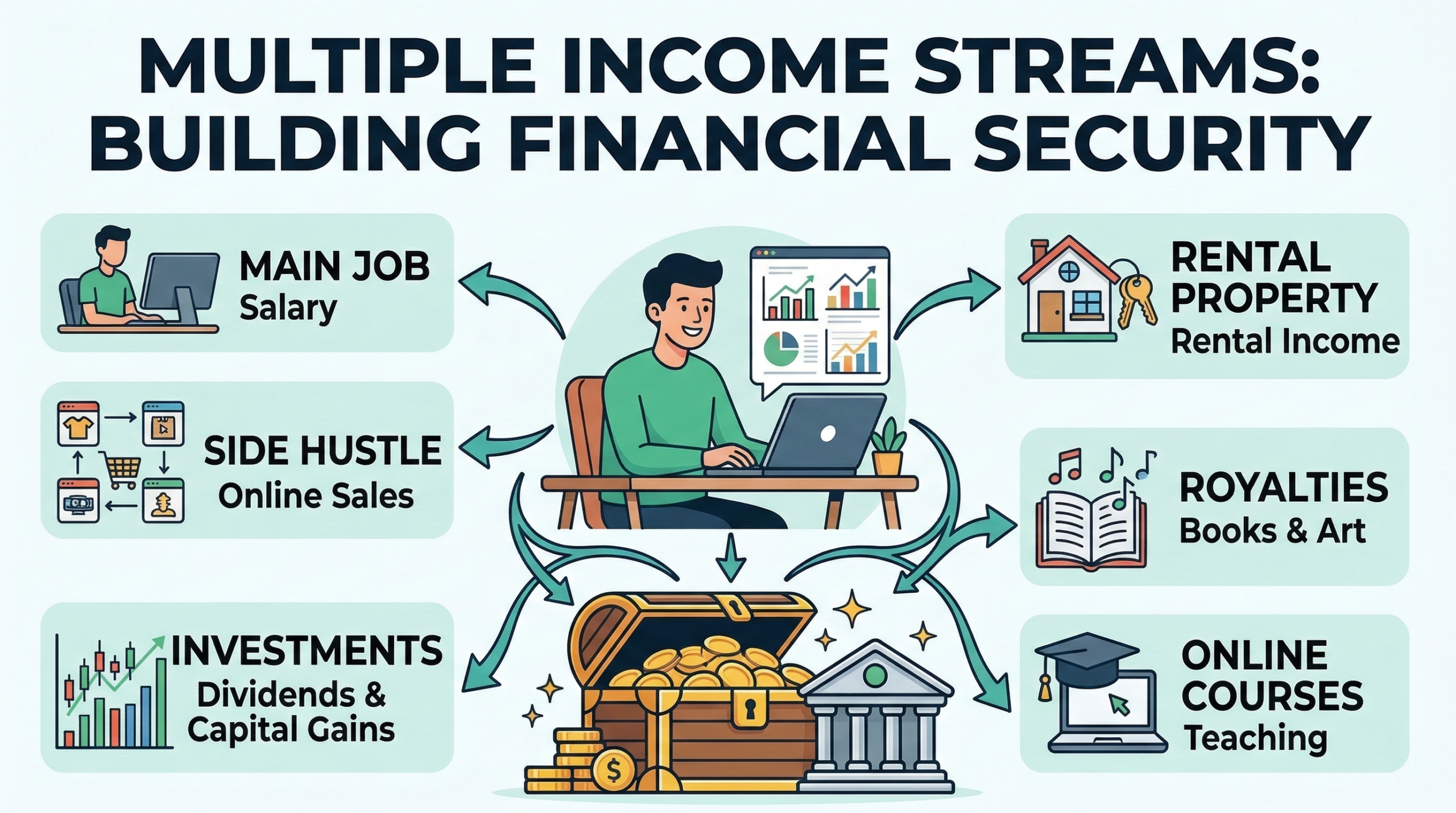
Relying on a single paycheck can leave your finances more vulnerable than they appear. A job loss, reduced hours, inflation, or an unexpected expense can quickly put pressure on your budget when most of your income comes from one source. Building multiple income streams can strengthen long-term financial stability, improve monthly cash flow, and give you more flexibility to save, invest, or pay down debt.
Your goal shouldn’t be chasing every side hustle at once. Instead, focus on building a practical mix of income streams that aligns with your skills, schedule, and financial priorities. With the right strategy, additional income can become more than extra spending money. It can help build financial resilience and create a stronger foundation for your future.
Why Multiple Income Streams Matter for Financial Stability
One income source can work well for a while, especially if your job is stable and your expenses are manageable. But from a long-term planning perspective, concentration risk is real. When too much of your financial life depends on one employer or one type of work, disruption becomes harder to absorb.
Multiple income streams help reduce that risk. They can also improve cash flow in positive ways. Extra income may allow you to build an emergency fund faster, catch up on retirement contributions, handle rising living costs, or make progress on high-interest debt without squeezing your main budget.
There’s also a psychological benefit. When you know your entire household finances don’t depend on one paycheck, money often feels less fragile. That added financial flexibility can make financial planning more sustainable.
Start With a Clear Purpose Before Adding Income Streams

Before choosing how to earn more, define why you want additional income in the first place. Without a clear purpose, it’s easy to overcommit, burn out, or end up with extra money that gets absorbed into lifestyle spending. Your purpose might be to create more monthly breathing room, build savings, fund a home down payment, reduce debt, or prepare for retirement. Some people want multiple streams for security, while others want more independence from traditional employment.
That purpose should shape the type of income stream you build. If your goal is faster cash flow, active side income may help most. If your goal is long-term wealth building, investment-based income may matter more. In many cases, the strongest strategy includes both.
Understand the Difference Between Active and Passive Income

Not all income streams work the same way. Some require ongoing time and effort. Others may become more hands-off over time, though very few are truly effortless. Active income includes work such as freelancing, consulting, tutoring, part-time jobs, selling services, or gig work. These options often generate income more quickly, but they depend on your time and energy.
Passive or semi-passive income can include dividend-paying investments, interest from savings or bonds, rental income, digital products, or royalties. These usually take more time, money, or setup upfront, but they can become more scalable later. Understanding this difference helps you build a balanced approach. Active income can improve cash flow now. Passive income can support long-term stability later.
Begin With the Easiest Income Opportunities You Can Sustain
A common mistake is pursuing complicated income ideas before testing simpler ones. The best first income stream is often the one closest to your existing skills, experience, or assets.
For example, someone with strong writing or design skills may start freelancing. A person with a teaching background may offer tutoring. Someone with extra storage space, equipment, or a rentable room may have asset-based opportunities. The key is to begin where your barrier to entry is low and your earning potential is realistic. Sustainability matters more than novelty. An income stream that fits your current life is more likely to last than one that sounds exciting but demands more time than you can consistently give.
Strengthen Your Primary Income First When Possible
Building multiple income streams doesn’t always mean starting from scratch somewhere else. Sometimes the highest-return move is increasing the value of your main income source. That might mean negotiating a raise, earning a certification, shifting to a higher-paying role, taking on strategic overtime, or moving into a specialty that commands better pay. If your primary job has room for growth, strengthening it can produce more income with less complexity than juggling several low-paying side projects. This doesn’t replace the value of diversification. It simply recognizes that improving your main income source is often the fastest and most efficient place to start.
Create a Side Income Strategy Based on Time, Not Just Money

A side income stream only helps if it improves your finances without damaging your health, performance at work, or personal responsibilities. That’s why time analysis matters.
Look honestly at how many hours you can commit each week. A parent with a full-time job may need flexible work that fits evenings or weekends. Someone with variable work hours may need a project-based income stream rather than a fixed schedule. The goal is to build around your actual capacity, not your idealized capacity. Steady progress from five focused hours a week is usually more sustainable than an ambitious plan you can’t maintain.
Use Extra Income to Build Financial Stability First
When new income starts coming in, it’s tempting to treat it as bonus money. But the smartest use of additional income is often reinforcing your financial foundation before upgrading your lifestyle.
For many households, that means using early extra income to build an emergency fund, pay off high-interest debt, catch up on retirement savings, or create sinking funds for irregular expenses. These moves improve financial stability and make future income-building efforts less stressful.
Once your foundation is stronger, you can decide how much of your extra income goes toward investing, lifestyle goals, or even reducing work hours.
Build Scalable Income Streams Over Time
Some income streams remain closely tied to your time, while others can grow without requiring the same level of effort for every dollar earned. Long-term financial stability often improves when you gradually add scalable income sources.
Scalable options may include a service business that becomes more efficient, digital products, licensing, rental income, dividend investing, or interest from savings and fixed-income accounts. These typically won’t replace a paycheck overnight, but over time they can expand your financial margin.
The most effective long-term strategy is often layered. A primary job supports current expenses, one or two side income streams improve cash flow, and savings and investments gradually build more passive income potential.
Keep Taxes, Expenses, and Risk in Mind
Extra income isn’t only about revenue. It also comes with taxes, expenses, and tradeoffs. Freelance or self-employment income may require quarterly tax payments. Rental or resale income can involve maintenance, insurance, or platform fees. Some side businesses need software, licensing, marketing, or equipment.
Tracking income and expenses carefully is part of building a healthy income system. Without that discipline, it’s easy to overestimate profits. Risk matters too. Avoid building multiple income streams that all depend on the same industry or the same economic condition. For example, if your job and side business are both highly sensitive to the same downturn, your diversification may not be as strong as it seems.
Automate the Financial Benefits of Extra Income
One of the best ways to turn additional income into lasting stability is to automate what happens after you earn it. If all extra cash flows into checking with no plan, it can disappear.
Consider assigning each stream a purpose. One income source might fund debt payoff. Another might go directly into savings or investments. You can automate transfers so that part of each deposit moves into a high-yield savings account, retirement contribution fund, or tax reserve. This creates structure and makes your income growth more visible. It also helps ensure the effort you’re putting in actually improves your financial position.
Don’t Try to Build Everything at Once

Trying to create three or four income streams immediately can backfire. It often leads to scattered effort and disappointing results. A better strategy is sequencing.
Start with one additional income stream that feels realistic. Learn how to manage it, track it, and integrate it into your financial plan. Once it’s stable, decide whether to grow it or add another stream. In the long run, this creates a more durable income structure. Financial stability usually comes from consistency, not speed. A modest second income that lasts for years is often more valuable than a short burst of activity across several ideas.
Review What’s Actually Improving Your Cash Flow
Not every income stream is worth keeping. Some may look productive but generate too little after expenses, taxes, and time costs. Periodically review what each stream is truly contributing.
Ask whether it improves your monthly cash flow, supports your goals, and still fits your life. If not, it may be worth simplifying and focusing on the streams with the best return on time and energy. This kind of review is part of smart financial management. Building multiple income streams should increase stability, not create ongoing chaos.
Conclusion
Building multiple income streams for long-term financial stability and greater cash flow starts with a clear purpose, a realistic plan, and a willingness to build gradually. By strengthening your primary income, choosing side income opportunities that match your skills and schedule, and using extra earnings to improve savings, debt reduction, and investing, you create a financial system that’s less dependent on one source of money.
Making more money shouldn’t mean filling every moment with work. The real aim is to create flexibility, improve resilience, and support a stronger future. When your income comes from more than one place and each stream has a purpose, you’re in a better position to handle setbacks, take advantage of opportunities, and move toward long-term financial security with more confidence.
