


If you’re looking to invest in a simple, cost-effective, and diversified way, Exchange-Traded Funds (ETFs) are an excellent option to consider. ETFs allow you to access a range of investments, from stocks and bonds to commodities, with a single purchase. They’re popular among both new and seasoned investors because of their low cost, flexibility, and diversification potential.
In this guide, we’ll break down everything you need to know about ETFs, how they work, the different types available, and how to effectively use them to build your wealth and meet your long-term financial goals.
What Are ETFs?
At its core, an Exchange-Traded Fund (ETF) is an investment fund that holds a basket of assets, such as stocks, bonds, or commodities. These assets are grouped together in a single fund, and when you buy shares of the ETF, you’re buying a portion of the underlying assets within that fund.
One of the key advantages of ETFs is their liquidity. They’re traded on stock exchanges, just like individual stocks, meaning you can buy and sell them throughout the trading day. Additionally, many ETFs are passively managed, which means they simply track an index, such as the S&P 500, rather than trying to outperform it, resulting in lower fees.

How Do ETFs Work?
ETFs function by pooling money from investors to purchase a diversified collection of assets. These funds typically track a specific market index, such as the Nasdaq-100 or Dow Jones Industrial Average, or they might target a specific sector, like technology or healthcare.
For example, if you purchase shares in a technology ETF, your money will be invested in a selection of technology stocks such as Apple, Microsoft, and Google, among others. This gives you exposure to multiple tech companies without having to buy individual shares in each one.
What makes ETFs particularly attractive to many investors is their low-cost structure. Unlike mutual funds, which are actively managed and typically come with higher fees, ETFs have much lower expense ratios, making them an affordable option for those looking to invest over the long term.
Types of ETFs
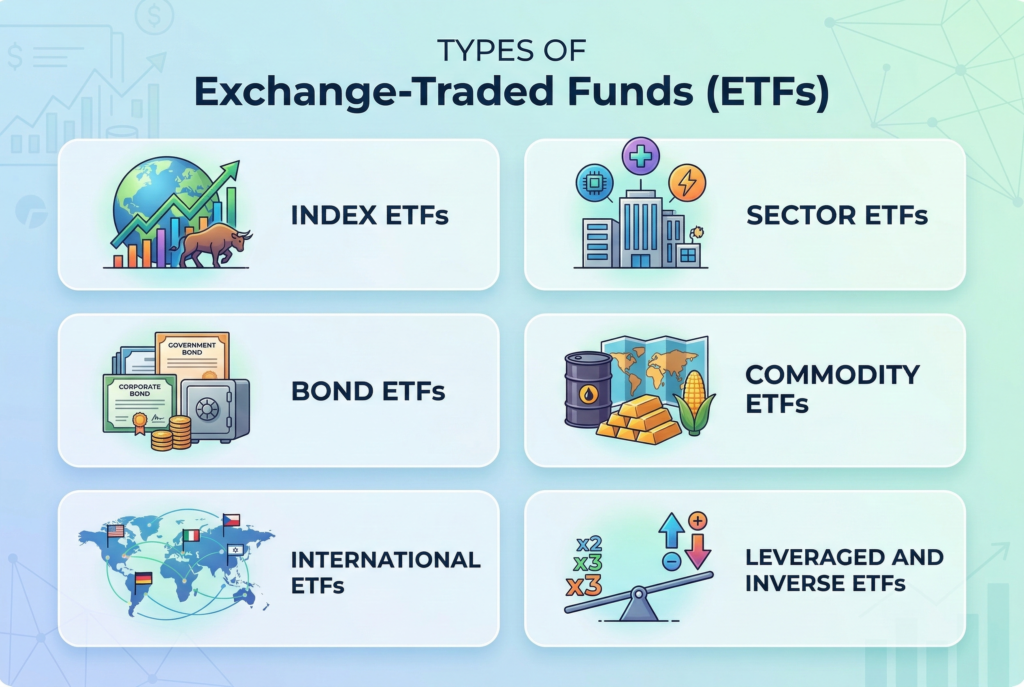
Index ETFs
These ETFs track a specific market index, such as the S&P 500 or Russell 2000. By purchasing shares of an index ETF, you gain exposure to the companies within that index, allowing for instant diversification.
Sector ETFs
These ETFs focus on a particular sector of the economy, such as technology, energy, healthcare, or financials. If you believe a certain industry will perform well, sector ETFs allow you to invest specifically in that area.
Bond ETFs
Bond ETFs hold bonds issued by the government or corporations. These ETFs are typically a good choice for investors looking for income or a more stable investment compared to stocks.
Commodity ETFs
Commodity ETFs track the price of a specific commodity, such as gold, oil, or agricultural products. These are ideal for investors looking to hedge against inflation or gain exposure to global commodity markets.
International ETFs
These ETFs focus on global markets, offering exposure to foreign countries or regions. You can invest in entire emerging markets, developed markets, or single-country ETFs, such as those focused on China, India, or Europe.
Leveraged and Inverse ETFs
These ETFs are designed for more advanced traders. Leveraged ETFs aim to amplify returns, while inverse ETFs aim to profit from a decline in a particular index or asset. Both come with higher risks and should be used with caution.
Benefits of ETFs

Diversification
One of the most significant advantages of investing in ETFs is diversification. With a single ETF purchase, you can gain exposure to hundreds or even thousands of individual stocks or bonds, significantly reducing risk.
Low Fees
ETFs typically have lower expense ratios than actively managed mutual funds, which helps reduce the overall cost of your investment over time. This makes them a cost-effective option for long-term investors.
Liquidity
ETFs are traded on major stock exchanges, meaning they can be bought or sold throughout the day. This liquidity gives investors the flexibility to react to market changes quickly.
Transparency
Most ETFs are required to disclose their holdings daily, providing investors with transparency about where their money is invested. This is in contrast to mutual funds, which typically only disclose their holdings quarterly.
Tax Efficiency
ETFs tend to be more tax-efficient than mutual funds because they don’t typically trigger capital gains taxes until you sell your shares. This makes ETFs an attractive option for those looking to minimize their tax burden.
Risks of ETFs
- Market risk: If the value of the assets within an ETF declines, the value of your investment will decrease as well. This is the same risk associated with investing in individual stocks or bonds.
- Liquidity risk: Although ETFs are generally liquid, some may experience difficulty with liquidity, especially during times of market turmoil.
- Tracking error: Some ETFs may not perfectly track the index or asset they are designed to mirror due to changes in the market or the costs of managing the ETF.
- Currency and political risk: For international ETFs, fluctuations in currency values and political instability in foreign countries can affect performance.
How to Invest in ETFs
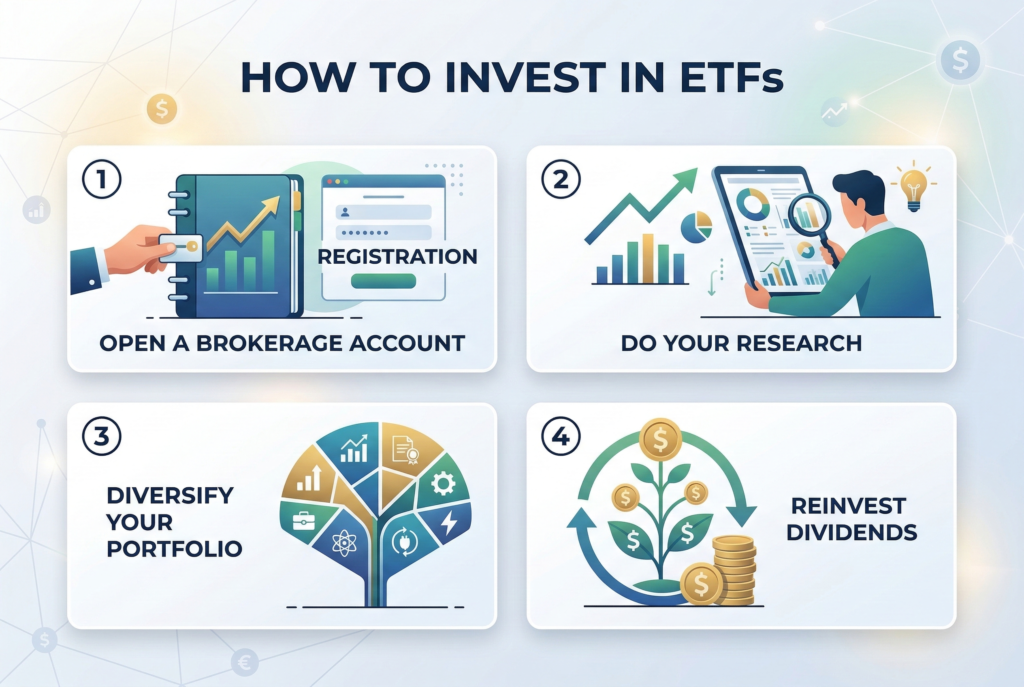
Step 1: Open a Brokerage Account
To buy ETFs, you’ll need a brokerage account. Many online brokers offer commission-free trading for ETFs, making it affordable for new investors to start. Compare brokers to find one with low fees and a user-friendly platform.
Step 2: Do Your Research
Before investing in any ETF, do your due diligence. Look into the ETF’s expense ratio, which is the annual fee you’ll pay for the management of the fund. Additionally, research the ETF’s performance history, the sector or index it tracks, and the overall economic conditions.
Step 3: Diversify Your Portfolio
Don’t put all your eggs in one basket. Consider spreading your investments across different types of ETFs, such as stock ETFs, bond ETFs, and international ETFs, to diversify and reduce risk.
Step 4: Reinvest Dividends
Many ETFs pay dividends, which can be reinvested to compound your returns. By setting up automatic reinvestment, you can let your investment grow more efficiently over time.
Maximizing Your ETF Portfolio
To get the most out of your ETF investments, it’s important to stay engaged. Regularly monitor your portfolio to ensure your ETF mix aligns with your long-term financial goals. If market conditions change, you may need to adjust your holdings accordingly.
Consider using tax-advantaged accounts like IRAs or 401(k)s to hold your ETFs. These accounts allow you to invest with tax benefits, helping you save on taxes while growing your wealth.
Final Thoughts
ETFs are an excellent choice for both novice and experienced investors due to their low cost, diversification, and liquidity. Whether you are looking to build a long-term portfolio, gain exposure to specific sectors, or invest in international markets, ETFs offer a flexible and affordable way to reach your financial goals.
By understanding the types of ETFs available, the risks, and the best strategies for investing, you can make more informed decisions and set yourself on the path to financial growth and stability. Start researching, select your ETFs carefully, and begin investing today with confidence!
