


Understanding capital gains tax (CGT) is essential for investors, homeowners, and anyone who sells assets like stocks, real estate, or collectibles. This tax impacts the profit you make from selling assets, and knowing how it works can help you make better financial decisions. Whether you’re new to investing or looking to optimize your tax strategy, this guide will explain how capital gains tax works, the current tax rates, and strategies to minimize your tax liability.
What is Capital Gains Tax?
Capital gains tax is a tax levied on the profit you make from the sale of assets such as stocks, real estate, bonds, and even digital assets like cryptocurrency. The tax applies to the difference between the price at which you bought the asset (its cost basis) and the price at which you sold it.
There are two main types of capital gains:
- Short-term capital gains: If you sell an asset that you’ve held for one year or less, the profit is taxed as short-term capital gains. These gains are taxed at your ordinary income tax rate, which could be as high as 37% for high earners.
- Long-term capital gains: If you sell an asset that you’ve held for more than one year, it’s subject to long-term capital gains tax, which is typically taxed at a lower rate than short-term gains.
How Capital Gains Tax Works

When you sell an asset, the profit made from the sale (called the capital gain) is taxed. The tax you pay depends on the length of time you held the asset and your tax bracket. For example, assets held longer than a year qualify for long-term capital gains, which are taxed at a lower rate than short-term capital gains, which are taxed at the same rate as your regular income.
For 2026, the long-term capital gains tax rates are 0%, 15%, and 20%, depending on your filing status and taxable income.
Here’s a breakdown of the 2026 tax rates for long-term capital gains:
- 0%: If your taxable income is up to $44,625 for single filers or $89,250 for married couples filing jointly.
- 15%: If your taxable income is between $44,626 and $492,300 for single filers or between $89,251 and $553,850 for married couples filing jointly.
- 20%: If your taxable income exceeds $492,300 for single filers or $553,850 for married couples filing jointly.
Short-term capital gains are taxed at your regular income tax rates, which range from 10% to 37%, depending on your income level.
Tax Impact of Different Assets

Stocks and Bonds
The most common assets subject to capital gains tax are stocks and bonds. If you sell a stock for a profit, you’ll pay tax on the capital gain, with short-term gains taxed at your regular income tax rate and long-term gains taxed at the favorable rates mentioned above.
Real Estate
Selling your home can trigger capital gains tax, but there are some exemptions. If you meet certain conditions, you can exclude up to $250,000 in gains (or $500,000 if married and filing jointly) from the sale of your primary residence. However, if you sell a rental property or second home, you’ll generally owe capital gains tax on the profit.
Digital Assets (Cryptocurrency, NFTs)
With the rise of digital currencies like Bitcoin, Ethereum, and NFTs, capital gains tax has become an increasingly important consideration for investors in digital assets. The IRS treats cryptocurrency as property, meaning that any gain from the sale or exchange of crypto is subject to capital gains tax. The tax is calculated based on the difference between the sale price and the original purchase price of the digital asset.
Strategies to Reduce Capital Gains Tax
1. Hold Investments for the Long Term
One of the simplest ways to reduce your capital gains tax liability is to hold your investments for over a year. Long-term capital gains are taxed at a significantly lower rate than short-term gains, which are taxed as ordinary income. If you’re able to wait for a year or more before selling your assets, you can save money on taxes by taking advantage of the lower long-term capital gains rates.
2. Use Tax-Advantaged Accounts
Contributing to tax-advantaged accounts, like a 401(k) or IRA, is one of the best ways to reduce taxable income. Traditional IRAs and 401(k)s allow you to defer taxes on capital gains until you withdraw the funds, typically in retirement. For Roth IRAs, capital gains are tax-free if the money is kept in the account for at least five years. For business owners and self-employed individuals, SEP IRAs and Solo 401(k)s offer similar tax benefits for long-term savings and retirement planning.
3. Tax-Loss Harvesting
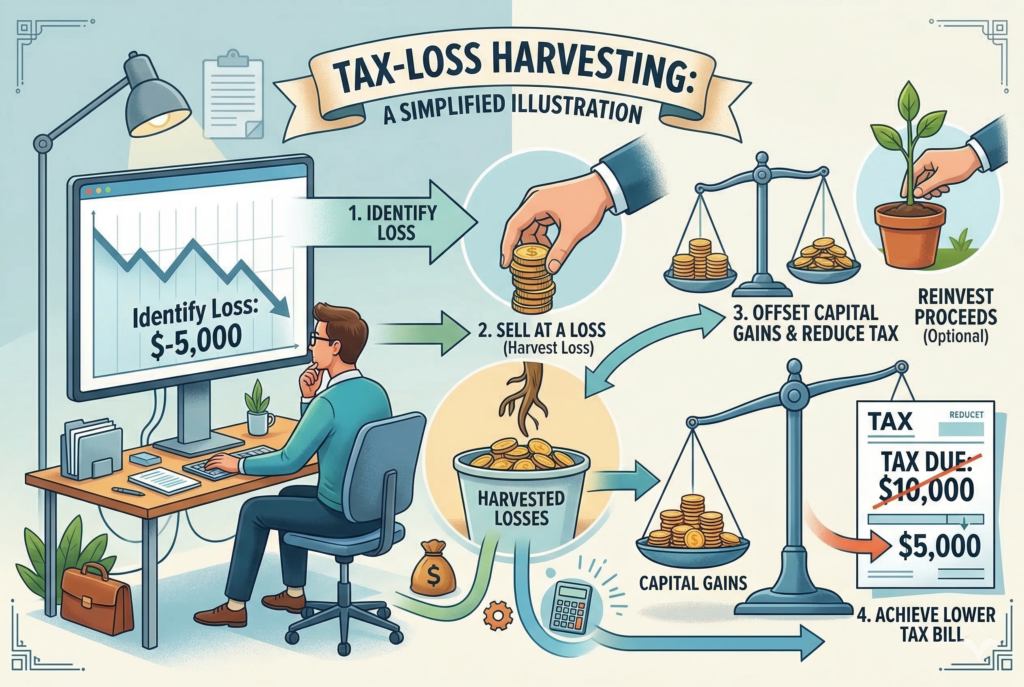
Tax-loss harvesting is a strategy that involves selling investments that have experienced a loss to offset gains from other investments. By doing this, you can reduce your taxable capital gains. This technique is particularly useful if you have investments in a taxable account that have underperformed.
For example, if you’ve sold stocks with capital gains, you could sell other investments that have capital losses to offset the gains, reducing your overall tax liability. Keep in mind that there are wash-sale rules, which prevent you from claiming a loss if you buy the same asset within 30 days of selling it.
4. Offset Gains with Capital Losses
If your portfolio has experienced losses, you can use capital losses to offset capital gains. If your capital losses exceed your capital gains for the year, you can use the excess losses to offset up to $3,000 in ordinary income (or $1,500 for married filing separately). Losses beyond this can be carried forward to future years.
5. Invest in Opportunity Zones
Investing in Opportunity Zones allows you to defer and potentially eliminate capital gains taxes. Opportunity Zones are designated areas that receive special tax incentives to promote investment in economically distressed communities. By holding investments in Opportunity Zones for at least 10 years, you can potentially avoid paying taxes on any capital gains from those investments.
Filing Capital Gains Tax
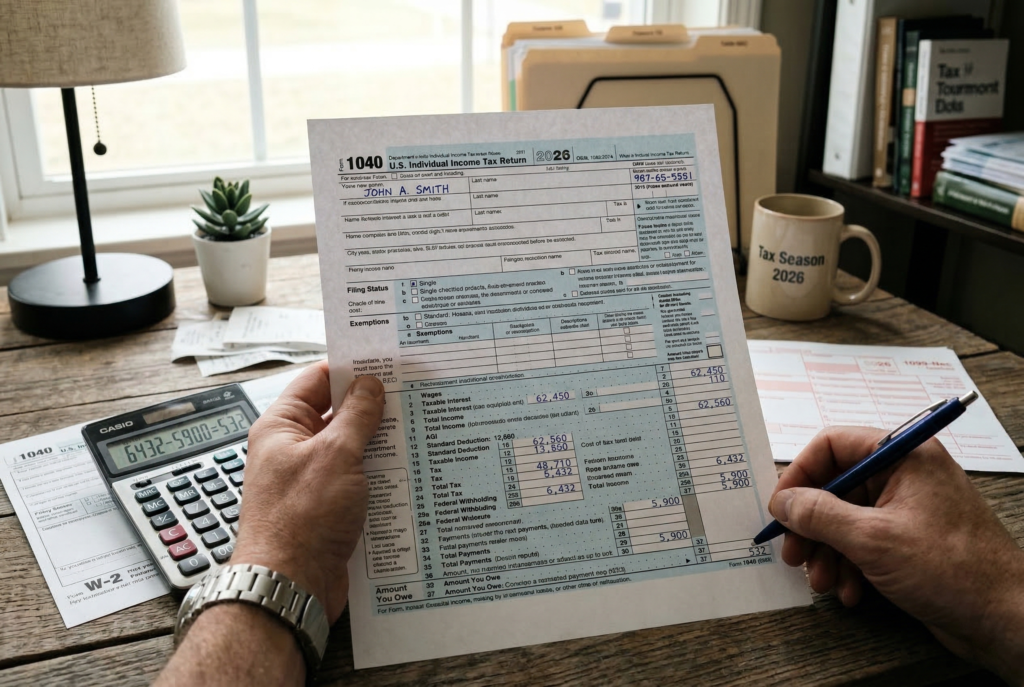
To report your capital gains and calculate the taxes you owe, you’ll need to file the IRS Form 1040, and use Schedule D (Capital Gains and Losses). This form helps you calculate the total gain or loss from the sale of your assets. If you’re claiming capital losses to offset other gains, you’ll also need to include Form 8949.
Make sure to keep detailed records of all transactions, including the purchase price, sale price, and date of sale for each asset, to ensure accurate reporting.
Conclusion: Plan Ahead to Minimize Your Capital Gains Tax
Capital gains tax can take a significant bite out of your investment profits, but with careful planning and strategy, you can minimize your tax liability. Holding assets for the long term, utilizing tax-advantaged accounts, and employing strategies like tax-loss harvesting and investing in Opportunity Zones can help you reduce the amount of tax you owe.
By staying informed about the current capital gains tax rates and taking advantage of tax-saving strategies, you can maximize your investment returns and keep more of your money working for you. Always consider consulting a tax professional or financial advisor to make sure you’re using the best tax strategies for your unique financial situation.
Related Articles
Short-Term vs Long-Term Capital Gains: Key Differences, Tax Rates, and How to Save
