


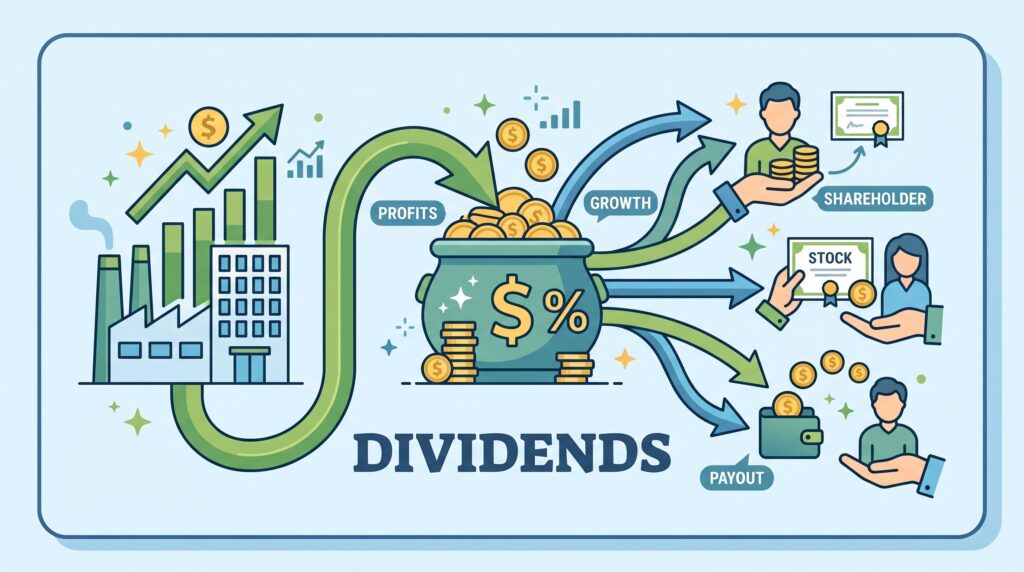
If you buy a dividend stock, you’re buying the possibility of recurring cash flow. But one question comes up fast: how often are dividends paid? The short answer is simple, but the real answer depends on the company, fund type, dividend policy, and the dates that determine whether you actually qualify for the payment.
Most U.S. dividend-paying companies pay dividends quarterly, meaning four times per year. However, dividends may also be paid monthly, semiannually, annually, or irregularly. Dividends aren’t guaranteed. A company can raise, reduce, pause, or cancel a dividend if business conditions change.
When Are Dividends Paid?
When are dividends paid? Dividends are paid on the payment date, but you must qualify before that date. Many beginners focus only on the payment date and miss the more important qualification dates. A company’s board first announces the dividend. Then the market applies an ex-dividend date, a record date, and finally a payment date. If you buy too late, you may not receive the upcoming dividend even if you own the stock by the time cash is distributed.
The 4 Crucial Dividend Dates You Must Know

Declaration Date
The declaration date is when a company announces the dividend. This announcement usually includes the dividend amount, record date, ex-dividend date, and payment date. This matters because it turns a possible dividend into an official scheduled event. Before the declaration date, investors may expect a dividend, but it isn’t confirmed.
Ex-Dividend Date
The ex-dividend date is the most important date for investors. If you buy the stock on or after the ex-dividend date, you generally won’t receive the upcoming dividend. To qualify, you usually need to own the stock before the ex-dividend date. This is why dividend payment dates alone can be misleading. The cash may arrive later, but eligibility is decided earlier.
Record Date
The record date is when the company checks its shareholder records to see who qualifies for the dividend. Because trades take time to settle, the ex-dividend date is usually the practical cutoff for investors. Think of the record date as the company’s official list-making day. If your name isn’t properly recorded, you don’t receive that dividend.
Payment Date
The payment date is when the dividend is actually paid. This is when cash appears in your brokerage account or when additional shares are credited if you use a dividend reinvestment plan. For income investors, the payment date is important for cash-flow planning. But for eligibility, the ex-dividend date matters more.
Types of Dividend Payout Methods
Cash Dividends
Cash dividends are the most common payout method. The company sends cash to shareholders based on the number of shares owned. For example, if a company pays $0.50 per share and you own 100 shares, you receive $50 before taxes. Cash dividends can be withdrawn, saved, reinvested, or used as income.
Stock Dividends
Stock dividends pay investors with additional shares instead of cash. This increases the number of shares you own, but it may also adjust the stock price because ownership is spread across more shares. Stock dividends are less common than cash dividends, but they can still be useful for companies that want to reward shareholders while preserving cash.
DRIP and Dividend Reinvestment Plan
A DRIP, or dividend reinvestment plan, automatically uses cash dividends to buy more shares. This can help investors compound wealth over time. Instead of spending the dividend, you reinvest it. Over many years, DRIP investing can increase your share count and future dividend income, assuming the company continues paying dividends.
How to Build a Monthly Dividend Income Calendar
Many investors want monthly income, but most companies pay quarterly dividends. The solution isn’t always chasing monthly dividend stocks. You can also build a calendar using quarterly payers with different payout months. For example, one group of stocks may pay in January, April, July, and October. Another may pay in February, May, August, and November. A third may pay in March, June, September, and December. By combining different dividend payout schedules, you may create more consistent monthly cash flow. To estimate income, use a dividend yield calculator or learn how to calculate dividends from your share count and expected annual dividend.
Dividend Schedules: Stocks vs. REITs, ETFs, and Mutual Funds
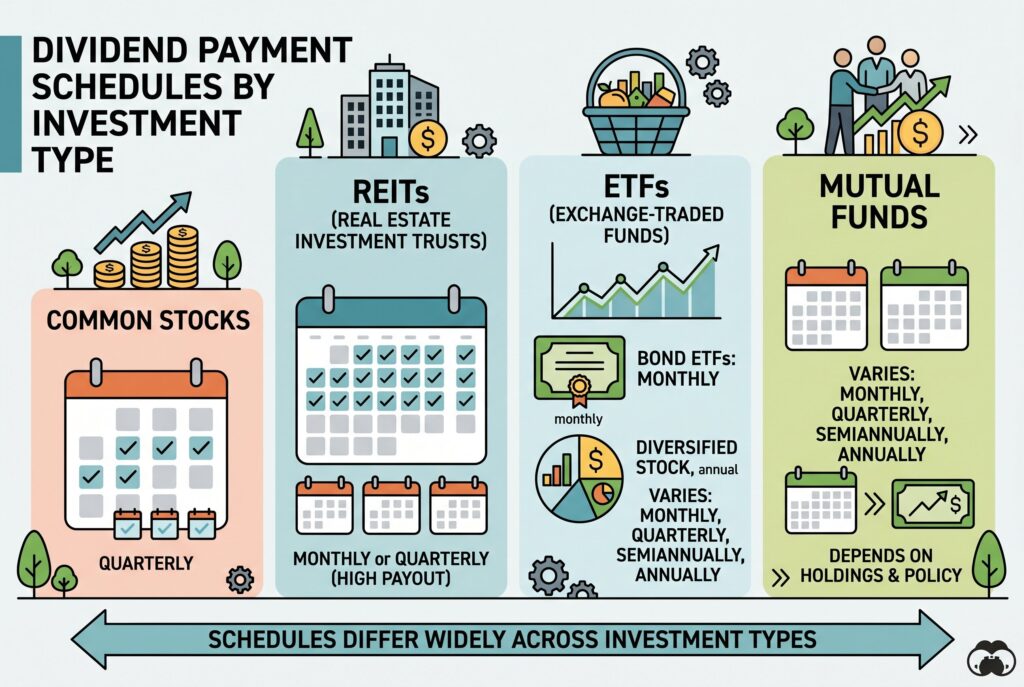
Common stocks usually pay quarterly dividends, but funds and income-focused assets can work differently. REITs often appeal to income investors because they are required to distribute much of their taxable income, and many pay monthly or quarterly. ETFs and mutual funds may pay monthly, quarterly, semiannually, or annually depending on their holdings and fund policy. Bond ETFs often pay monthly because the underlying bonds generate regular interest income. This is why dividend frequency depends not only on the company, but also on the investment type. A dividend stock, REIT, ETF, and mutual fund may all follow different schedules.
Dividend Taxes: What You Need to Keep
Dividends are usually taxable unless they are held in certain tax-advantaged accounts. Qualified dividends may receive lower long-term capital gains tax rates if they meet IRS requirements. Ordinary dividends are generally taxed as ordinary income. Taxes reduce your real return, so dividend income isn’t the same as after-tax income. If you invest for cash flow, always consider whether the dividend is qualified, what account holds the investment, and how taxes affect your net payout.
FAQs About Dividend Payouts
What is dividend yield and does it change how often I get paid?
Dividend yield measures annual dividend income as a percentage of stock price. It doesn’t decide how often you get paid. A stock can have a high dividend yield and still pay quarterly, monthly, or irregularly.
How to calculate dividend payout ratio?
Dividend payout ratio compares dividends paid to company earnings. A simple formula is annual dividends per share divided by earnings per share. This helps investors judge whether a dividend may be sustainable.
How often do dividends pay if I own ETFs?
ETF dividends may pay monthly, quarterly, semiannually, or annually. The schedule depends on the fund’s structure and the income produced by its holdings.
Final Thoughts
So, how often are dividends paid? Most U.S. dividend stocks pay quarterly, but monthly, semiannual, annual, and irregular payouts also exist. The key isn’t only knowing the dividend frequency. You also need to understand the declaration date, ex-dividend date, record date, payment date, taxes, and payout method. A strong dividend strategy is about getting paid sustainably, knowing when you qualify, and building a dividend calendar that matches your income goals.

