


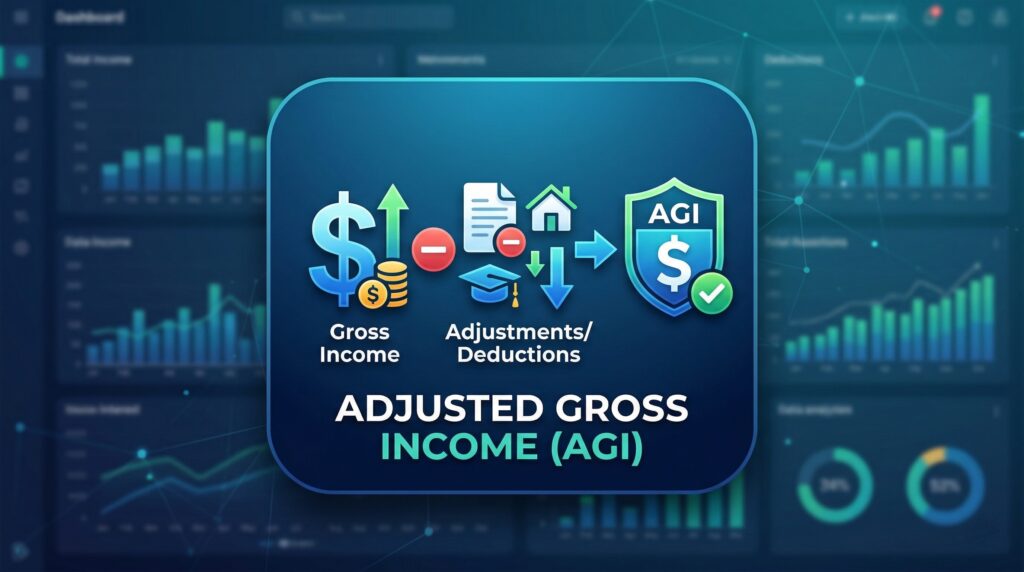
Adjusted Gross Income (AGI) is one of the most important numbers on your tax return, even though many people don’t pay much attention to it until filing season. It helps determine how much of your income is taxable and can affect your eligibility for valuable tax deductions, tax credits, and other financial benefits. Once you understand how AGI works, it becomes much easier to make informed tax decisions and avoid surprises when you file.
What Is Adjusted Gross Income (AGI)?
Adjusted Gross Income, usually called AGI, is your total income for the year minus certain allowed adjustments. It’s a key figure used by the IRS to calculate parts of your tax return and determine whether you qualify for specific tax benefits.
Your total income may include wages, salary, tips, business income, freelance earnings, interest, dividends, capital gains, rental income, retirement income, and some unemployment compensation, depending on your situation. After adding up the income that must be reported, you subtract eligible adjustments to arrive at your adjusted gross income.
That’s why AGI isn’t the same as your full earnings and it isn’t the same as your final taxable income either. It sits in the middle of the tax calculation process and serves as an important reference point for many other tax rules.
Why AGI Matters So Much

A lot of tax rules are built around AGI. If your adjusted gross income is too high, you may lose access to certain deductions, credits, or savings opportunities. If it’s lower, you may qualify for benefits that reduce your tax bill.
This is why AGI matters far beyond one line on a tax form. It can influence your eligibility for education-related tax breaks, retirement contribution deductions in some cases, child-related benefits, healthcare-related thresholds, and various income-based phaseouts.
It also matters for practical reasons. Lenders, financial aid programs, and some state-level programs may look at income figures related to your federal return. While each program has its own rules, adjusted gross income often plays a role in determining what kind of assistance or tax treatment you receive.
How Adjusted Gross Income Is Calculated
The formula is fairly simple in concept. You start with your gross income, then subtract certain approved adjustments.
Gross income includes the income you earned or received during the year from taxable sources. From there, you may be able to reduce that number through specific adjustments, sometimes called above-the-line deductions.
Common adjustments that may reduce AGI can include:
- Certain contributions to traditional retirement accounts
- Contributions to a Health Savings Account
- Student loan interest in qualifying cases
- Certain educator expenses
- Some self-employment-related deductions
- Contributions to specific self-employed retirement plans
- Self-employed health insurance deductions, when eligible
These adjustments are valuable because they can reduce your adjusted gross income even if you don’t itemize deductions. That makes them especially important for taxpayers who take the standard deduction but still want ways to lower the income used in later tax calculations.
AGI vs. Gross Income vs. Taxable Income
These three terms are often confused, but they mean different things. Gross income is the starting point. It includes the taxable income you received during the year from all relevant sources. Adjusted Gross Income is what you get after subtracting eligible adjustments from that gross income.
Taxable income comes later. After calculating AGI, you then subtract either the standard deduction or your itemized deductions, along with any other qualifying deductions, to determine the amount of income that is actually taxed. This distinction matters because a lower AGI can create a chain reaction. It may reduce taxable income directly, and it may also improve your eligibility for credits or deductions tied to income thresholds. In other words, lowering AGI can sometimes help in more than one way.
How AGI Affects Your Taxes

Your AGI affects your taxes because it’s used as a measuring point throughout the tax return. A lower adjusted gross income may help you qualify for benefits or reduce the impact of phaseouts. A higher AGI can do the opposite.
For example, some tax credits and tax deductions become limited or unavailable once income rises above certain levels. AGI can also affect the deductible portion of certain expenses in situations where the tax code applies percentage-based thresholds.
This is one reason tax planning should never focus only on your refund. The bigger question is how your income is structured and whether there are legal ways to reduce your adjusted gross income before your return is finalized.
People often look for ways to cut taxes only at filing time, but many of the most effective AGI-related decisions happen during the year. Retirement contributions, HSA funding, and self-employment planning are just a few examples of actions that may influence AGI before tax season arrives.
Common Situations Where AGI Becomes Especially Important
Adjusted Gross Income matters for nearly everyone, but it becomes especially important in certain financial situations.
If you’re saving for retirement, AGI may affect whether contributions are deductible or whether you qualify for related tax advantages. If you’re paying student loan interest, AGI may influence whether that deduction is available. If you have children or dependents, income thresholds may shape your access to valuable family-related tax benefits.
It also matters for people with freelance or self-employment income. Business owners and independent contractors often have more flexibility in tax planning, but they also need to be more careful. Because income and expenses can vary from year to year, AGI management becomes a bigger part of their overall financial strategy. Homeowners, investors, and people receiving multiple sources of income may also need to watch their AGI closely. The more complex your finances become, the more important this number usually gets.
Smart Ways to Lower Adjusted Gross Income
One of the most practical ways to improve your tax position is to reduce AGI legally when possible. That doesn’t mean chasing deductions blindly. It means using tax rules that fit your real financial goals.
Contributing to a traditional retirement account may help lower AGI if you qualify. Funding a Health Savings Account can also reduce AGI for eligible individuals while helping with current or future medical costs.
If you’re self-employed, keeping accurate records can make a major difference. Legitimate business-related deductions and eligible adjustments can affect not only your current tax bill but also your AGI and access to other tax benefits.
Student loan interest may also reduce AGI in qualifying situations. Educators and certain self-employed individuals may have additional opportunities depending on their expenses and filing details.
The key is to plan before the year ends. Waiting until the last minute often limits your choices. When AGI is part of your year-round tax strategy, you’re more likely to find opportunities that support both your taxes and your broader financial goals.
Why Understanding AGI Can Improve Financial Decisions
Knowing your adjusted gross income helps you think more clearly about taxes all year, not just when you file. It gives you a better sense of how income, deductions, and financial choices connect.
That can improve decisions around retirement savings, healthcare planning, education costs, side income, and major life changes such as marriage or parenthood. It can also help you estimate whether a tax move is likely to produce real savings or simply sound helpful on the surface. The more you understand AGI, the easier it becomes to plan ahead instead of reacting under pressure at filing time.

Conclusion
Adjusted Gross Income (AGI) is one of the most important figures in the tax system because it helps determine how much of your income is taxed and whether you qualify for valuable tax credits, tax deductions, and other income-based benefits. It sits between your gross income and your taxable income, making it a central part of how your tax return works.
Understanding AGI can help you make smarter choices throughout the year, especially when it comes to retirement contributions, health savings, self-employment planning, and managing eligibility for tax benefits. When you pay attention to this number and use legal strategies to manage it carefully, you put yourself in a stronger position to lower your tax bill and keep more of your money.

