Holiday home insurance covers second homes, vacation properties, and short-term rentals that aren’t occupied year-round. Unlike standard homeowners insurance, it’s designed for risks such as vacant periods, guest stays, theft, weather damage, and liability claims.
Using a standard homeowners policy for a property rented through Airbnb, Vrbo, or direct bookings can lead to denied claims. A proper holiday home policy covers both personal and rental risks, including property damage, liability, and lost rental income.
Why Standard Home Insurance for Rental Property Fails
Home insurance for rental property fails because the insurer priced the policy around normal owner occupancy. When you live in a home, you notice a dripping pipe, broken lock, storm damage, or electrical problem quickly. A holiday home may sit empty for weeks. That delay turns small problems into major claims. Un-occupancy limits are one of the biggest traps. Many standard policies restrict coverage if the home is empty for a long continuous period, often 30 to 60 days. If a pipe bursts while the house is empty and no one checks it for three weeks, the insurer may argue that the risk wasn’t disclosed or that the policy conditions weren’t met.
Rental use creates another issue. A paying guest changes the property from personal use to income producing use. If someone slips on wet decking, falls by the pool, or injures themselves on a loose stair, you may need public liability protection. A normal homeowners policy may not treat that injury as a standard household accident because the stay was commercial. That’s why holiday home cover must match how the property is actually used. A family only second home, occasional guest rental, full time Airbnb, and long term rental aren’t the same insurance risk.
The Airbnb Dilemma: Short-Term Rental Insurance
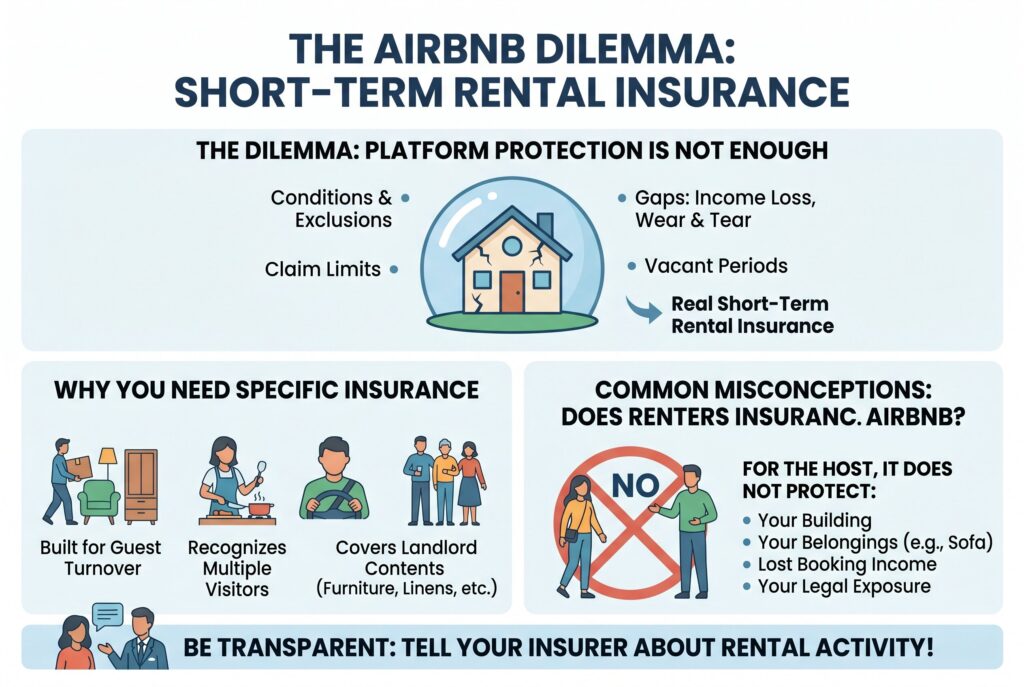
Many hosts assume platform protection is enough. It isn’t. Airbnb and Vrbo style protections can be helpful, but they shouldn’t replace real short-term rental insurance. Platform programs may have conditions, exclusions, claim limits, documentation requirements, and gaps around income loss, wear and tear, gradual damage, off platform bookings, or periods when the property is vacant.
Short-term rental insurance is built for guest turnover. It recognizes that strangers will use the home, move furniture, cook, shower, park cars, invite visitors, and sometimes damage things without reporting them. It can also cover landlord owned contents, such as furniture, appliances, linens, kitchenware, smart locks, and outdoor equipment.
2026 Cost Drivers: Weather, Water, and Tax Shifts
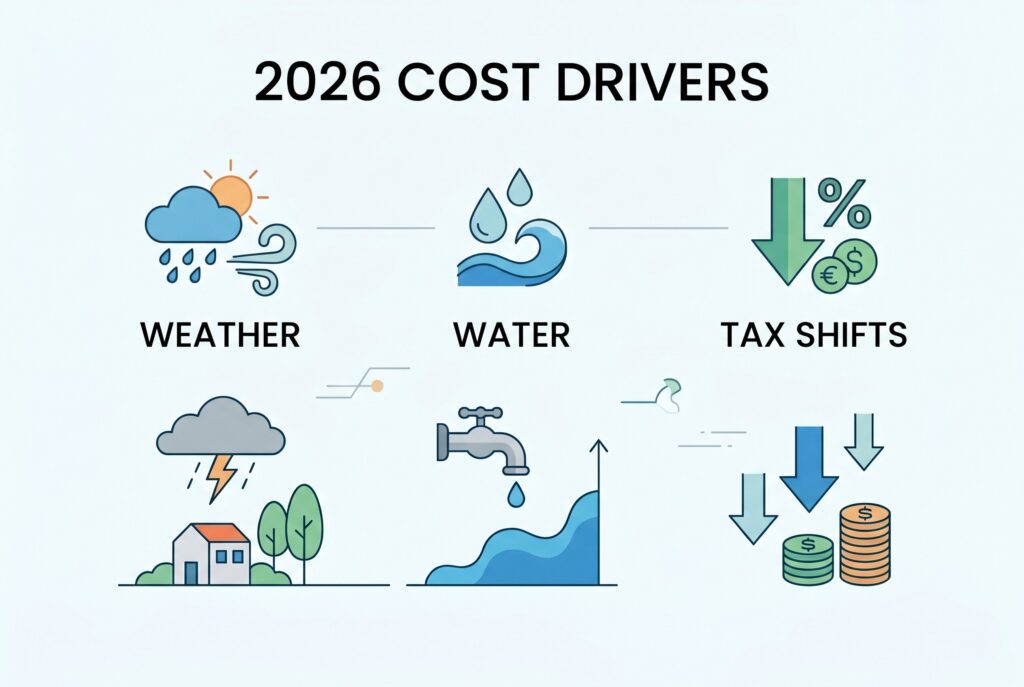
Holiday home insurance costs are rising because insurers are seeing more expensive claims. Weather is one reason. Storms, flooding, wildfire exposure, wind damage, and coastal risk all affect premiums. A small cottage in a mild inland area may be easier to insure than a beach house exposed to storm surge or a mountain cabin at wildfire risk.
Escape of water is another major driver. A burst pipe in a primary home may be caught within hours. In a holiday home, water can run for days. That is why insurers may charge higher deductibles for water damage, require winterization, ask for heating minimums, or expect regular inspections during empty periods.
Security also matters. A property that sits empty can attract theft, vandalism, and unauthorized entry. Smart cameras, monitored alarms, leak detectors, strong locks, and local property managers can help reduce risk.
For UK style furnished holiday lets, tax changes after April 2025 have also made owners more sensitive to operating costs. Even outside the UK, the broader lesson still applies: when margins tighten, insurance should be optimized, not weakened.
Smart Mitigation: How to Lower Your Premium
You can lower your premium without making reckless coverage cuts. Start with accurate disclosure. Tell the insurer how often the home is rented, whether bookings are short-term or long-term, how many days it may sit empty, and whether you use platforms or direct bookings.
- Install smart security. Cameras, alarms, water leak detectors, smart thermostats, and remote locks can reduce claim risk. In some cases, they may also support discounts or better underwriting.
- Use local checks. A cleaner, neighbor, caretaker, or property manager should inspect the home during empty periods. Keep inspection logs with dates and photos. If a claim happens, proof of responsible maintenance can matter.
- Screen guests carefully. Set house rules, require deposits when appropriate, document the property before and after stays, and don’t file tiny claims for ordinary wear and tear. A clean claims history can be more valuable than one small payout.
- Review deductibles. A higher deductible may reduce the premium, but don’t choose an amount you couldn’t afford after a storm or water claim.
Conclusion
The best holiday home insurance policy isn’t always the cheapest one. It’s the policy that matches your real use: personal second home, short-term rental, holiday let, Airbnb property, or long-term rental. Read exclusions for unoccupied periods, wear and tear, poor maintenance, flood, earthquake, guest damage, business activity, and loss of rental income.
Before renewal, compare quotes, update rebuild cost, check contents limits, review public liability, and confirm that short term rental insurance is included if you host paying guests. A holiday home should feel like an asset, not a hidden insurance trap. The safest approach is simple: be honest about use, protect the property remotely, keep inspection records, and buy cover for the way the home actually earns money.