


For a $400,000 home, homeowners insurance in 2026 typically costs $1,500 to $3,636 per year, assuming about $400,000 in dwelling coverage. However, premiums can be much higher in areas prone to hurricanes, wildfires, hail, or other costly risks.
Keep in mind that insurers base premiums on replacement cost, not your home’s purchase price or land value. Your rate also depends on factors such as your ZIP code, roof age, deductible, claims history, credit-based insurance score, and coverage options. The best policy is one that provides enough coverage to rebuild your home, replace your belongings, and cover liability if a major loss occurs.
Decoding the $400,000 Question: Market Value vs. Coverage
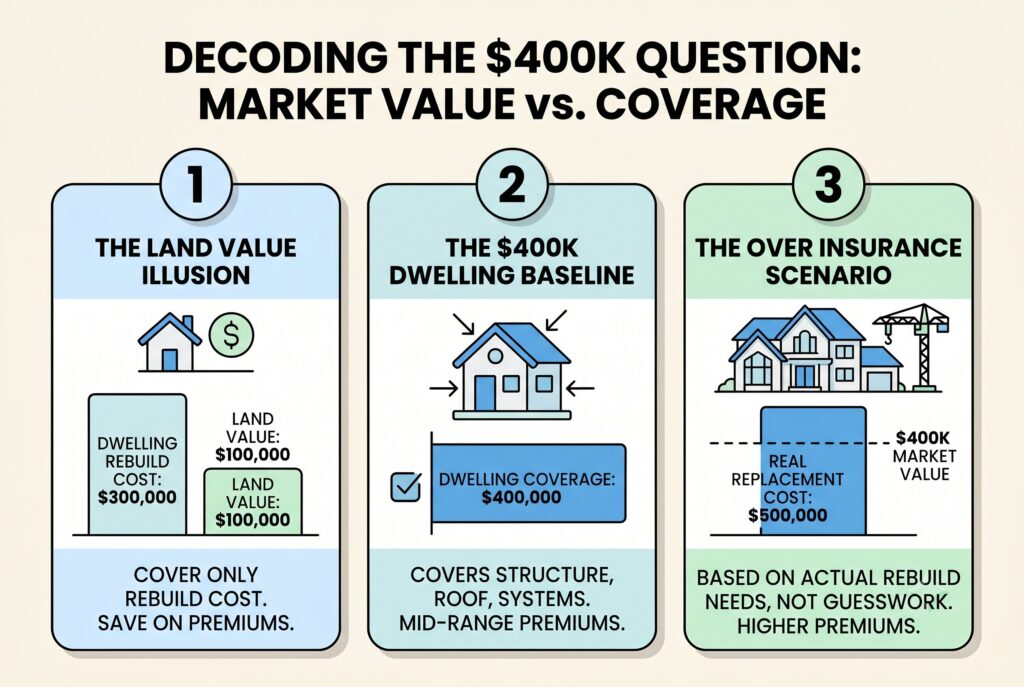
1. The Land Value Illusion
A $400,000 house may include $100,000 or more in land value. That land may be valuable, but it doesn’t need dwelling coverage. If the structure itself would cost only $300,000 to rebuild, insuring the full purchase price may make your premium unnecessarily expensive. This is why homeowners insurance on a $400K home should begin with rebuild cost, not market value.
2. The $400K Dwelling Baseline
If your real replacement cost is $400,000, then $400,000 dwelling coverage is the correct baseline. This pays to repair or rebuild the main structure, including walls, roof, foundation, built in systems, and attached features. For many homeowners, this scenario puts the premium near the middle of the 2026 average range.
3. The Over Insurance Scenario
Some homes worth $400,000 on the market may need $500,000 in dwelling coverage because of custom finishes, expensive labor, complex roofs, or strict building codes. That can push the premium much higher. It isn’t automatically wrong, but it should be based on a real replacement cost estimate, not fear or guesswork.
The 2026 Hidden Costs: What Spikes Your Premium?
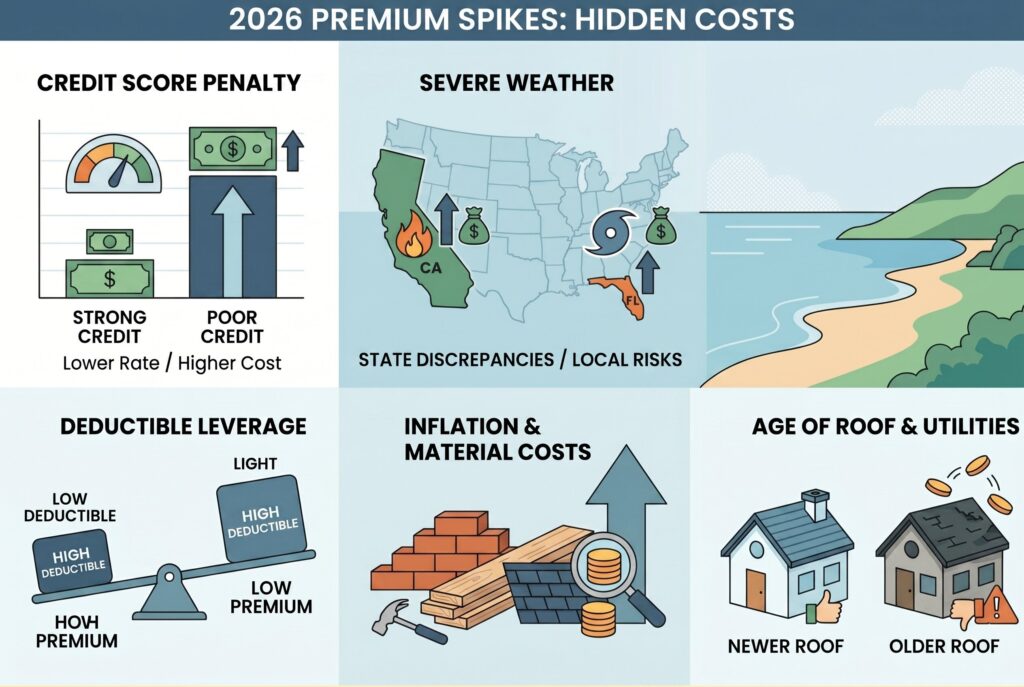
The Credit Score Penalty
In many states, insurers can use a credit based insurance score to help price your policy. Strong credit can lower your homeowners insurance rates 2026, while poor credit can make the same house much more expensive to insure. This can feel unfair, but it remains a major pricing factor where allowed.
Severe Weather and State Discrepancies
Home insurance by state can change the entire quote. A $400,000 home in a lower risk state may cost close to $1,500 per year, while a similar home in Florida can exceed $7,000 because of hurricane risk. Wildfire exposure in California, hail in Texas, and tornado risk in Oklahoma can also push premiums higher.
The Deductible Leverage
Your homeowners insurance deductible is the amount you pay before insurance starts paying. A low deductible such as $500 can make the policy feel safer, but it often raises the premium. A higher deductible can reduce the bill, but only choose it if you can comfortably pay that amount after a loss.
Inflation and Material Costs
Construction inflation is one reason the cost of homeowners insurance keeps rising. Lumber, roofing, electrical work, plumbing, permits, and skilled labor all cost more than they used to. If insurers expect higher claim payouts, they raise premiums to match that risk.
Age of Roof and Utilities
An older roof is a red flag. So are outdated electrical panels, aging plumbing, old HVAC systems, and poor maintenance. A newer roof, upgraded wiring, and modern safety systems can help you qualify for better pricing. An old roof may even lead to limited coverage or nonrenewal in some markets.
Essential Coverages Beyond the Structure
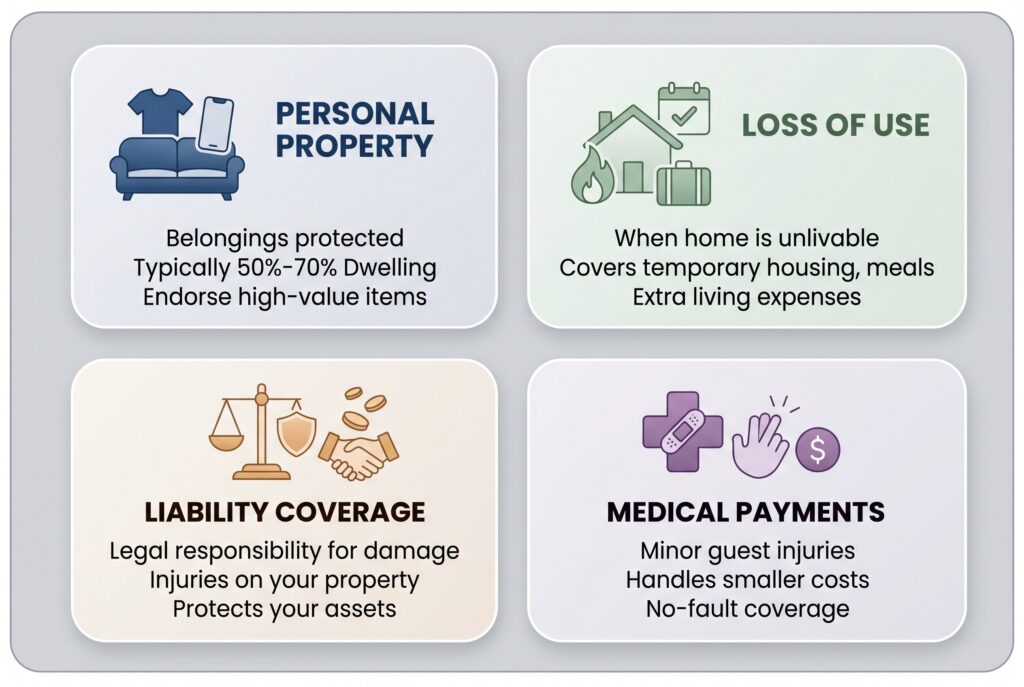
Personal Property Coverage
Personal property insurance protects furniture, clothing, electronics, appliances, tools, and other belongings. It’s often set around 50% to 70% of dwelling coverage. On a $400,000 dwelling limit, that could mean $200,000 to $280,000 in protection. High value items like jewelry, art, or collectibles may need extra endorsements.
Loss of Use
Loss of use coverage pays extra living costs if a covered event makes your home unlivable. If a fire forces you into a hotel or rental home for months, this coverage can pay for temporary housing, meals, storage, and other added expenses.
Liability Coverage
Liability coverage protects you if someone is injured on your property or if you’re legally responsible for damage. A common minimum is $300,000, but homeowners with savings, investments, pools, dogs, or higher risk exposure may want more.
Medical Payments
Medical payments coverage handles smaller guest injuries without requiring a lawsuit. Limits are often modest, such as $1,000 to $5,000, but this coverage can help resolve minor accidents quickly.
Smart Fixes to Lower Your Bill
Policy Bundling
Bundling home and auto insurance can reduce your premiums by 10% to 20% through multi-policy discounts. However, don’t focus solely on the discount. Compare the total cost of the bundled package with separate quotes from other insurers, as a bundle may not be a good deal if one of the policies is overpriced.
Wind Mitigation and Smart Home Tech
Certain home upgrades can help lower your insurance premiums by reducing the risk of damage or loss. Features such as storm-resistant roofing, impact-resistant windows, monitored alarm systems, smoke detectors, leak sensors, and security cameras make homes safer and less costly to insure. Because these improvements reduce the likelihood of claims, many insurers offer discounts to homeowners who install them.
Claim History Management
Avoid filing small insurance claims unless necessary. If the repair cost is only slightly higher than your deductible, paying for the damage out of pocket may be the better financial decision. Filing multiple claims can increase your risk profile, leading to higher homeowners insurance premiums for several years and potentially limiting your access to the best rates.
Conclusion
So, how much homeowners insurance do you need for a $400,000 house? The answer depends on your home’s replacement cost, not its purchase price. Once you’ve determined that amount, choose enough coverage for your belongings, liability, and additional living expenses. While homeowners insurance for a $400,000 house varies by location, deductible, and other risk factors, the right policy should leave you financially prepared to rebuild and recover after a covered loss.
Related Articles
How Much Is Homeowners Insurance on a $150,000 House? 2026 Breakdown

