
Your dog has an accident on the rentals’ carpet. Your first thought may be, “That’s what renters insurance is for.” In most cases, it isn’t. The reason has less to do with your pet and more to do with who legally owns the carpet.
Pet damage and carpet damage are among the most misunderstood parts of renters insurance. Many renters assume they’re automatically covered, but coverage is much more limited. Renters insurance primarily protects your personal belongings and provides liability coverage for damage or injuries you cause to others.
If your pet injures someone or damages someone else’s property, liability coverage may help. However, pet damage to your own furniture, rugs, or belongings is typically excluded. Likewise, carpet damage is often the landlord’s property, so stains, burns, and pet-related damage are usually deducted from your security deposit instead of being covered by renters insurance.
Does Renters Insurance Cover Pets?
The Pet Liability Reality: What Is Actually Covered?
Most standard renters policies include personal liability coverage, and this is the piece pet owners are usually hoping for. Coverage limits commonly start around $100,000 and are often available up to $300,000 or $500,000 depending on the insurer and the plan you choose.
This coverage generally applies when your pet accidentally injures someone or damages another person’s property and you’re legally responsible for the loss. The insurer will review the circumstances of the incident, your policy terms, and any exclusions before deciding whether the claim is covered. For example, if your dog bites a delivery worker, your cat injures a guest who needs medical treatment, or your pet damages a friend’s expensive camera, liability coverage can help pay covered medical bills, legal defense costs, settlements, or property damage claims.
This is a different type of protection than pet insurance. Pet insurance pays for your own pet’s veterinary care when they’re sick or injured. Renters insurance protects you when your pet creates legal liability toward someone else. If your dog needs surgery, renters insurance won’t help with that bill. If someone files a covered liability claim because of something your pet did, your renters policy may step in.
If your dog’s breed is restricted or excluded by your insurer, or you simply want a higher safety net, ask about a personal umbrella policy. Many insurers offer $1 million or more in additional liability coverage as a relatively affordable add-on, and some umbrella policies will extend coverage to dogs the base renters policy excludes. It’s worth a five-minute phone call if you own a breed on a restricted list.
What Renters Insurance Usually Doesn’t Cover for Pets
Renters insurance usually doesn’t cover damage your pet causes to your own belongings. If your puppy chews your laptop cord, your cat destroys your curtains, or your dog tears your sofa, that is normally your loss. Insurers often treat this as preventable household damage, not a sudden covered event. Damage to the rental unit is also commonly excluded. Pet urine in carpet, claw marks on doors, scratched flooring, chewed baseboards, and lingering odors are usually handled through the lease, pet deposit, pet fee, or security deposit. Your landlord may charge you directly.
Breed restrictions can also create problems. Some insurers exclude certain dog breeds or animals with bite history. Commonly restricted breeds may include Pit Bulls, Rottweilers, Doberman Pinschers, Akitas, Chow Chows, German Shepherds, and wolf hybrids. The rules vary by insurer and state, so don’t assume your dog is covered just because you bought a renters policy.
One important exception: service animals and legitimate emotional support animals are generally treated differently under the Fair Housing Act. Landlords typically cannot apply pet deposits, pet rent, or breed restrictions to a qualifying service animal or ESA, even in a building with a no-pets policy. This is a landlord-tenant law matter rather than an insurance one, but it’s worth knowing if it applies to your situation.
Does Renters Insurance Cover Carpet Damage?
Why Does Renters Insurance Cover Carpet Damage Usually End in No?
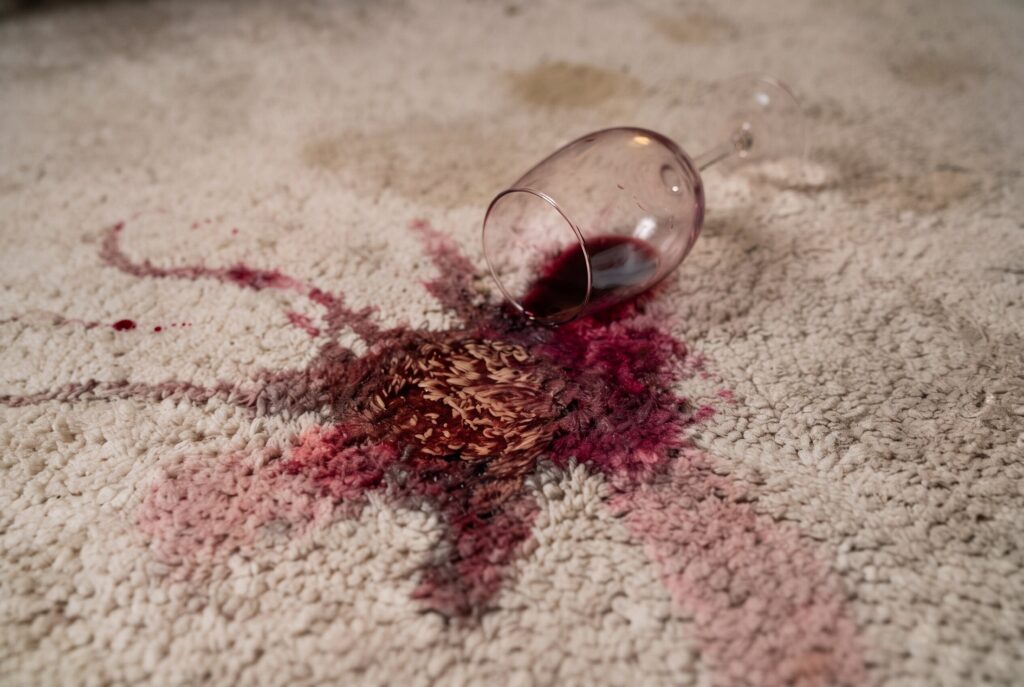
The core issue is ownership. Renters insurance is designed to protect your personal property. Wall-to-wall carpet is usually part of the rental unit, which means it belongs to the landlord. Your policy doesn’t normally insure the landlord’s building materials.
If a fire, burst pipe, or covered water event damages the carpet, the landlord’s insurance may handle the building repair. Your renters policy may cover your damaged belongings, such as clothes, electronics, furniture, or an area rug you bought yourself. But if the carpet damage comes from your actions, the situation changes. A red wine spill, pet stain, cigarette burn, candle burn, makeup stain, or careless move out damage may be treated as tenant caused damage. Renters insurance often won’t help because it isn’t there to protect you from ordinary negligence inside your own unit.
Pet Damage to Carpet: The Three Scenarios
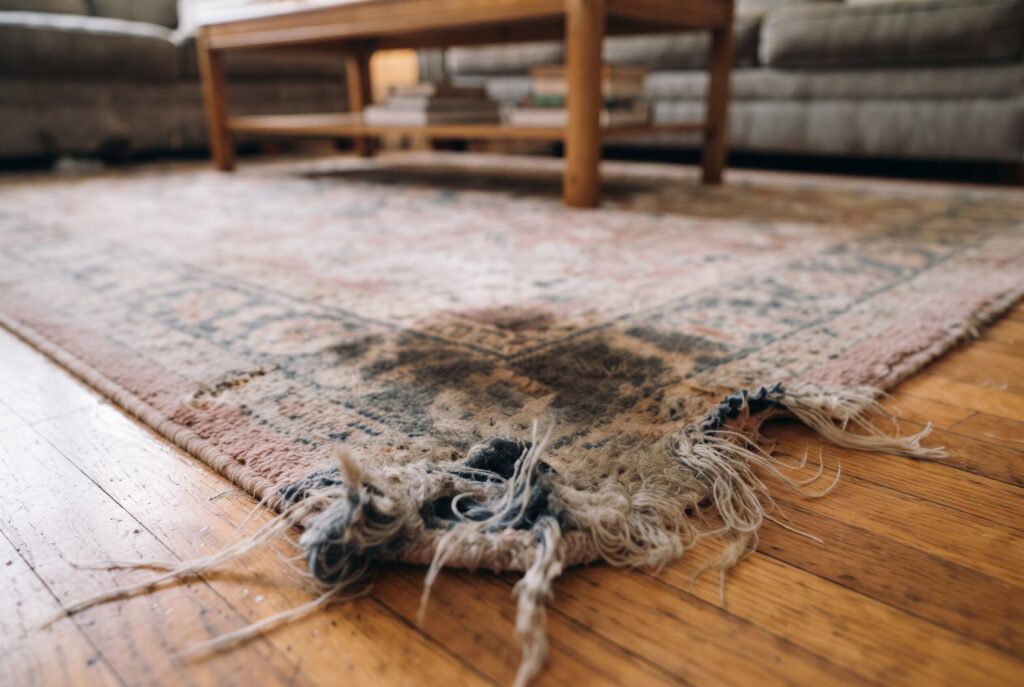
Your Pet Damages Your Own Rug
If your dog stains, tears, or chews an area rug that you purchased, renters insurance generally won’t cover the loss. Although the rug is your personal property, most renters policies exclude damage caused by your own pet. Because there is no liability to another person, you’ll typically be responsible for cleaning, repairing, or replacing the rug yourself.
Your Pet Damages the Landlord’s Carpet
Wall-to-wall carpet is usually considered part of the rental unit and belongs to the landlord. If your dog urinates on the carpet, scratches it, or leaves permanent odors, the cost of cleaning or replacement is typically handled under your lease rather than your renters insurance policy. The landlord may deduct the cost from your pet deposit or security deposit, and if the damage exceeds the deposit, you could be billed for the remaining amount.
Your Pet Damages Someone Else’s Property
This is the scenario where renters insurance is most likely to provide protection. Imagine your dog damages a neighbor’s area rug while visiting their apartment. Because the damaged property belongs to someone else, the claim may fall under your personal liability coverage.
Whether the insurer pays depends on the facts of the claim. In general, you must be legally responsible for the damage, the incident must be accidental rather than intentional, and the loss must not fall under a policy exclusion, such as a breed restriction or another limitation in your policy. If those requirements are met, the insurer may pay for the repair or replacement of the damaged rug, subject to your liability limit and the terms of your policy.
A renter in Austin experienced both situations. Her cat scratched the carpet near the patio door and also chewed through the edge of an area rug she owned. She paid to replace the rug herself. The carpet damage cost about $600, which exhausted her $500 security deposit, and she later received a $100 bill for the remaining balance after moving out. Her renters insurance did not cover either loss because neither claim involved someone else’s property.
The Security Deposit Trap
For carpet damage, your biggest financial battle usually isn’t with the insurance company. It’s with the landlord. Landlords may try to charge for carpet cleaning, patching, odor removal, or full replacement. Some charges may be fair. Others may be excessive, especially if the carpet was already old or worn before you moved in. Normal wear and tear carpet rental issues should not be treated the same as tenant damage.
This is where documentation protects you. On move in day, take clear photos and videos of every room. Focus on stains, burns, faded areas, frayed edges, pet odors, and worn traffic paths. Send the file to yourself by email so there’s a timestamp. Complete the move in condition form carefully and keep a copy. Before moving out, consider professional cleaning if your lease requires it or if the carpet needs it. A $100 to $150 receipt for steam cleaning can be stronger than arguing after the fact.
The Depreciation Rule Renters Forget
The carpet doesn’t last forever. If a landlord tries to charge you for brand new carpet after you lived in the unit for years, ask about age and depreciation. In many disputes, the remaining useful life of the carpet matters. A tenant may not fairly owe full replacement cost for carpet that was already near the end of its expected life. This doesn’t mean you can destroy old carpet without consequences. It means replacement charges should be reasonable, documented, and connected to actual damage beyond normal wear.
Frequently Asked Questions
Can My Landlord Charge Me for Carpet Replacement After I Move Out?
Yes, but generally only for damage beyond normal wear and tear and in proportion to the carpet’s remaining useful life. In most cases, a landlord cannot charge the full replacement cost for carpet that was already old or close to the end of its expected lifespan.
Is a Pet Deposit Refundable?
Usually, yes. Unlike a pet fee, which is typically nonrefundable, a pet deposit is generally refundable if there is no pet-related damage beyond normal wear and tear. The exact rules vary by state and your lease agreement.
Does Renters Insurance Cover Dog Bites?
In many cases, yes. Renters insurance often covers dog bites through your personal liability coverage, provided the incident is accidental, you are legally responsible, and your policy does not exclude your dog’s breed or other specific circumstances.
Do I Need Both Pet Insurance and Renters Insurance?
For many pet owners, the answer is yes because they serve different purposes. Renters insurance helps protect you if your pet injures someone or damages someone else’s property, while pet insurance helps pay for your own pet’s eligible veterinary expenses. One does not replace the other.
Conclusion
Renters insurance can be valuable for pet owners because personal liability coverage may help if your pet accidentally injures someone or damages another person’s property. However, it won’t cover everything. Damage to your own belongings, vet bills, and damage to your rental unit are typically excluded.
Does renters insurance cover pet damage to carpet? In most cases, no. Damage to a landlord’s carpet is usually handled through your lease and security deposit rather than your insurance policy. Before moving in, review your lease, confirm your liability coverage, and document the condition of the carpet with photos. Insurance helps protect you from liability, while good documentation helps protect your security deposit.