



These days, with living expenses climbing, job stability uncertain, and many people balancing work with personal life, passive income is gaining attention as one of the most talked-about but often misunderstood financial ideas in the U.S.
You don’t have to be rich, a financial guru, or even own a business to create passive income streams. What you need is a solid plan, realistic goals, and the drive to start.
This article brings together advice from top financial experts, real-life examples, and the latest earning trends. It will help you grasp what passive income is and show you how regular people can create it.
What Is Passive Income? (An Easy Explanation)
Passive income is money you earn with little ongoing effort after the initial setup. Common examples include dividends from stocks, rental income from property, earnings from YouTube or affiliate programs, and royalties from creative work like books or music.
Unlike income you earn from a job or freelance gig, passive income keeps coming in even if you aren’t actively working. But setting it up takes effort, and you might need to maintain it.

Why Building Passive Income Matters More Than Ever
Many people in the U.S. are facing real financial pressure. Inflation continues to erode savings, layoffs are affecting major industries, and housing costs are rising faster than wages. At the same time, more people want financial freedom without taking on a second full-time job, while uncertainty around retirement planning adds even more stress.
Passive income isn’t a shortcut to instant wealth, but it can provide meaningful support. Even modest streams can act as a safety net, reduce stress during job changes, increase monthly cash flow, and help you reach goals like paying off debt, saving for a home, or retiring sooner. Over time, these income streams can contribute to lasting financial security.
The key is that you don’t need to start big. Many people begin by investing or saving just $20 or $50 a month and gradually increase their contributions as their situation improves.
Before You Get Started: Setting Realistic Goals
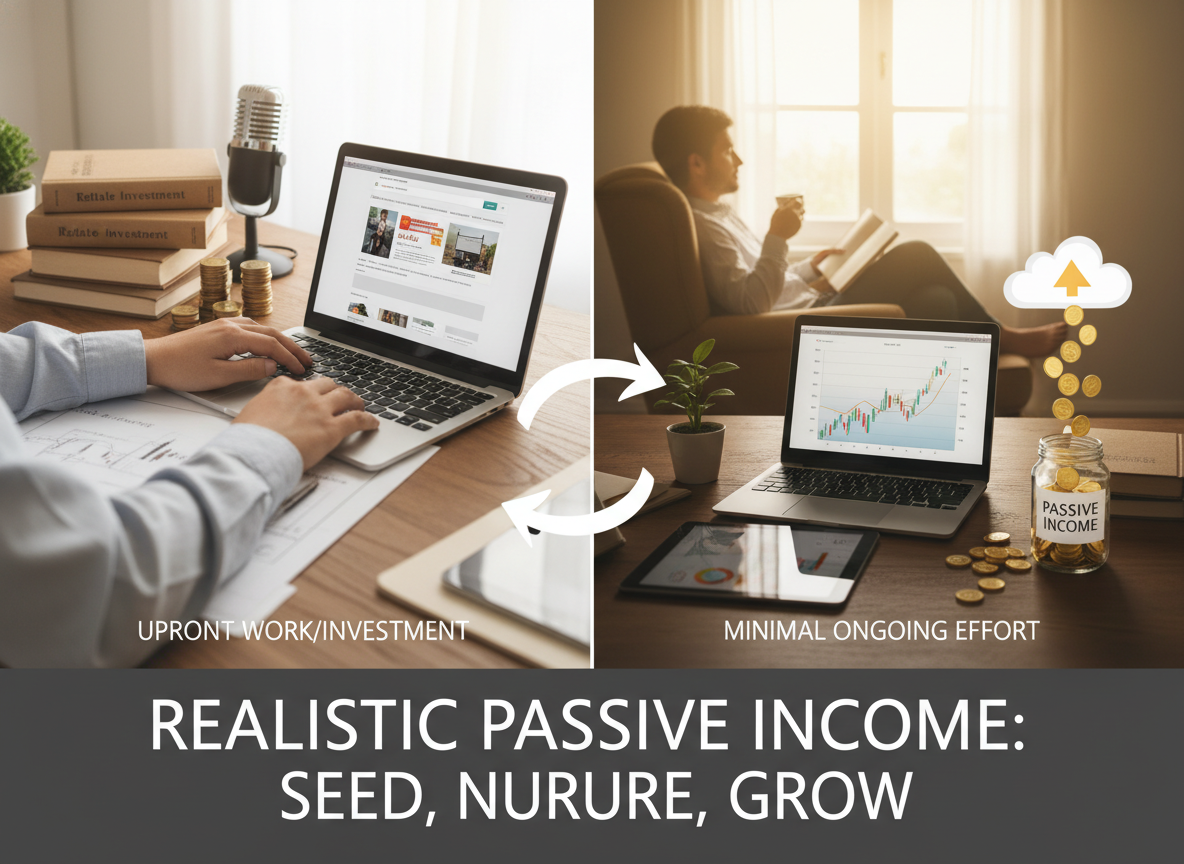
The mindset behind successful passive income is about realistic expectations. Every income stream requires an upfront investment of time, money, or creative energy before it becomes more hands-off.
Most people who succeed start small by focusing on a single income source. They take the time to understand how it works, improve it, and make it reliable before trying to expand. Attempting to build multiple income streams at once often leads to overwhelming and slow progress.
Once a solid foundation is in place, diversification becomes important. Relying on just one source of income is risky, while gradually building two or three creates greater stability. Today, this process is easier than ever thanks to tools like AI software, automated investing, and fractional real estate, opportunities that were once only available to the wealthy.
The 6 Main Types of Passive Income
1. Earning Through Investments
Dividend Stocks
Businesses share part of their earnings with shareholders usually every three months. This works well for those seeking both steady earnings and long-term growth.
Dividend stocks tend to offer more stable price movements than growth stocks and provide regular income through payouts. Reinvesting those dividends can also help compound returns and grow earnings faster over time.
On the downside, dividend investing usually requires upfront capital to get started, and dividend payments aren’t guaranteed, they can increase, decrease, or be suspended depending on company performance.
Dividend ETFs and Index Funds
They’re a great option if you want simple investing with built-in diversification, allowing you to spread risk without picking individual stocks. With broad market exposure, lower costs, steady dividend payouts, and less risk than owning a single stock, they offer an easier and more balanced way to invest.
Bonds and Bond Funds
This means you loan money to governments or businesses and receive interest payments in return. This type of investment is generally safer than stocks, provides a reliable income source, and helps keep your overall investment portfolio balanced. However, the tradeoff is that earnings are usually lower compared to stocks.
REITs (Real Estate Investment Trusts)
If you want real estate earnings without the hassle of owning a property, REITs will be a good fit. They offer attractive dividend income, and they can be easily bought and sold like stocks. However, you should consider carefully because they react strongly to changes in interest rates.
High-Yield Savings & Money Market Funds
These options may not be thrilling, but they’re solid choices if you want stress-free passive income. They work well for setting aside emergency cash, saving money, and securing low-risk earnings.
2. Real Estate-Based Passive Income

Rental Properties
Owning traditional long-term rentals brings in reliable and consistent income. But they also have some challenges, such as dealing with maintenance, tenant problems, and significant initial investment.
Short-Term Rentals (Airbnb / Vrbo)
Renting out a full property, a spare room, or even your home while you’re away can create an additional income stream with flexible hosting options and the potential to earn more than traditional long-term rentals.
However, this type of income can be unpredictable since demand often depends on the season, frequent guest turnover requires ongoing effort, and local rules or regulations may be complex and restrictive.
Renting Out a Room
This is an affordable way to start small with fewer risks, offering steady monthly income and low setup expenses.
3. Ways to Earn Online with Digital Income
Short-form videos like YouTube Shorts, Instagram Reels, and TikTok are growing faster than ever, but they aren’t the only affordable and scalable ways to earn money online. Many people also create online courses using their expertise and sell them repeatedly through platforms like Udemy, Skillshare, or Teachable. Others earn by selling digital products while blogging and content creation can generate income through ads, sponsorships, and affiliate links. Starting a YouTube channel is also a good option, because well-made videos can continue producing income long after they’re published.
4. Making Money Through Sharing Economy
Even small assets can generate surprising income when used creatively. Many people rent out items they already own, such as tools, cameras, lawn equipment, or party supplies, to earn extra cash. Others make money by leasing parking spots in areas where parking is scarce, especially in busy cities. Some companies will even pay you to place advertisements on your car, turning your daily commute into an additional income stream.
5. Earning Passive Income Through Businesses
You can also explore business ideas that offer recurring income with relatively low barriers to entry. Vending machines can require modest startup costs and generate steady profits in high-traffic locations. Subscription boxes provide predictable monthly income once the systems are in place, and dropshipping lets you sell products without holding inventory, since suppliers handle storage and shipping for you.
6. Crypto and Digital Finance Today (Be Careful)
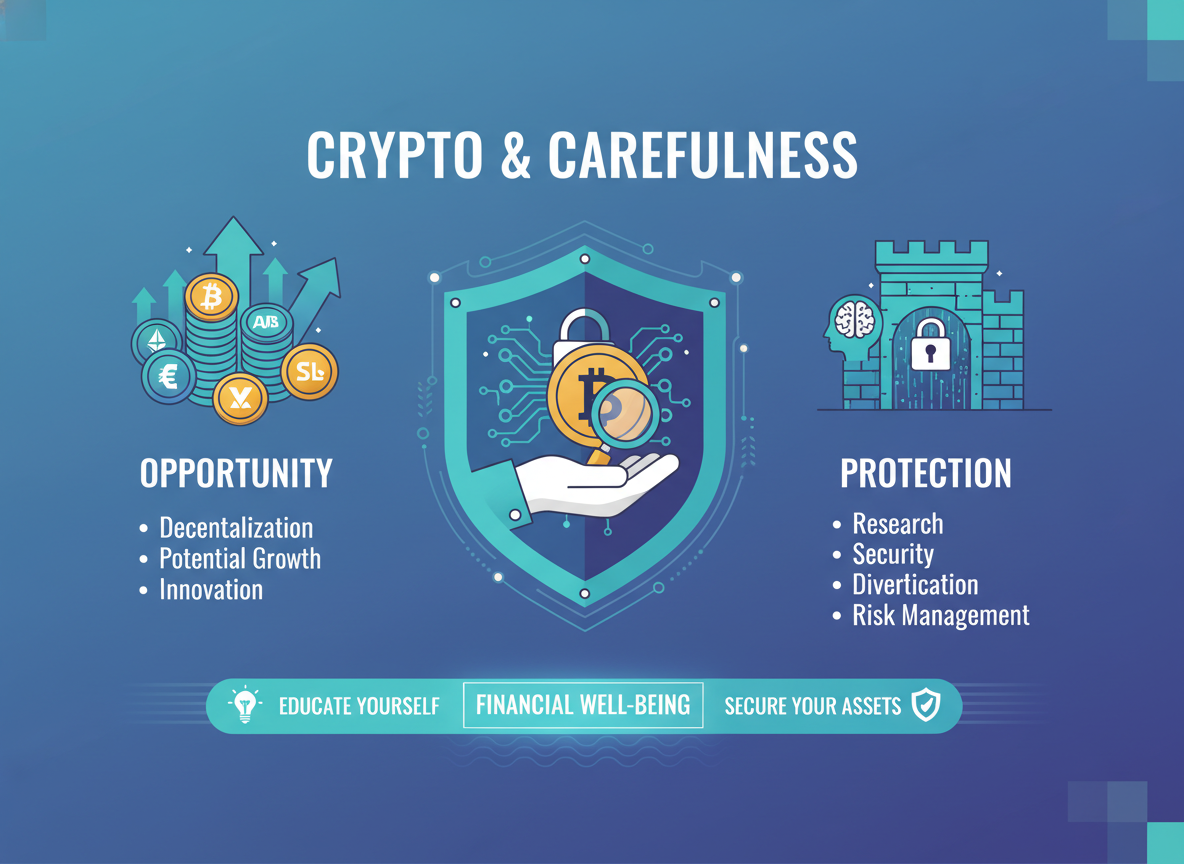
Cryptocurrency staking allows you to help validate blockchain transactions and earn rewards in return. However, it comes with risks, including price volatility and lock-up periods, so it may not be suitable for everyone.
How to Find a Passive Income Option That Fits You
You can use this simple framework to choose an option that fits your current situation. If you have very limited funds to start, focus on ideas that require more time than money, such as affiliate marketing, blogging or content creation, selling digital products, renting out items you already own, or building online courses.
If you have moderate funds available, you can balance both time and money. Options in this category include dividend stock ETFs, REITs, bonds or bond funds, high-interest savings accounts, short-term room rentals, and vending machine businesses. These approaches usually require some setup and ongoing attention, along with an initial investment.
If you have larger savings and less time to manage day-to-day work, higher-capital options may make sense. These include owning rental properties, investing in income-focused stocks, larger Airbnb investments, or participating in real estate partnership deals. These strategies can generate more scalable and hands-off income over time.
The Right Mindset: Common Misunderstandings About Passive Income
Newcomers often struggle because they assume passive income is quick and easy, that a large amount of money is required to start, or that they’re too busy to make it work. These beliefs can stop progress before it even begins.
In reality, passive income takes time to build, until one day it doesn’t. Consistent, steady effort matters more than short bursts of intensity. Even small wins count; the first $20 you earn is proof that your system works and can grow.
A Simple Way to Start (Get Going Today)
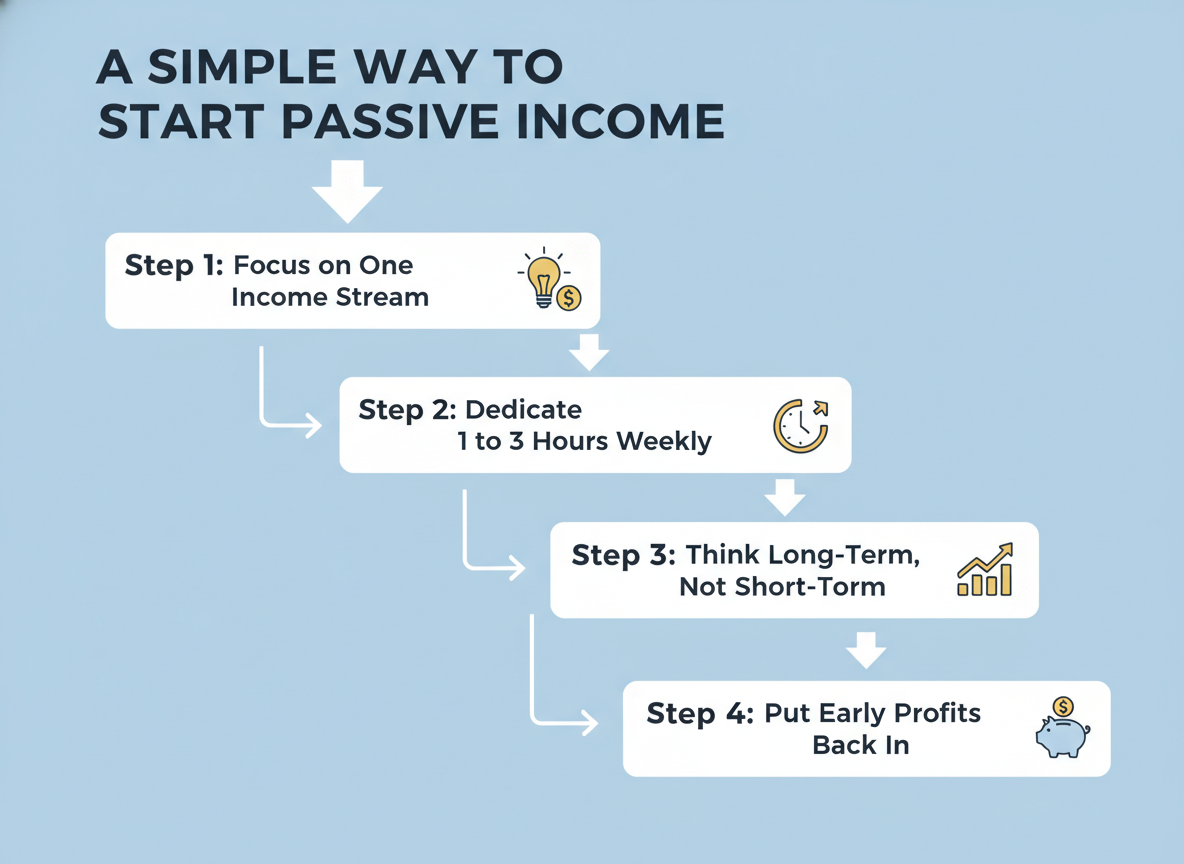
- Step 1: Focus on one income stream you can start now. Don’t get distracted by flashy ideas.
- Step 2: Dedicate 1 to 3 hours weekly. Stick to a small doable routine.
- Step 3: Think long-term, not short-term. True passive income grows over time.
- Step 4: Put early profits back in. Reinvesting helps build growth faster.
Final Thoughts: Anyone Can Build Passive Income, Not Just the Rich
You don’t need to be a financial wizard, a tech guru, or a lot of money to create passive income. What truly matters is having a realistic plan, taking consistent action, staying patient, and being open to trying new things. Every passive income source, whether big or small, moves you closer to financial freedom and long-term control.
Related Articles
20 Best Passive Income Ideas for Beginners: Low-Risk Ways to Start Earning with Little Capital

