


How many credit cards should I have? The honest answer is that there isn’t one perfect number. For some people, one card is enough. For others, having two to four credit cards can improve credit utilization, increase available credit, create backup payment options, and help earn better rewards. The real question isn’t simply how many credit cards should you have. It’s whether you can manage multiple credit cards without missed payments, credit card debt, unnecessary annual fees, or constant hard inquiries.
Is It Good to Have Multiple Credit Cards?
Why Multiple Cards Can Help Your Credit
Multiple credit cards can help your credit score when they increase your total available credit and you keep spending controlled. For example, if you have one card with a $2,000 limit and regularly spend $1,000, your credit utilization is 50%. If you add a second card and your total limit becomes $6,000, that same $1,000 balance drops your utilization to about 17%. That is useful because credit utilization is one of the biggest credit score factors.
Why One Card Can Sometimes Be Limiting
One card is simple, but it can create pressure. A low limit can make normal spending look high relative to available credit. One declined, frozen, or compromised card can also leave you without a backup. A single-card setup works best for people who value simplicity, rarely travel, and don’t need to optimize rewards.
The Difference Between More Cards and More Debt
More cards don’t automatically mean more debt. Debt comes from carrying balances, not from owning cards. A person with five cards and zero balances may be in better shape than someone with one maxed-out card. The danger starts when more available credit feels like more available income.
Why Responsible Usage Matters More Than the Number Itself
Payment behavior matters more than card count. If you can pay every bill in full, track due dates, and avoid overspending, multiple cards can be useful. If you miss payments or carry balances, even one card may be too many.
How Multiple Credit Cards Affect Your Credit Score
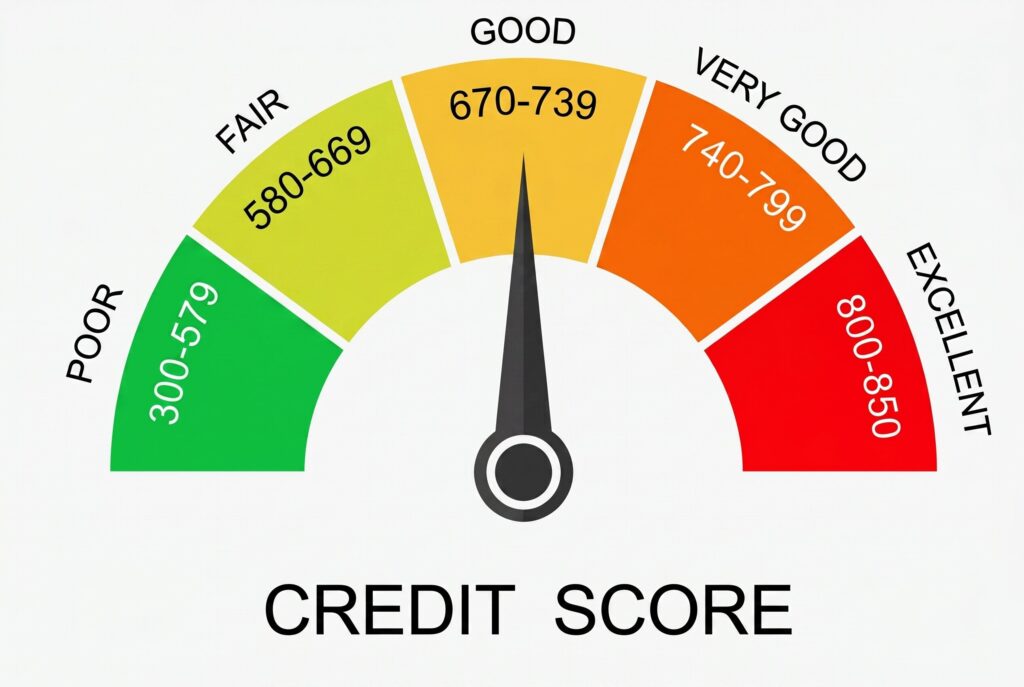
Payment History
Payment history is the most important credit score factor. Multiple cards can build more positive reporting history, but they also create more chances to miss a due date. Autopay for at least the minimum payment is essential.
Credit Utilization
Credit utilization measures how much of your available credit you use. Keeping utilization below 30% is a common rule, but lower is often better. More available credit can help only if your spending doesn’t rise with it.
Length of Credit History
Older accounts can help your credit age. This is why closing old credit cards too quickly can hurt. Even an unused old card may support your average account age and total available credit.
New Credit and Hard Inquiries
Each credit card application can trigger a hard inquiry. One inquiry usually isn’t a disaster, but frequent applications can make lenders nervous, especially before a mortgage, auto loan, or personal loan.
Credit Mix
Credit mix looks at the variety of accounts you manage, such as revolving credit cards and installment loans. Credit cards can help build a file, but they aren’t the only factor. A thin credit file may improve over time with responsible card use.
How Many Credit Cards Are Ideal for Different People?
1 Card: Best for Minimalists and Beginners
One card is best if you’re new to credit, rebuilding your habits, or want maximum simplicity. Choose a no-annual-fee card with basic rewards. The downside is limited backup access and fewer reward opportunities.
2 Cards: Best Starter Setup for Most People
Two cards are often a strong baseline. You can use one as your main card and keep the second as backup. This setup can improve utilization while staying manageable.
3 to 4 Cards: Best Balance for Credit Building and Rewards
Three to four cards can work well for people who want category rewards. For example, one card for groceries, one for dining, one for travel, and one flat-rate cashback card. This is often the best credit card setup for organized users.
5+ Cards: Best for Advanced Rewards Users
Five or more cards can make sense for travel rewards strategy, rotating categories, business expenses, or large households. But this requires a system: calendar alerts, autopay, annual fee reviews, and spending discipline.
10+ Cards: When It Starts Becoming Risky
Ten or more cards isn’t automatically bad, but it raises complexity. Annual fees can pile up. Missed payment risk increases. Mortgage underwriters may ask more questions. At this level, many people start asking how many credit cards is too many because the system becomes harder to manage effectively.
Signs You May Have Too Many Credit Cards
You Forget Due Dates
If you’re missing due dates or constantly checking which bill is due next, your setup may be too complicated. Managing too many cards increases the risk of missed payments, late fees, and credit score damage. If staying organized feels stressful, it may be time to simplify and rethink how many credit cards is too many for your lifestyle.
You Carry Balances Across Multiple Cards
Carrying balances across multiple cards is usually a warning sign that debt is becoming harder to control. Interest charges can grow quickly, often costing more than the cashback, travel points, or rewards you earn. If balances keep spreading across several cards, it may be time to simplify your setup and reconsider how many credit cards is too many for your spending habits.
Annual Fees Exceed Rewards Value
A credit card isn’t worth keeping just because it looks premium or offers flashy perks. If the annual fee costs more than the rewards or benefits you actually use, the card may no longer make financial sense. In that case, consider downgrading to a no-fee version or closing the card strategically to avoid unnecessary costs.
You Open Cards Mainly for Bonuses
Welcome bonuses can be valuable, but opening new cards just for signup rewards can become risky without a clear plan. Applying too often may lead to unnecessary hard inquiries, lower your average account age, and encourage overspending just to hit bonus requirements.
Your Spending Feels Harder to Control
If managing multiple cards makes your budget harder to track, it may be a sign that your setup is becoming too complicated. Rewards can be helpful, but financial clarity and spending control are usually more valuable than earning a few extra points or cashback percentages.
The Best Credit Card Setups by Financial Goal
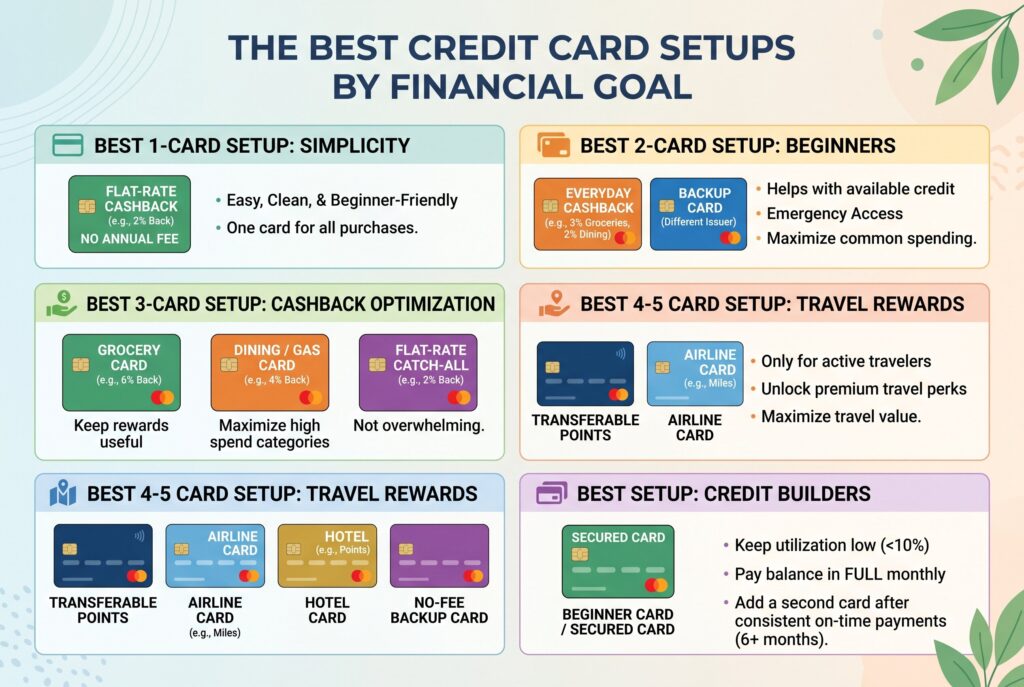
Best 1-Card Setup for Simplicity
Use one flat-rate cashback card with no annual fee. It’s easy, clean, and beginner-friendly.
Best 2-Card Setup for Beginners
Use one everyday cashback card and one backup card from a different issuer. This helps with available credit and emergency access.
Best 3-Card Setup for Cashback Optimization
Use one grocery card, one dining or gas card, and one flat-rate catch-all card. This keeps rewards useful without becoming overwhelming.
Best 4 to 5 Card Setup for Travel Rewards
Use a transferable points card, airline card, hotel card, and no-fee backup card. This works only if you travel enough to use the perks.
Best Setup for Credit Builders
Start with a secured card or beginner card, keep utilization low, pay in full, then add a second card after consistent on-time payments.
When You Shouldn’t Open Another Credit Card
Don’t open a new credit card right before applying for a mortgage or major loan because new applications can temporarily lower your credit score and create extra hard inquiries. You should also avoid opening another card if you already carry credit card debt, miss payments, or struggle to manage existing accounts. A new card should improve your financial setup, not add more stress, fees, or spending temptation.
Should You Close Unused Credit Cards?
Keeping old credit cards open can help your credit score by supporting credit age and lowering overall credit utilization. However, closing a card can still make sense if the annual fee is too high, the rewards are weak, or the card encourages unnecessary spending. Before closing an account, pay off the balance, redeem any rewards, update automatic payments, and remember that reducing your available credit may temporarily affect your credit score.
Final Thoughts
There is no universal perfect number. The best answer depends on your habits, income, goals, and organization. For many people, two to four credit cards is enough. For others, one card is safer. Advanced users may handle more. Questions like how many credit cards should I have and how many credit cards should you have ultimately come down to financial discipline, not just card count.
The right number is the number you can manage without stress, missed payments, or debt. Build your credit card setup intentionally, not randomly. Strong credit comes from on-time payments, low credit utilization, and disciplined applications, not from collecting cards just because you can.

