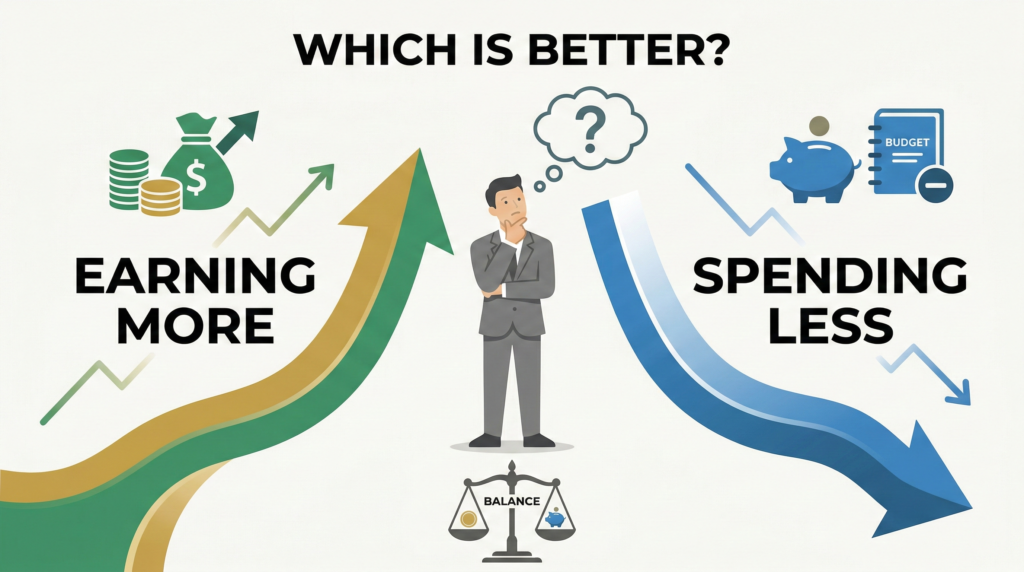
The common belief that spending less is the most important factor for building wealth has long been ingrained in personal finance advice. While reducing your expenses is certainly a useful strategy for controlling your budget, it’s the ability to earn more that truly drives long-term financial growth. In this article, we’ll explore why earning more is a crucial component of long-term wealth-building, how it enables you to take advantage of more opportunities, and the key strategies to increase your income to secure a stronger financial future.
The Power of Earning More: The Road to Financial Freedom
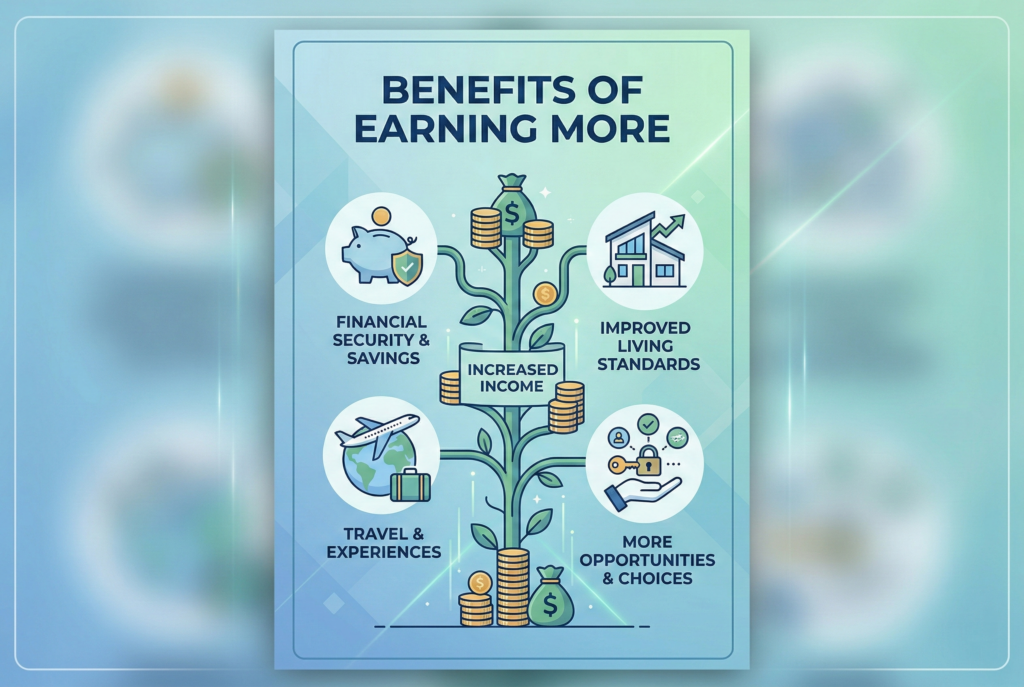
Increasing your income offers more flexibility, better investment opportunities, and faster wealth-building than simply cutting back on spending. When you focus on earning more, you’re expanding your financial possibilities.
More Income Means More for Savings and Investments
The key to long-term wealth is about increasing the amount of money you can save and invest. By boosting your income, whether through a higher salary, additional jobs, or better investment opportunities, you can contribute more to your savings, build a larger emergency fund, and make smarter investment decisions. This allows your money to grow at a faster pace.
For instance, imagine you earn an additional $500 a month through a side hustle. Over the course of a year, that’s $6,000 more you can invest in your retirement accounts, stocks, or real estate. With the power of compounding interest, this extra $6,000 could grow significantly over time, putting you in a better financial position for the future.
Building Wealth Through Additional Income Streams
When you earn more, you open doors to building multiple income streams. Having just one source of income, such as a salary, can limit your wealth-building potential. However, adding side jobs, freelance work, or starting a small business can diversify your income and help you accumulate wealth faster.
Additionally, generating multiple income streams protects you from the risk of losing your job or encountering unexpected expenses. For example, a side hustle or rental property can continue to bring in money even if your primary job is disrupted.
Debt Reduction Becomes Easier
If you’re carrying high-interest debt, such as credit card balances or student loans, focusing on earning more allows you to pay it off much faster. When you earn more, you can allocate a larger portion of your income toward reducing your debt. This not only helps improve your credit score but also saves you money on interest over the long term.
For example, instead of spending all your extra earnings on consumer goods or short-term expenses, use them to pay off high-interest debt. This will reduce your debt burden and free up more money for saving and investing down the line.
Long-Term Security and Flexibility

Earning more also offers greater financial security and flexibility. As your income increases, you gain the ability to live comfortably while still saving aggressively for future goals. With higher earnings, you can easily adjust your financial strategy to account for long-term objectives, such as buying a home, saving for your children’s education, or building a robust retirement fund.
Higher income also gives you the freedom to take advantage of opportunities that might require upfront investment. Whether it’s a career opportunity, a business venture, or a real estate deal, you can pursue these options with less financial stress when you’re earning more.
The Limits of Spending Less: Why It Isn’t Enough
While cutting back on spending is an essential part of financial discipline, relying solely on spending less doesn’t have the same long-term impact as earning more. Let’s look at the limitations of focusing only on reducing your expenses:
Your Wealth-Building Potential Is Capped
No matter how much you cut back, the growth potential of your wealth is limited by your income. If your income remains stagnant, you can only save so much, and your wealth will grow at a slower pace. A tighter budget doesn’t offer the same expansion of possibilities as earning more does.
Lifestyle Sacrifices May Lead to Burnout

Constantly focusing on reducing expenses can lead to lifestyle sacrifices. While cutting back on non-essential expenses may provide temporary relief, it can also lead to frustration or a feeling of deprivation. Moreover, drastically reducing spending may not be sustainable in the long run, leading to burnout or eventually overspending once the strict limits become too difficult to maintain.
Limited Investment Opportunities
A strict budget may force you to prioritize basic needs over wealth-building strategies, such as investing or building an emergency fund. You might miss out on opportunities to invest in stocks, real estate, or even skills development that could increase your earning potential in the future.
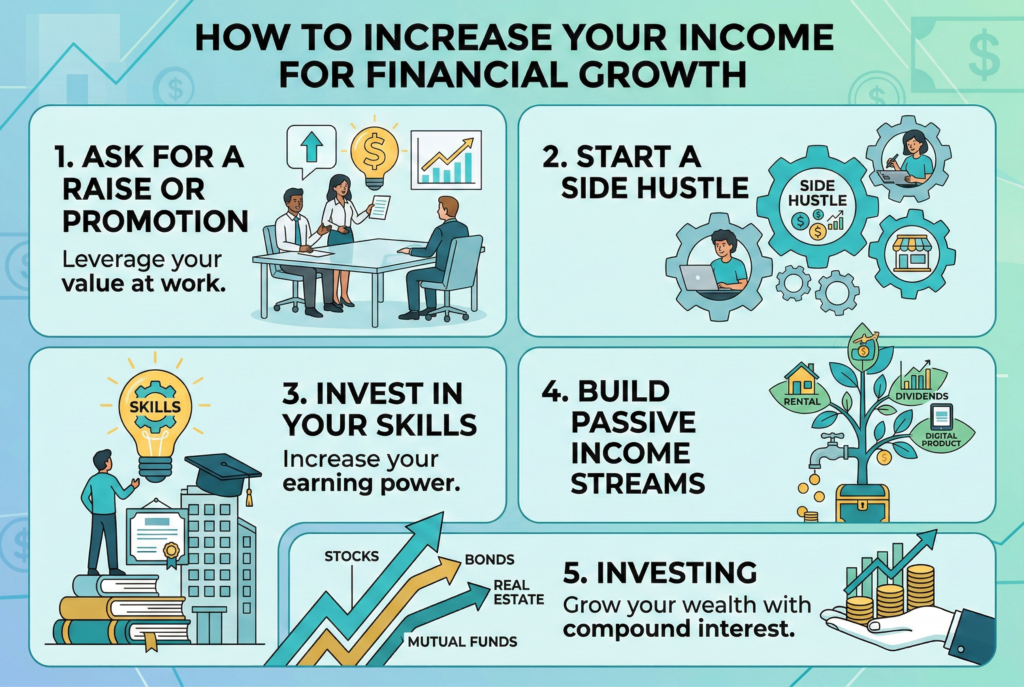
How to Increase Your Income for Financial Growth
1. Ask for a Raise or Promotion
If you’ve been with your current employer for a while, don’t hesitate to ask for a raise or pursue a promotion. Presenting your case based on your achievements, contributions, and market research can demonstrate your value and increase your earning potential.
2. Start a Side Hustle
Side hustles are a powerful way to supplement your income. Whether it’s offering freelance services, tutoring, or even selling handmade products, there are many ways to earn extra money outside of your regular job. In fact, many people have turned side hustles into full-time businesses that generate significantly more income than their day jobs.
3. Invest in Your Skills
Investing in your education and skillset can lead to higher-paying opportunities. Consider taking courses or obtaining certifications in fields that are in demand, such as tech, finance, or marketing. As you expand your expertise, you’ll be more competitive in the job market, which can lead to higher salaries and career advancement.
4. Build Passive Income Streams
Passive income is money earned with minimal effort once the initial work is done. This could include earnings from rental properties, dividend-paying stocks, or starting a business that requires little ongoing involvement. The more passive income streams you have, the less dependent you’ll be on your primary job for financial security.
5. Investing
Start investing early to let the power of compound interest work for you. Whether you’re contributing to a 401(k), Roth IRA, or investing in individual stocks and bonds, putting your money into investments that appreciate over time is one of the best ways to grow your wealth. Remember, investing involves risk, but with smart strategies and a long-term view, you can build a solid financial foundation.
Why Earning More Is the Key to Financial Independence
While reducing expenses is a crucial aspect of financial discipline, the true power of building wealth lies in increasing your income. By diversifying your income sources, investing in assets, and focusing on your professional growth, you’ll have more flexibility and opportunities to build long-term wealth. More income means more potential for saving, investing, and building financial security, all of which are necessary for achieving financial independence.
Focusing on earning more doesn’t mean you should ignore your budget, instead it’s about balancing both strategies. Cutting back on unnecessary expenses can give you the space to save more, while increasing your income allows you to accelerate wealth accumulation over time.
Final Thoughts
The path to financial growth and security is paved with a combination of smart spending and intelligent earning. If you focus on earning more, whether through negotiating raises, taking on side jobs, investing, or learning new skills, you’ll create more opportunities to grow your wealth, reduce financial stress, and eventually enjoy greater financial freedom.
Long-term financial success is about building wealth through multiple income streams, making smart investments, and developing the mindset that more income means more opportunities for growth. Start focusing on ways to earn more, and watch how it transforms your financial future.