
Dividend yield is one of the first numbers investors check when they look at dividend stocks. It seems simple: a company pays cash dividends, and you compare that income to the stock price. But the meaning is deeper than a single percentage. A high yield can signal steady income, but it can also warn that a stock price has fallen because investors are worried.
What Is Dividend Yield in Simple Terms?
Dividend yield is the income return you receive from dividends, based on the price you pay for a stock. If you buy a stock mainly for income, this number helps you estimate how much cash flow the investment may generate. For example, a $1,000 investment in a stock with a 4% dividend yield may produce about $40 per year in dividend income before taxes. That doesn’t include stock price gains or losses. It only measures the dividend portion of return.
The Dividend Yield Formula
The basic formula is:
How to Calculate Dividend Yield Step by Step
Dividend Yield Calculator
Use this calculator to estimate dividend yield. Enter either the annual dividend per share or the latest quarterly dividend, then enter the current stock price. The calculator will estimate annual dividends per share and dividend yield automatically.
Annual Dividend = Latest Quarterly Dividend × 4, or entered Annual Dividend per Share
Dividend Yield = Annual Dividends per Share ÷ Current Stock Price × 100
Dividend Income per 100 Shares = Annual Dividend per Share × 100
Note: Dividend yield changes when the stock price changes. If the dividend stays the same and the stock price falls, yield rises. If the dividend stays the same and the stock price rises, yield falls. This calculator does not predict future dividends, dividend cuts, special dividends, taxes, or reinvestment returns.
- First, find the annual dividends per share. If the company pays quarterly dividends, add the last four payments or multiply the latest quarterly dividend by four.
- Second, find the current stock price. Dividend yield changes as the stock price moves.
- Third, divide annual dividends by the current price. Finally, multiply by 100.
This is why yield can rise even when the company doesn’t increase the dividend. If the stock price falls and the dividend stays the same, dividend yield goes up. If the stock price rises and the dividend stays the same, dividend yield goes down.
Trailing vs Forward Dividend Yield
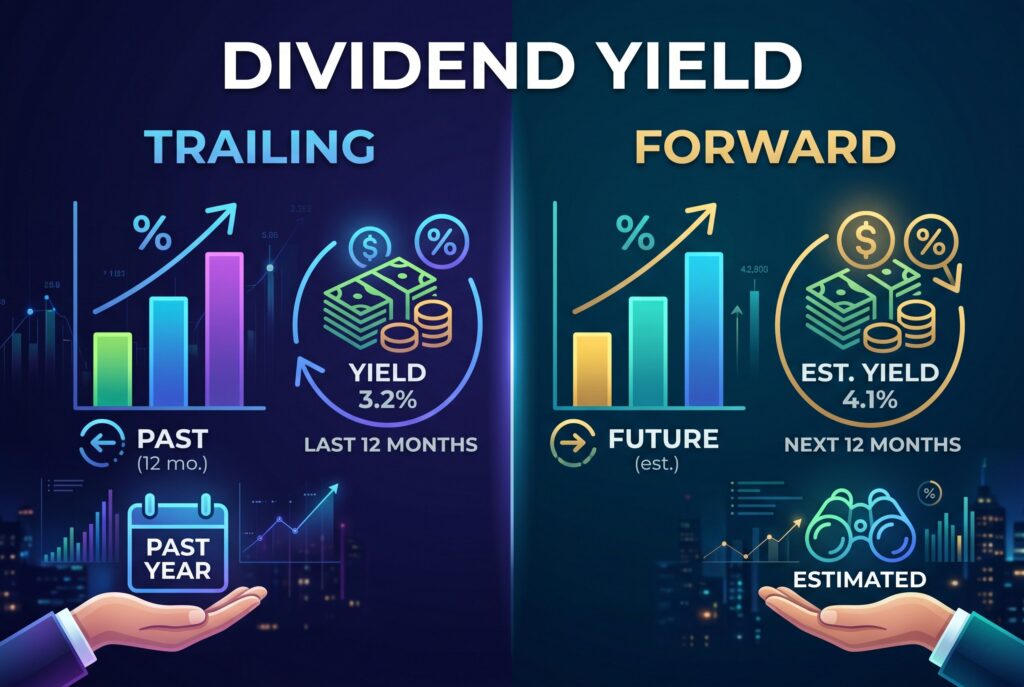
There are two common ways to calculate dividend yield. Trailing dividend yield uses the dividends paid over the past 12 months. This is based on history, so it reflects what shareholders actually received. Forward dividend yield estimates future income by annualizing the latest dividend. If a company just paid $0.60 quarterly, a forward calculation may assume $2.40 annually. Both can be useful. Trailing yield is more factual. Forward yield is more current if the company recently raised or cut its dividend.
How to Calculate Dividends From Your Investment Using a Dividend Yield Calculator
If you know the dividend yield and your investment amount, you can estimate yearly dividend income.
Estimated Annual Dividend Income = Investment Amount × Dividend Yield
For example, if you invest $5,000 in a stock with a 3% dividend yield, estimated annual dividend income is:
$5,000 × 3% = $150
This estimate assumes the dividend remains unchanged. It also doesn’t include taxes, reinvestment, price changes, or dividend cuts.
Real-World Example of Dividend Yield
Imagine Stock A trades at $100 and pays $4 per share annually. Its dividend yield is 4%. Now imagine the stock price falls to $80 while the dividend stays at $4. The yield becomes 5%. That higher yield may look attractive, but it doesn’t automatically mean the stock is better. The price may have dropped because investors expect weaker earnings, debt pressure, or a possible dividend cut.
Dividend Yield vs Dividend Payout Ratio
Dividend yield tells you how much income you receive compared with the stock price. Dividend payout ratio tells you how much of a company’s earnings are being paid out as dividends.
Dividend payout ratio formula:
For example, if a company earns $5 per share and pays $2 in dividends, the payout ratio is 40%. Dividend yield helps investors measure income return. Payout ratio helps investors judge whether that dividend may be sustainable.
Beware of the Dividend Trap
A dividend trap happens when a stock looks attractive because the yield is high, but the yield is high mainly because the share price has collapsed. For example, a 10% dividend yield may look exciting, but it can be dangerous if the company is losing money, carrying too much debt, or paying more in dividends than it can afford. A dividend cut can reduce income and hurt the stock price at the same time. Before chasing high dividend yield, check earnings, free cash flow, debt, payout ratio, dividend history, and industry conditions.
What Is a Good Dividend Yield?
There isn’t one perfect number. A good dividend yield depends on the industry, interest rates, company maturity, and your investing goals. Utilities, banks, telecoms, and real estate companies often have higher yields because they are mature and income-oriented. Fast-growing tech companies may pay little or no dividend because they reinvest profits into growth. A moderate, sustainable yield is often better than an unusually high yield that may be cut.
How Often Are Dividends Paid?
Many U.S. companies pay dividends quarterly. Some pay monthly, semiannually, or annually. ETFs and mutual funds may also follow different distribution schedules. Always check the dividend declaration, record date, ex-dividend date, and payment date. These dates determine who qualifies to receive the dividend and when the money is paid.
Final Thoughts
Dividend yield is a useful shortcut for comparing income investments, but it isn’t the whole story. It tells you what a stock pays relative to price, not whether the dividend is safe, growing, or worth the risk. Use dividend yield with payout ratio, cash flow, debt levels, earnings quality, and total return. The best dividend investors don’t just ask, “How high is the yield?” They ask, “Can this company keep paying it?”