
When it comes to managing your finances, understanding the role of a financial planner is crucial to achieving your long-term financial goals. Financial planners are professionals who help individuals and families navigate the complex world of personal finance, offering expert advice and creating tailored strategies to ensure financial success. This article will delve into what financial planners do, how they can assist with various aspects of your financial life, and why their services are essential for securing your financial future.
What Is a Financial Planner?
A financial planner is a professional who works with clients to create a comprehensive financial plan, focusing on long-term goals like saving for retirement, managing debt, and building wealth.
Unlike other financial professionals who may specialize in specific areas, such as investment management or taxes, financial planners take a holistic approach. They analyze all aspects of your financial situation, from income and expenses to savings, debts, and investments, and help you make informed decisions about how to manage your money.
Financial planners provide a roadmap for your financial future, helping you prioritize goals, create budgets, and invest wisely. They also assist with more complex areas like estate planning, tax strategies, and ensuring adequate insurance coverage. With their expertise, financial planners guide you through decisions that might seem overwhelming and help you stay on track to meet your long-term financial goals.
Why You Should Work with a Financial Planner

There are several reasons why hiring a financial planner can be beneficial, especially if you’re dealing with complex financial decisions or are unsure where to start. For many, the process of managing their financial future can be overwhelming, and a financial planner can provide clarity and expert advice.
Here are a few scenarios where working with a financial planner can significantly improve your financial outcomes:
Planning For Retirement
If you have no clear idea of how much to save or what types of accounts to invest in for retirement, a financial planner can help you build a strategic plan. They’ll analyze your current savings, determine how much you’ll need for retirement, and help you choose the best retirement savings accounts, such as 401(k)s or IRAs.
Managing Life Transitions
Major life events, such as getting married, having children, buying a home, or dealing with a divorce, often come with new financial challenges. A financial planner can help you navigate these changes, adjusting your budget and financial plan accordingly to ensure that your goals are still achievable.
Reducing And Managing Debt
If you’re carrying significant debt, a financial planner can help you create a debt management plan that allows you to pay off your loans more efficiently. They can also advise on how to improve your credit score and manage any financial stress that debt may cause.
Investment Management
If you’re new to investing or want to improve your current investment strategy, a financial planner can help you understand your investment options and select the right assets for your risk tolerance and long-term objectives. They’ll ensure that your investment choices align with your overall financial plan.
Comprehensive Financial Planning
A financial planner doesn’t just focus on one aspect of your finances. They help you create a comprehensive strategy that looks at all areas of your financial life, from savings and budgeting to retirement planning, tax strategies, and estate planning.
Key Services of a Financial Planner

A financial planner’s primary role is to help you build and execute a strategy for achieving your financial goals. The services they offer go beyond just investment advice. Financial planners typically provide a range of services designed to help you make informed decisions about your money and secure your financial future.
A financial planner helps you define your financial goals and build a strategy for achieving them. They can assist with creating personalized budgets, establishing emergency savings funds, and setting clear short-term and long-term financial objectives. Financial planners will also assess your current financial situation, help you determine how much you should be saving, and suggest the most effective savings vehicles to use for your goals.
In terms of investments, financial planners guide you on building a portfolio that matches your risk tolerance and time horizon. They’ll help you choose from a variety of stocks, bonds, mutual funds, and ETFs to grow your wealth over time.
A financial planner is also equipped to assist with estate planning. They’ll advise you on how to ensure that your assets are passed on to heirs efficiently, through methods like wills, trusts, and power of attorney arrangements. Their goal is to minimize the tax burden on your estate and ensure that your wealth is transferred according to your wishes.
Types of Financial Planners
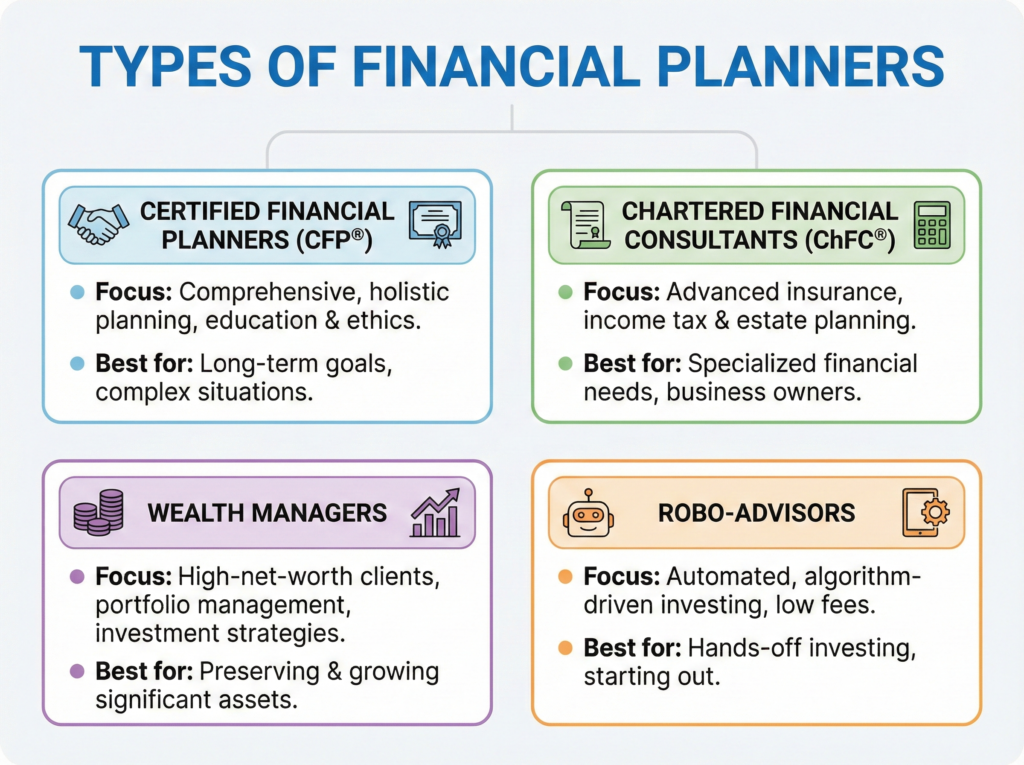
Certified Financial Planners (CFP)
These professionals are trained to provide comprehensive financial planning services. To become a CFP, one must meet specific educational requirements, pass a certification exam, and adhere to ethical standards. CFPs are typically well-versed in managing a broad range of financial matters, including investment planning, tax planning, estate planning, and more.
Chartered Financial Consultants (ChFC)
Similar to CFPs, ChFCs focus on comprehensive financial planning but may have a broader focus that includes business finances, insurance, and retirement strategies. ChFCs also adhere to a strict code of ethics and are highly regarded in the field of financial planning.
Wealth Managers
Wealth managers focus on serving high-net-worth individuals and families. They provide specialized advice in managing substantial assets and building wealth, often covering areas like tax efficiency, estate planning, and risk management.
Robo-Advisors
Robo-advisors are automated online platforms that create and manage investment portfolios based on algorithms. While they’re typically less expensive than human financial planners, they don’t provide the personalized guidance that a traditional planner can offer.
How Financial Planners Are Paid
Financial planners are typically compensated in one of the following ways:
- Fee-only: These planners charge a fixed fee, typically based on the amount of assets under management (AUM) or an hourly rate. They don’t earn commissions from selling products, so their advice is generally more impartial.
- Fee-based: Fee-based planners charge a combination of fees and commissions. While they may offer lower fees initially, there may be potential conflicts of interest, as they can earn commissions from recommending financial products.
- Commission-based: These planners earn commissions from selling products such as insurance or mutual funds. While this can result in lower upfront costs, it may present conflicts of interest as they may recommend products that are in their financial benefit.
When Should You Hire a Financial Planner?

You don’t need to wait until your financial situation becomes complicated to hire a financial planner. It’s advisable to consult a planner when you want to ensure your finances are organized and aligned with your goals.
Life Changes
If you experience a major life change such as marriage, divorce, or the birth of a child, a financial planner can help you reevaluate your financial priorities and adjust your financial plan.
Retirement Planning
If you’re nearing retirement or want to ensure that you can retire comfortably, a financial planner can help you assess your savings, investment strategy, and retirement accounts.
Business Owners
If you own a business, a financial planner can help with business finances, including tax planning, profit distribution, and saving for retirement.
How to Choose the Right Financial Planner
Choosing the right financial planner is essential to your financial success. Here are some tips to ensure you find the right one:
- Assess your needs: Consider whether you need a comprehensive financial plan or if you’re only seeking specific advice on investments or retirement planning.
- Understand their compensation: Make sure you understand how the planner is paid and whether their fee structure aligns with your budget.
- Check qualifications: Look for CFP or ChFC certifications, which ensure the planner has met rigorous standards of education and experience.
- Research their experience: Make sure the planner has experience in the areas that matter most to you, whether it’s tax planning, retirement planning, or estate planning.
Conclusion: Take Control of Your Financial Future with a Professional
Hiring a financial planner is an important step toward securing your financial future. With their expertise and guidance, you can develop a comprehensive financial plan that addresses all aspects of your financial life, from investments to estate planning. By choosing the right financial planner, you’ll have the tools and strategies needed to meet your financial goals and build long-term wealth. Whether you’re preparing for retirement or looking to maximize your wealth, a financial planner can help guide you toward financial success.