


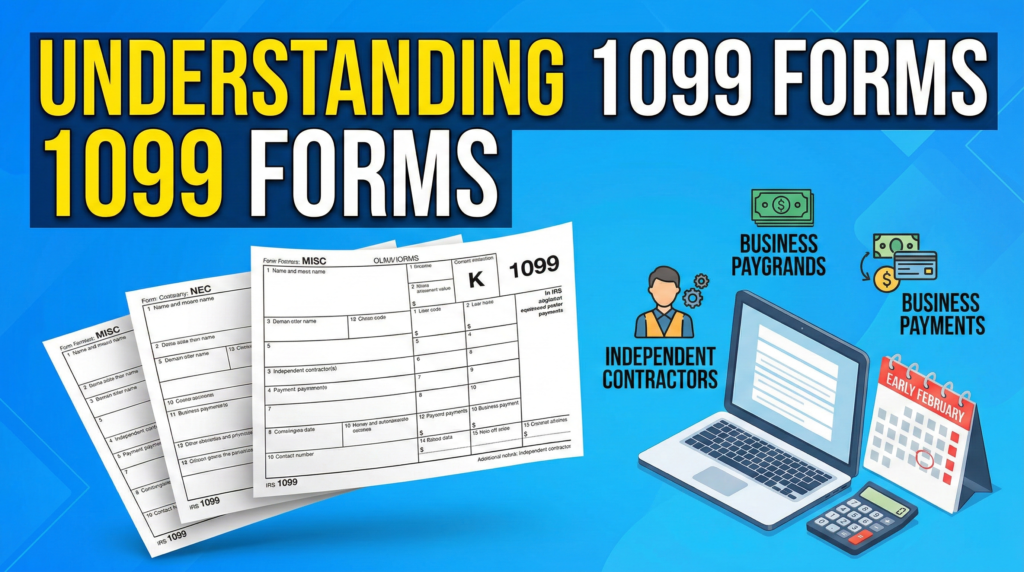
Filing taxes can be confusing, especially when it comes to understanding all the forms you may receive. Among the most common forms that self-employed individuals and contractors encounter is the 1099 form. If you’re a freelancer or independent contractor, you’ve likely received this form at least once in your career.
But what exactly is a 1099 form, and why is it so important? In this guide, we’ll break down everything you need to know about 1099 forms, including the types of forms you might encounter, how to file them correctly, and the deadlines to keep in mind.
What Is a 1099 Form?
A 1099 form is a tax form used by businesses to report income earned by individuals who aren’t considered employees. For example, independent contractors, freelancers, or self-employed individuals will typically receive a 1099 form from the businesses they work with. The form reports non-employment income to the IRS.
In essence, if you’ve received payments for services provided that total $600 or more in a tax year, you should receive a 1099 form from the payer to report that income to the IRS. There are several types of 1099 forms, depending on the kind of income reported. It’s important to understand these variations, as each type of form has different rules for reporting specific types of income.

Types of 1099 Forms
There are multiple variations of the 1099 form used for reporting different types of income. Here are some of the most common types:
- 1099-NEC (Nonemployee Compensation): This form is used to report payments of $600 or more made to freelancers and independent contractors for services rendered. This is the most common form you’ll receive as a self-employed person.
- 1099-MISC (Miscellaneous Income): Formerly used for reporting nonemployee compensation, the 1099-MISC form now reports other types of income, such as rent, prizes, and awards.
- 1099-INT (Interest Income): If you earned more than $10 in interest from a bank, financial institution, or another lender, you’ll receive a 1099-INT form.
- 1099-DIV (Dividend Income): This form reports dividend payments, including those from stocks, mutual funds, or other investments. You’ll receive this form if you earned more than $10 in dividends.
- 1099-R (Retirement Distributions): If you take a distribution from a retirement account (like an IRA, 401(k), or pension plan), the 1099-R form reports the distribution amounts.
Other variations include 1099-K, 1099-G, 1099-B, and 1099-C, which report different types of income such as proceeds from sales, government payments, or canceled debts.
When Are 1099 Forms Issued?

The IRS requires businesses to send 1099 forms to contractors and self-employed workers by January 31st of the year following the tax year. For example, if you worked as a contractor in 2025, you should expect to receive your 1099 forms by January 31, 2026.
It’s important to keep in mind that the IRS also receives a copy of the 1099 form, so it’s critical that the income reported on these forms matches what you report on your tax return. If there are discrepancies, it could lead to delays or audits.
If you haven’t received a 1099 form by the deadline, it’s essential to follow up with the business that issued the payment. If there’s an error on your form, such as missing income, it’s your responsibility to contact the business to get a corrected form.
How to Use 1099 Forms for Tax Filing
Once you have received your 1099 forms, you’ll use them to report your nonemployee income on your tax return. Generally, you’ll file your 1099 income using Form 1040. The specific amount reported on the 1099 forms will be included on your income tax return to ensure that the IRS matches your reported earnings.
If you’re a freelancer or independent contractor, you may need to report your income on Schedule C (Profit or Loss from Business) as part of your Form 1040. This is where you will report income from freelance work and any business expenses, which may reduce your taxable income.
How to Correct a Mistake on Your 1099 Form
Mistakes happen, and if you notice an error on your 1099 form, it’s important to address it as soon as possible. Common errors include incorrect amounts or incorrect information (such as your name or Social Security number).
If a mistake is found on your 1099, contact the payer immediately to request a corrected 1099 form. Depending on the severity of the error, this might involve receiving a corrected 1099-NEC or 1099-MISC form, which will need to be filed with your tax return.
State Taxes and 1099 Forms
While the 1099 form is a federal document, it’s important to remember that your state taxes might have their own rules and filing requirements. State income tax laws vary, so it’s crucial to consult with a tax professional or research your specific state’s requirements when filing. Some states may require you to file a state-specific tax form in addition to the federal return. Be sure to check for any state-specific tax obligations when filing your 1099 income.
Conclusion: Understanding 1099 Forms for Better Tax Filing

1099 forms play a vital role in ensuring that your income is reported accurately to the IRS. By understanding the different types of 1099 forms, filing deadlines, and how to correct mistakes, you can ensure that your tax filing goes smoothly. With the growing gig economy and the rise of freelance work, more individuals are receiving 1099 forms as opposed to traditional W-2 forms. Understanding how to use these forms correctly can save you time, stress, and potential fines.
By following the steps outlined in this guide, you’ll be well-prepared to manage your 1099 income, avoid common mistakes, and stay compliant with tax laws. Always remember to keep accurate records, follow up on any discrepancies, and seek help from a tax professional if you need additional assistance.

