


Managing healthcare and dependent care expenses can often feel overwhelming, especially when you’re trying to keep your budget under control. Fortunately, Flexible Spending Accounts (FSAs) offer a powerful tool to help reduce your taxable income and cover eligible expenses: all while giving you more control over your finances.
Whether you’re looking to save on healthcare costs, childcare, or even eldercare, an FSA can be a game-changer. In this article, we’ll dive deep into what FSAs are, how they work, and provide tips on how to make the most of them to maximize your savings and minimize your tax liability.
What is an FSA?
A Flexible Spending Account (FSA) is an employer-sponsored account that allows you to set aside pre-tax money to pay for eligible healthcare and dependent care expenses. FSAs are popular because they offer significant tax savings, which can lower your overall taxable income. The contributions you make to an FSA are deducted from your paycheck before taxes, meaning you’re effectively lowering your taxable income and reducing your tax bill.
There are two primary types of FSAs: Health Care FSAs and Dependent Care FSAs. Health Care FSAs can be used to cover medical, dental, and vision expenses, while Dependent Care FSAs are used to pay for qualified child care or elder care services. Both types of accounts come with their own benefits, and understanding how each works is key to maximizing their potential.
How Does an FSA Work?
Once you elect to contribute to an FSA through your employer, the amount you choose to contribute is deducted from your paycheck throughout the year, usually in equal installments. The money is placed into your FSA, and you can use it to pay for eligible expenses.
One of the key benefits of an FSA is that contributions are made pre-tax, which reduces your overall taxable income. For example, if your annual salary is $50,000 and you contribute $2,000 to your FSA, your taxable income is effectively reduced to $48,000. This means you pay less in taxes, giving you immediate savings.

FSA Contribution Limits for 2026
Health Care FSA
You can contribute up to $3,400 per year. This can be used for medical, dental, and vision expenses, such as prescription medications, doctor’s visits, and even certain over-the-counter items.
Dependent Care FSA
The contribution limit is $7,500 per year for a household. This amount can be used to cover qualified dependent care expenses, such as daycare for children under 13 or adult care services for elderly dependents.
Both accounts come with their own unique rules and limitations, so understanding the nuances of each is critical to getting the most out of your FSA.
The Benefits of FSAs
Tax Savings
The most obvious benefit of an FSA is the tax savings it provides. By contributing pre-tax dollars to an FSA, you reduce your taxable income, which can lower your overall tax liability. This is especially helpful for individuals in higher tax brackets who want to minimize the amount they owe to the IRS.
Coverage for Eligible Expenses

FSAs allow you to pay for a wide variety of healthcare and dependent care expenses. For Health Care FSAs, this includes things like prescription medications, dental treatments, vision care, and copayments. For Dependent Care FSAs, you can use the funds for childcare expenses, including daycare services, after-school programs, and even summer day camps. The broad eligibility for these expenses makes FSAs a flexible tool for managing costs that are often difficult to predict.
Immediate Access to Funds
Unlike Health Savings Accounts (HSAs), FSAs allow you to use the full annual contribution amount right away, even if you haven’t contributed the full amount yet. This feature is especially helpful if you need to cover an unexpected medical or dependent care expense early in the year.
Employer Contributions
Some employers may offer to match a portion of your contributions to an FSA, which can further increase your savings. Be sure to check with your HR department to see if your employer offers any additional incentives or contributions to your FSA account.
Tips for Maximizing Your FSA Savings
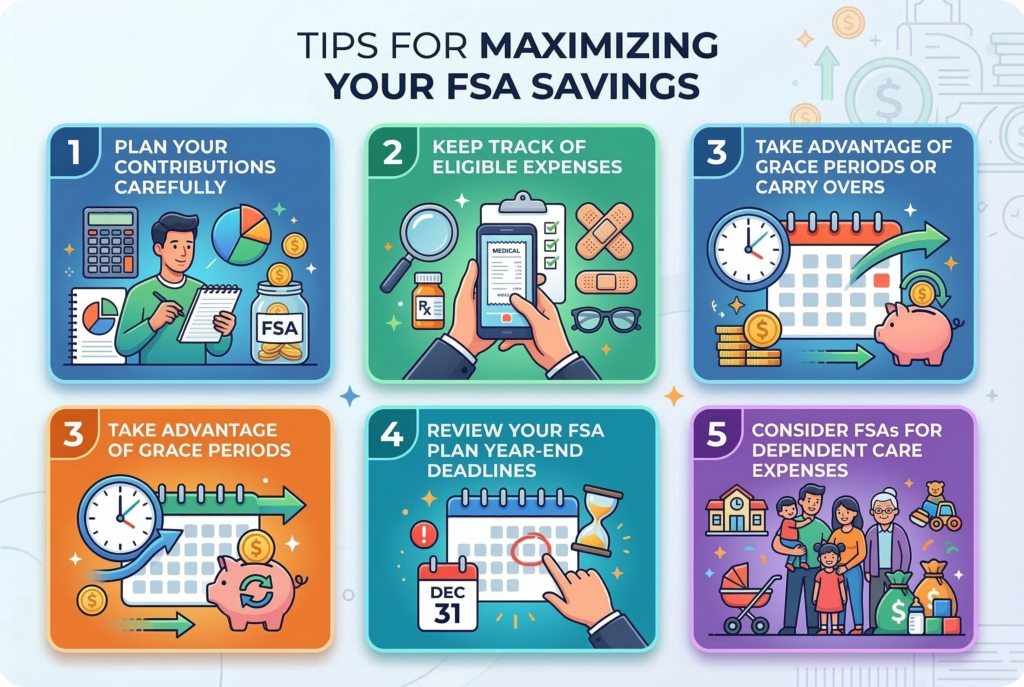
1. Plan Your Contributions Carefully
The “use-it-or-lose-it” rule applies to FSAs, meaning any funds remaining at the end of the plan year are forfeited. To avoid losing money, it’s crucial to carefully estimate your medical and dependent care expenses for the year. You don’t want to over-contribute, but you also want to ensure you contribute enough to cover your anticipated expenses.
2. Keep Track of Eligible Expenses
It’s easy to overlook certain expenses that qualify for reimbursement from your FSA. Commonly eligible items include prescription medications, dental procedures, vision care, and even certain over-the-counter medications (if prescribed). For dependent care, eligible expenses may include daycare services, before and after-school programs, and even summer camps for children under 13. Always keep a record of your receipts to submit for reimbursement.
3. Take Advantage of Grace Periods or Carryovers
Some employers offer grace periods or carryover options to help you use up your remaining FSA funds. A grace period allows you to continue using your FSA funds for a limited time after the plan year ends, typically up to 2.5 months. Alternatively, the carryover option allows you to roll over a portion of your unused FSA balance into the next plan year. If your employer offers these options, make sure to take advantage of them to avoid forfeiting any funds.
4. Review Your FSA Plan Year-End Deadlines
FSA plans typically have a deadline for submitting claims, and if you miss that deadline, you may lose access to any remaining funds. Review your FSA’s plan documents to make sure you’re aware of any important deadlines for submitting claims or requesting reimbursements. Being proactive about these deadlines can save you from leaving money on the table.
5. Consider FSAs for Dependent Care Expenses
If you have children under 13 or dependents who require care, a Dependent Care FSA can help reduce the financial burden of childcare. The $7,500 contribution limit for 2026 allows you to set aside money for daycare, babysitters, or elder care expenses, reducing your taxable income and offering immediate savings on dependent care services.
The Difference Between FSAs and HSAs
While Health Savings Accounts (HSAs) and FSAs both offer tax advantages, there are key differences between the two:
- Eligibility: HSAs are available only to individuals with high-deductible health plans (HDHPs), while FSAs are available to anyone whose employer offers them, regardless of the type of health plan.
- Contribution limits: For 2026, the contribution limit for HSAs is higher than for FSAs. Individuals can contribute $3,850 to an HSA for individual coverage and $7,750 for family coverage, with an additional catch-up contribution for those over 50.
- Portability and rollovers: HSAs are portable, meaning the funds roll over from year to year and stay with you even if you change employers. FSAs, however, typically have the “use-it-or-lose-it” rule, though some employers offer carryover or grace period options.
Conclusion: Make the Most of Your FSA
Flexible Spending Accounts (FSAs) are an incredibly valuable tool for managing healthcare and dependent care expenses while reducing your taxable income. By carefully planning your contributions, keeping track of eligible expenses, and taking advantage of grace periods or carryover options, you can maximize your FSA savings.
Whether you’re looking to save on medical expenses, reduce the cost of childcare, or simply lower your taxable income, FSAs offer significant financial benefits. Review your company’s FSA plan, estimate your expenses, and take full advantage of this tax-saving opportunity to enhance your financial well-being.