



While a quitclaim deed can be useful in specific situations, it’s also one of the most misunderstood documents in real estate. The biggest danger is that people focus on speed and convenience while ignoring the hidden risks.
The truth is that quitclaim deed loopholes work both ways. Some loopholes allow courts, creditors, heirs, or government agencies to challenge and reverse a transfer. Others create devastating financial consequences that many families never see coming. The repercussions of a quitclaim deed can include capital gains tax exposure, title insurance problems, Medicaid penalties, probate complications, and mortgage issues that can cost tens or even hundreds of thousands of dollars. Before downloading any quitclaim deed form, it’s essential to understand the risks behind the document.
3 Major Quitclaim Deed Loopholes Used to Invalidate Transfers
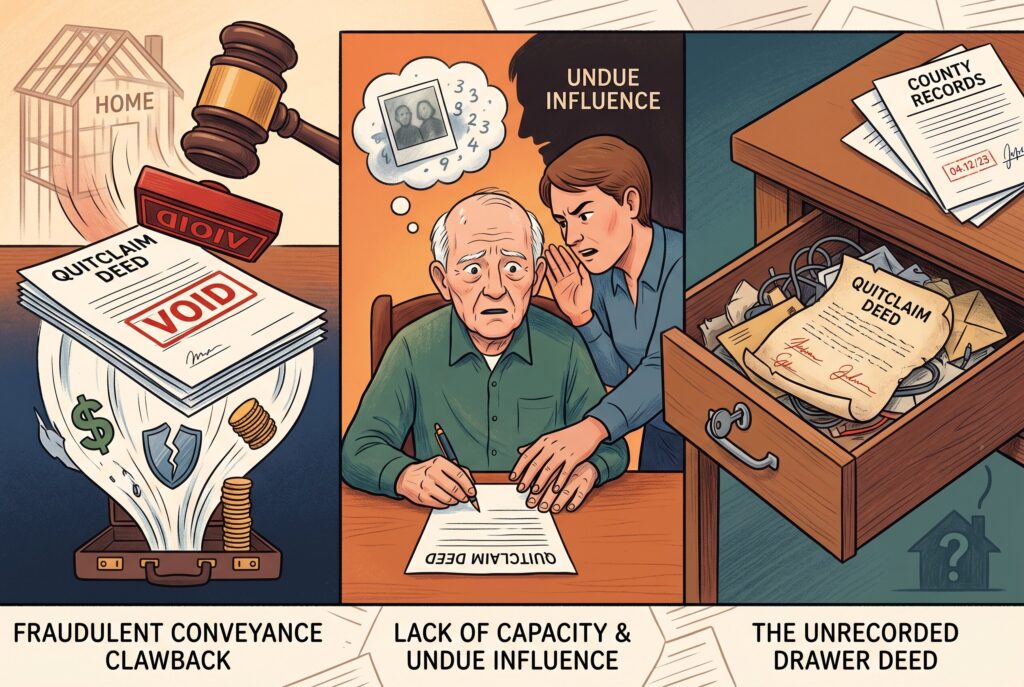
1. The Fraudulent Conveyance Clawback
One of the most dangerous quitclaim deed loopholes involves fraudulent conveyance. Some property owners attempt to transfer a house to a relative for $0 shortly before bankruptcy, litigation, divorce disputes, or creditor collection efforts. The assumption is that moving ownership will protect the asset.
Courts frequently see through this strategy. If a judge determines the transfer was intended to delay, hinder, or defraud creditors, the transaction may be reversed. The property can be pulled back into the owner’s estate and made available to satisfy legitimate debts. A quitclaim deed isn’t a magic shield against lawsuits. In many cases, it becomes evidence that the owner intentionally attempted to move assets beyond the reach of creditors.
2. Lack of Capacity and Undue Influence
Another common challenge involves mental capacity. A quitclaim deed can be overturned if evidence shows the grantor lacked the legal capacity to understand what they were signing. This issue often appears when elderly parents transfer property shortly before death.
Medical records, physician testimony, cognitive assessments, and witness statements may all become evidence in court. Undue influence is equally dangerous. If a caregiver, family member, or trusted advisor pressured the grantor into signing the deed, the transfer may be challenged successfully. Family disputes involving dementia, Alzheimer’s disease, or sudden property transfers frequently center on this loophole.
3. The Unrecorded Drawer Deed
Many people sign a quitclaim deed and place it in a desk drawer, safe, or filing cabinet without recording it. This is a serious mistake. Recording establishes public notice of the transfer. Without proper recording, the deed may create confusion regarding ownership rights. If the grantor dies before the document is properly delivered and recorded, the property may still enter probate despite the signed deed. An unrecorded transfer can also create opportunities for competing claims, liens, judgments, or ownership disputes.
The Devastating Repercussions of a Quitclaim Deed
The Capital Gains Tax Bomb
The most expensive repercussions of a quitclaim deed often involve taxes. Imagine a parent purchased a home decades ago for $50,000. Today the property is worth $500,000. If the parent transfers the home to a child during life using a quitclaim deed, the child generally receives the parent’s original tax basis of $50,000. If the child later sells the property for $500,000, they may face taxable gains based on the $450,000 difference.
That tax bill can be substantial. By comparison, if the child inherits the property through a properly structured estate plan or living trust, they may receive a step up in basis based on the home’s market value at death. This can dramatically reduce or eliminate future capital gains taxes. This single mistake can cost a family tens of thousands of dollars.
Voiding Title Insurance Protection
Many property owners are unaware that transferring property through a quitclaim deed can affect title insurance coverage. Title insurance exists to protect owners from hidden defects, undisclosed liens, recording errors, forged documents, and other title problems.
Certain transfers can disrupt the chain of warranties connected to the policy. For example, investors who move property from personal ownership into an LLC sometimes discover that their title insurance protections don’t automatically continue after the transfer. If a title defect later appears, the financial consequences can be significant.
The Tenancy in Common Trap
Estate planning mistakes create another major risk. A parent may add a child to a property using a quitclaim deed without carefully selecting the ownership structure. If the deed fails to include language establishing Joint Tenants with Rights of Survivorship, the ownership arrangement may default to Tenancy in Common. When the parent dies, their share of the property may not automatically transfer to the child. Instead, that portion can enter probate court. Ironically, the family may experience the exact probate process they were trying to avoid.
The Medicaid Five Year Look Back Problem
Medicaid planning creates another hidden danger. Many seniors transfer property to children believing they are protecting the home from future nursing home costs. However, Medicaid applies a five year look back period. Property gifts made within that period may trigger penalties that delay eligibility for long term care benefits. The result can be devastating for families that expected government assistance to help cover nursing home expenses.
How to Safely Execute a Quitclaim Deed Form in 2026
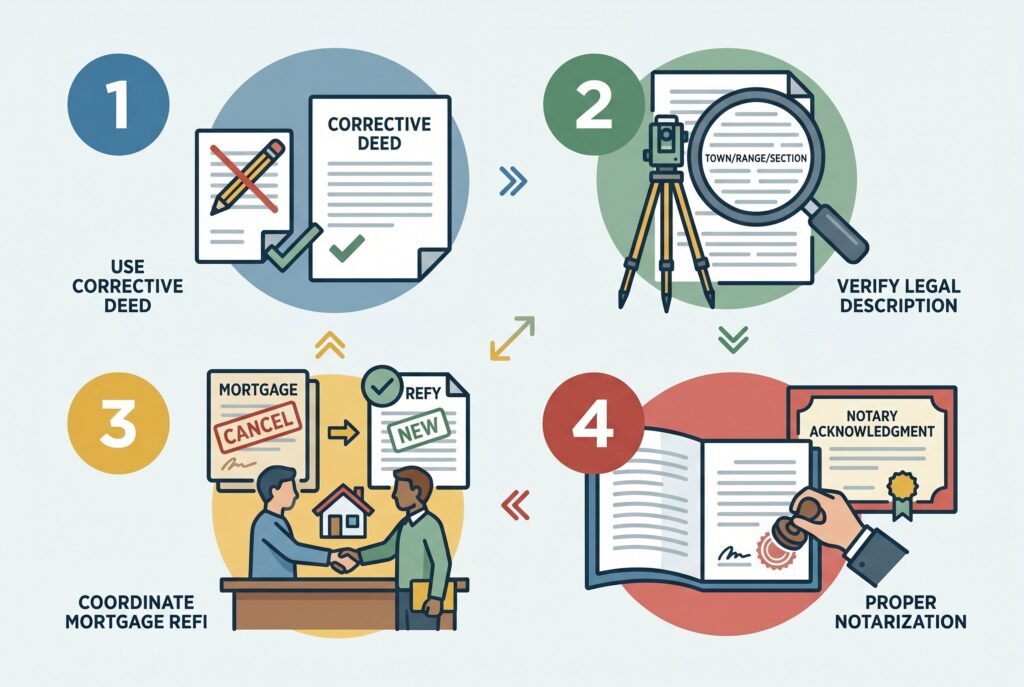
Step 1: Use a Corrective Deed for Errors
If you discover a mistake after recording a quitclaim deed, never cross out language or make handwritten corrections. Instead, use a Corrective Deed or Deed of Correction when allowed under local law. This creates a proper legal record and helps prevent future title disputes.
Step 2: Verify the Legal Description
One of the most common filing mistakes involves the legal description. The mailing address isn’t enough. The deed should contain the exact legal description from prior recorded documents, surveys, or county records. A single error can cloud title and create ownership disputes years later.
Step 3: Coordinate Mortgage Refinancing
A quitclaim deed transfers ownership, not mortgage liability. If one party is keeping the property, refinancing should often occur at the same time as the transfer. Otherwise, the original borrower may remain legally responsible for the debt despite no longer owning the property.
Step 4: Always Use Proper Notarization
Most states require notarization before a deed can be recorded. A missing notary acknowledgment can result in rejection by the recorder’s office and may jeopardize the validity of the transfer.
Conclusion
The biggest misconception about quitclaim deed loopholes is that they help people avoid legal problems. In reality, many loopholes become the very reason a transfer fails. The repercussions of a quitclaim deed can include tax disasters, Medicaid penalties, title insurance problems, creditor clawbacks, probate complications, mortgage liability, and expensive family litigation.
A quitclaim deed remains useful for specific situations such as divorce settlements, funding a living trust, correcting title issues, or transferring property between trusted family members. However, it should never be viewed as a universal asset protection tool. Before signing any quitclaim deed form, evaluate the tax consequences, mortgage obligations, title insurance implications, and estate planning impact. A document that costs only a few dollars to prepare can ultimately determine the future of assets worth hundreds of thousands of dollars.

