


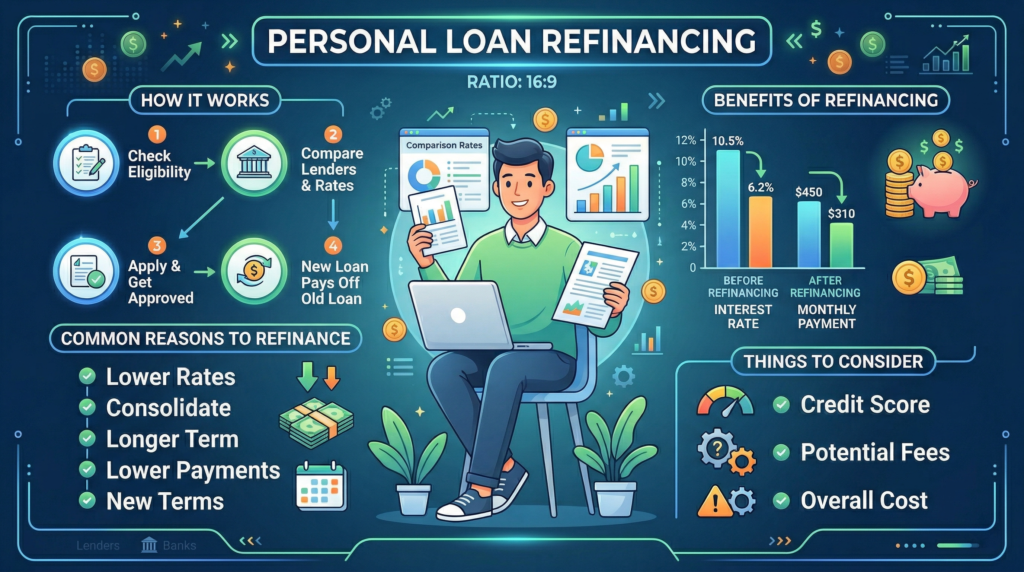
Personal loan refinancing can be a smart move for borrowers who want to save money, simplify repayment, or make monthly bills easier to manage. When done at the right time, refinancing may help you secure a lower interest rate, reduce your monthly payment, or adjust your loan term to better fit your budget. But it doesn’t always lead to savings, so it’s important to understand how the process works before replacing an existing loan.
What Personal Loan Refinancing Means
Personal loan refinancing means taking out a new loan to pay off an existing personal loan. The new loan comes with its own APR, repayment term, monthly payment, and lender requirements. The goal is usually to improve the terms of the original loan rather than simply borrow more money.
For example, a borrower who qualified for a higher rate in the past may now have stronger credit, more stable income, or lower overall debt. In that situation, refinancing could lead to better loan terms. In other cases, a borrower may refinance to stretch out the repayment term and reduce monthly pressure, even if the total interest paid over time ends up being higher. The idea is straightforward. You replace an older loan with a new one that ideally fits your current financial situation more effectively.
How Personal Loan Refinancing Works
The refinancing process usually begins with comparing lenders and checking what rates and terms you may qualify for. Many lenders allow borrowers to prequalify, which can provide an estimated rate without requiring a full application right away.
If you move forward, the lender reviews your credit profile, income, employment, existing debts, and other financial details. If approved, the new loan is issued and the old personal loan is paid off, either directly by the new lender or by you using the new loan proceeds. After that, you begin making payments on the refinanced loan.
The most important part of the process is comparison. A refinance only improves your position if the new loan actually offers better value. A lower monthly payment may sound appealing, but it doesn’t always mean the new loan is cheaper overall. The full cost depends on the interest rate, loan term, fees, and how much interest you’ll pay over time.
Why People Refinance a Personal Loan
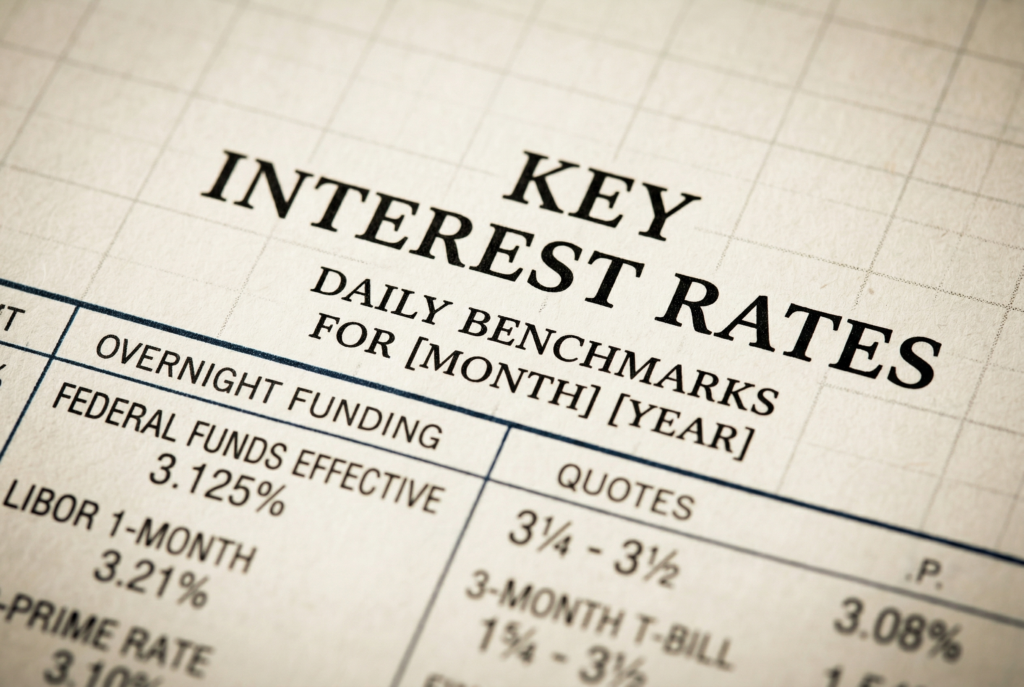
One of the most common reasons to refinance a personal loan is to get a lower interest rate. If your credit score has improved since you first borrowed, you may now qualify for better pricing. Lower rates can reduce the amount of interest paid and may also lower the monthly payment.
Another reason is cash flow relief. Some borrowers refinance because they need a smaller monthly payment to fit their budget more comfortably. This often happens by extending the repayment term. While that can help in the short term, it may increase the total cost of the loan if repayment takes much longer.
Some people also refinance to switch lenders, combine features they prefer, or move away from a loan with unfavorable terms. Others want to simplify repayment after their financial situation has changed. The motivation may differ, but the main question stays the same: does the new loan improve the overall borrowing experience in a meaningful way?
When Refinancing Can Help You Lower Your Interest Rate
Refinancing is most likely to help when your financial profile has improved since the original loan was approved. A stronger credit score, higher income, lower debt-to-income ratio, or more stable employment can all make you look like a lower-risk borrower.
Market conditions can matter too. If lenders are offering more competitive personal loan rates than they were when you first borrowed, you may have an opportunity to refinance into a lower-cost loan. The improvement doesn’t need to be dramatic to matter. Even a modest rate reduction can create savings, especially if a large balance remains on the loan.
Still, not every borrower will qualify for a better deal. If your credit score has dropped, your income has become less stable, or your overall debt has increased, refinancing may not improve your terms. In some cases, the new rate may be no better than what you already have.

How Refinancing Can Reduce Monthly Payments
A refinanced loan can lower your monthly payment in two main ways. The first is by reducing the interest rate. If the rate drops enough, your required payment may decrease even if the loan term stays similar.
The second is by extending the repayment period. Spreading the balance over more months usually reduces the amount due each month. This can make the loan more manageable in the near term, especially if you’re dealing with tighter cash flow or other rising expenses.
But lower payments deserve a closer look. A smaller monthly bill can feel like a win, yet extending the term may mean paying interest for much longer. That can raise the total amount repaid, even though the loan feels easier to handle month to month.
This is why refinancing decisions shouldn’t be based only on the monthly payment. The smarter comparison looks at the full structure of the new loan, including total interest and the amount you’ll pay by the end of the term.
Key Benefits of Personal Loan Refinancing
One major benefit of personal loan refinancing is potential savings. A lower rate can reduce total borrowing cost and help more of each payment go toward principal instead of interest. That can make debt repayment more efficient.
Another benefit is improved flexibility. A new loan may offer a repayment term that better matches your current needs. If your budget has become tighter, a longer term may provide breathing room. If your income has improved, a shorter term may help you get out of debt faster.
Refinancing may also make repayment feel more manageable psychologically. A loan with clearer terms, a more competitive rate, or a better lender experience can make it easier to stay on track. In some cases, borrowers also benefit from updated features such as autopay discounts, improved online account tools, or more convenient customer service.
Risks and Drawbacks You Shouldn’t Ignore
Refinancing isn’t always the right move. One of the biggest risks is focusing too much on a lower monthly payment and not enough on total cost. A longer term may reduce monthly pressure while increasing overall interest paid.
Fees can also reduce the value of refinancing. Some lenders charge origination fees or other loan costs that offset the benefit of a lower rate. If the savings are small, fees can erase them quickly.
There’s also the possibility that refinancing won’t improve your terms at all. Some borrowers apply expecting a much lower rate and receive offers that are only slightly better or even worse than the current loan. In that situation, refinancing may not be worth pursuing.
A new loan application may also involve a hard credit inquiry, which can affect your credit score slightly. That usually isn’t the biggest issue, but it’s still part of the process. More importantly, taking on a new loan without carefully reviewing the terms can create a false sense of progress while leaving the underlying debt problem mostly unchanged.
How to Know if Personal Loan Refinancing Makes Sense
Refinancing tends to make the most sense when you can clearly improve at least one major part of the loan without creating a bigger disadvantage somewhere else. That might mean lowering the APR, reducing the monthly payment in a sustainable way, shortening the term, or moving into a loan with lower fees and better terms overall.
A good starting point is to compare your current loan details with potential refinance offers. Look at the remaining balance, current rate, monthly payment, months left, and any prepayment penalties or fees. Then compare those numbers with the proposed refinance terms.

If the new loan lowers your rate and reduces total interest, the case for refinancing is usually stronger. If the new loan mostly lowers the monthly payment by extending the term, the decision becomes more about cash flow than cost savings. That can still be valid, but it should be a conscious tradeoff.
What Lenders Look at When You Apply
Lenders typically review many of the same factors they considered when you first borrowed. Your credit score is a major one, because it helps them assess repayment risk. Stronger credit often leads to better rates, while weaker credit can limit your options.
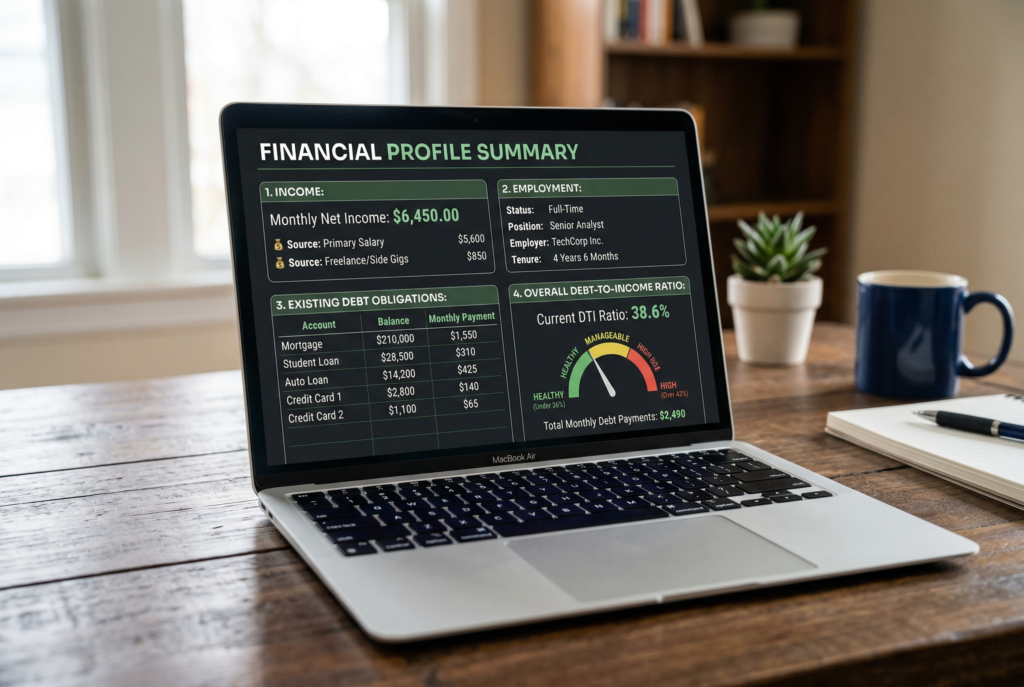
Lenders also look at income, employment, existing debt obligations, and overall debt-to-income ratio. They want to see that you have the ability to manage the new loan responsibly. Some may also consider payment history on your existing loan, bank account activity, or other financial indicators.
Because lender standards vary, shopping around matters. One lender may view your profile more favorably than another. This is one reason prequalification can be so useful. It gives you a way to compare possible terms before committing to a full application.
How to Compare Refinance Offers Wisely
The best refinance offer isn’t always the one with the lowest advertised rate. You should compare the full APR, not just the base interest rate, because APR reflects certain fees and gives a clearer view of borrowing cost.
Also look closely at the repayment term, monthly payment, total repayment amount, and any origination fee or penalty. A loan with a lower rate but a sizable fee may not be the best deal. Likewise, a loan with a lower monthly payment may cost more overall if it extends repayment too far.
It’s also worth reviewing lender reputation, customer support, payment flexibility, and whether the lender charges late fees or offers hardship options. The numbers matter most, but the overall borrowing experience matters too.
Conclusion
Personal loan refinancing can be a useful strategy for borrowers who want to lower their interest rate, reduce monthly payments, or restructure debt in a way that better fits their current budget. It can create real savings when credit has improved or when a stronger loan offer becomes available. But refinancing only works in your favor when the new terms are genuinely better than the old ones. By comparing offers carefully, reviewing fees and total repayment cost, and staying focused on long-term financial impact, you can decide whether refinancing your personal loan is a smart move or simply a temporary adjustment.

