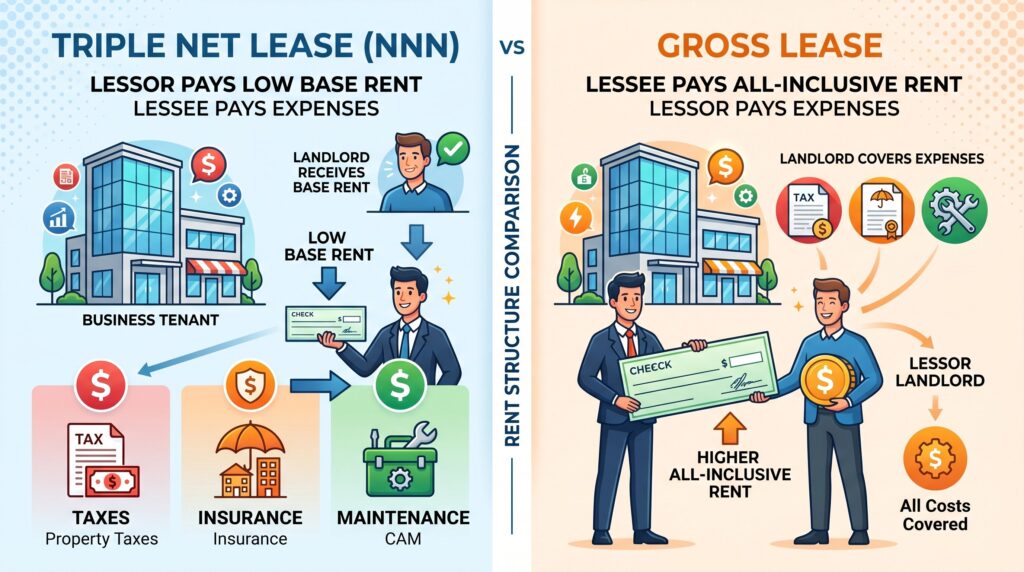
Choosing between a triple net lease and a gross lease isn’t just about comparing rent numbers. It’s about understanding who pays for taxes, insurance, maintenance, utilities, and repairs after the commercial lease agreement is signed. These days, operating costs can shift quickly, so the lease label matters less than the exact language inside the contract. A low base rent can become expensive if the tenant carries too much cost risk.
NNN Meaning: Understanding the Triple Net Lease
NNN meaning is simple: the three “nets” are property taxes, building insurance, and common area maintenance. So, what does NNN mean in practical terms? It means the tenant pays base rent plus the property’s major operating expenses.
The triple net lease meaning is important because it changes the real cost of occupying a space. In a triple net lease, the landlord often advertises a lower base rent, but the tenant takes on variable expenses. If property taxes rise, insurance premiums increase, or maintenance costs jump, the tenant usually feels that increase.
A triple net lease is common in retail, restaurants, warehouses, medical offices, and single tenant commercial property for lease. It can work well, but only when the tenant understands the full expense package.
Gross Lease: Simplicity With Fixed Costs

A gross lease is the opposite structure. The tenant pays one fixed monthly rent, and the landlord usually pays most property operating expenses. This may include taxes, insurance, common area maintenance, and sometimes utilities, depending on the lease.
The biggest advantage of a gross lease is budget certainty. A business knows what it’ll pay each month, which makes forecasting easier. The base rent is usually higher than an NNN lease, but there are fewer surprise pass through costs. For tenants who value stability, a gross lease can be attractive. For landlords, it means more responsibility and more exposure to rising expenses.
Detailed Comparison: Who Pays for What?
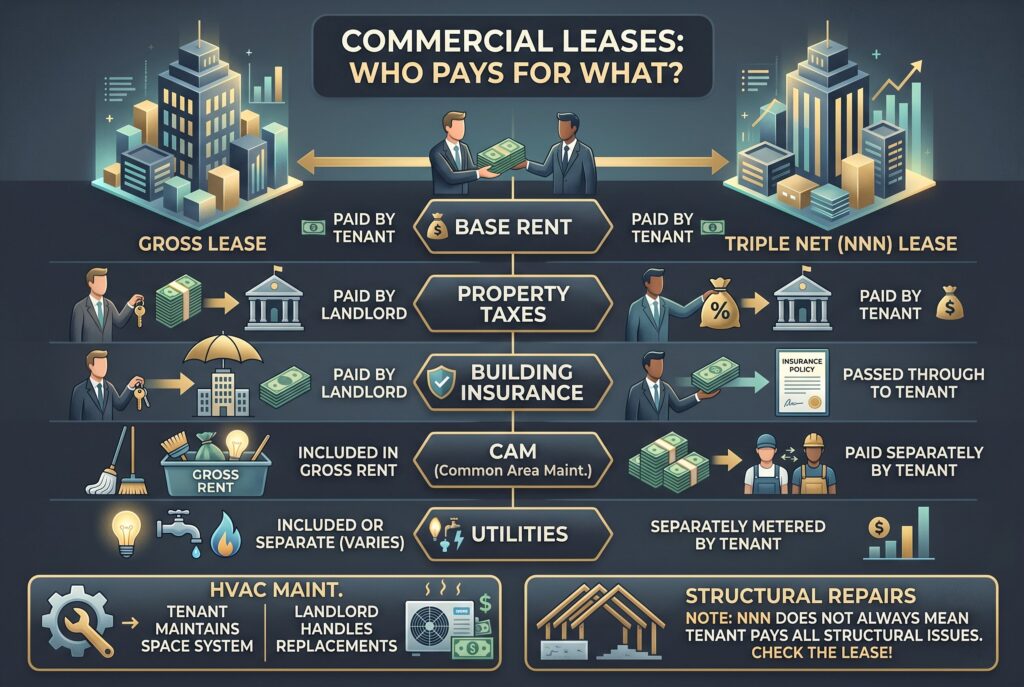
In a commercial lease agreement, responsibility depends on the exact wording. Still, the basic structure usually works like this. Base rent is paid by the tenant in all lease types.
Property taxes are usually paid by the landlord in a gross lease and by the tenant in a triple net lease. Building insurance is usually paid by the landlord in a gross lease and passed through to the tenant in an NNN lease. CAM is usually included in gross rent under a gross lease, but paid separately by the tenant under a triple net lease. Utilities may be included, separately metered, or partly shared, depending on the property.
HVAC maintenance can be tricky. Some leases make the tenant maintain the system serving their space, while others keep replacement obligations with the landlord. Structural repairs are one of the most important items to review. Roof, foundation, exterior walls, and major building systems should be clearly assigned. A lease may be called NNN, but that doesn’t automatically mean the tenant pays for every structural issue.
Cost Calculator: Real Total Occupancy Cost
A lease calculator should compare total occupancy cost, not just advertised base rent. For example, imagine a gross lease costs $8,000 per month. That includes most expenses.
Now imagine a triple net lease with $6,200 base rent, plus $900 in taxes, $300 in insurance, $1,000 in CAM, and $400 in utilities. The total monthly cost becomes $8,800. The NNN lease looked cheaper at first, but the real cost is higher.
That’s why tenants should calculate annual and monthly totals before signing. Add base rent, taxes, insurance, CAM, utilities, HVAC obligations, and any expected increases. Investors should do the same when evaluating cash flow, because the lease structure directly affects net operating income and risk.
Total Occupancy Cost Calculator
Compare a gross lease with a triple net lease by calculating the real total occupancy cost. This calculator includes base rent, taxes, insurance, CAM, utilities, HVAC obligations, and expected increases.
Gross Lease
Triple Net Lease
Gross Lease Monthly Cost = Gross Rent + Expected Increase
NNN Monthly Cost = Base Rent + Taxes + Insurance + CAM + Utilities + HVAC + Expected Increase
Annual Cost = Monthly Cost × 12
Modified Gross Lease: The Balanced Option
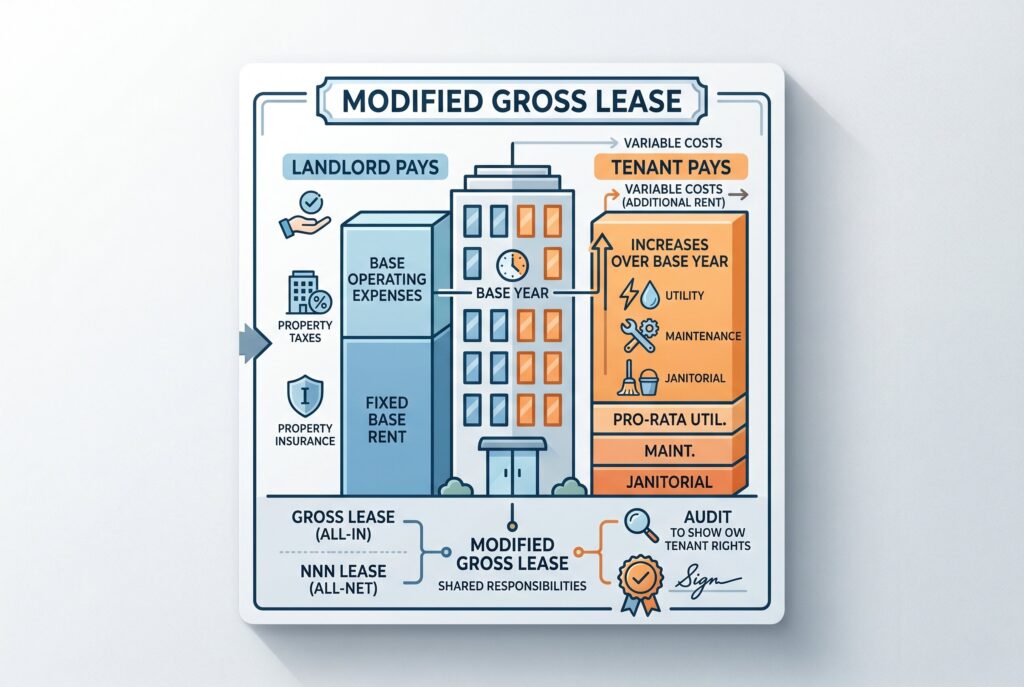
A modified gross lease sits between a gross lease and a net lease. It divides expenses between landlord and tenant in a customized way. For example, the tenant may pay base rent and utilities, while the landlord pays property taxes and insurance. In another modified gross lease, the tenant may pay increases above a base year. This base year structure is common in office leases.
A modified gross lease can be useful because it creates balance. Tenants get more predictability than an NNN lease, while landlords can still share some cost increases. However, the details matter. “Modified gross” isn't one fixed formula. It depends entirely on the contract.
Leasing Strategy: Which Option Gives the Best Advantage?
For Tenants
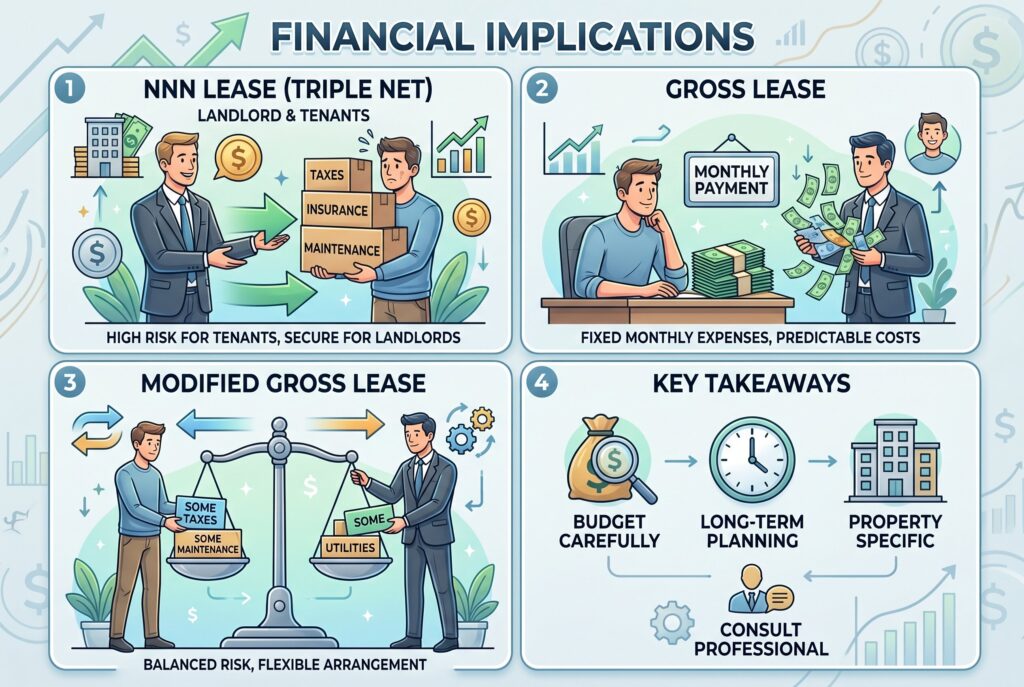
An NNN lease requires careful consideration. Property taxes, insurance, utilities, and maintenance costs can rise quickly, making expenses unpredictable. For businesses with thin margins, these variable costs can create significant budget pressure. A gross lease may be a better fit for companies that need fixed monthly expenses. Startups, service-based businesses, and office tenants often prioritize predictable occupancy costs, even if the base rent is higher.
For Landlords
A triple net (NNN) lease can help protect profit margins. By passing operating expenses through to tenants, landlords can preserve income even when inflation drives costs up. This stability is why many investors favor NNN leases, particularly when leasing to strong, reliable tenants.
A Balanced Option: Modified Gross Lease
A modified gross lease can offer a more flexible solution. It allows both tenants and landlords to share certain costs, creating a fairer distribution of risk. This structure is especially useful when both parties want stability but prefer not to bear all cost increases individually.
Conclusion
Triple net, gross lease, and modified gross lease are useful labels, but they aren't enough. The real answer is always inside the lease. Before signing, review CAM definitions, tax pass throughs, insurance obligations, HVAC duties, repair clauses, base year language, and audit rights. Tenants should ask for the right to review actual CAM expenses. Landlords should define costs clearly to avoid disputes. The best lease isn't always the one with the lowest rent. It’s the one with the clearest responsibilities and the most realistic total cost.
Related Articles
Commercial Property for Lease: NNN Hidden Costs Business Owners Miss