
Airport lounge access used to feel like a quiet luxury reserved for frequent business travelers. In 2026, premium travel cards have made lounges easier to reach, but also harder to understand. Many travelers open credit cards with lounge access expecting free food, calm seating, Wi-Fi, and family-friendly comfort, only to discover guest fees, visit limits, authorized user costs, overcrowding rules, or airline restrictions after paying a large annual fee. The right credit card with airport lounge access can be valuable, but only if the rules match how you actually travel.
How Airport Lounge Access Actually Works
Airline Lounges vs Independent Lounge Networks
Airline lounges are usually tied to a specific airline, such as American, Delta, or United. They work best if you often fly that carrier or live near one of its hubs.
Independent lounge networks, such as Priority Pass, are broader and more flexible. They may include lounges across many airports and countries, but quality varies widely. Some lounges feel premium, while others are basic waiting rooms with snacks.
Priority Pass Explained
A Priority Pass credit card gives access to participating lounges in the Priority Pass network. This can be excellent for international travel, where Priority Pass coverage is often stronger. The catch is that not every Priority Pass membership is equal. Guest rules, restaurant credits, and lounge access depend on the card issuer. You should read the actual benefit terms, not just the marketing line.
Credit Card Lounge Partnerships
Some premium travel cards offer access to their own lounge networks. Amex, Capital One, and Chase have all invested in branded lounges. These can be better than typical contract lounges, but they’re not available at every airport.
What You Usually Need to Enter a Lounge
Most lounges require a same-day boarding pass, eligible credit card or membership, government ID, and sometimes enrollment in a lounge program. Some lounges restrict entry to a few hours before departure, especially when crowded.
The True Costs of Lounge Access Credit Cards
Annual Fees Are Higher Than Ever
Many lounge access credit cards sit in the premium card category, where annual fees can range from roughly $395 to $695 or more. The fee may be worth it if you travel often and use the card’s credits, insurance, and lounge benefits. It isn’t worth it if you only fly once a year.
Authorized User Fees Add Up Quickly
Authorized user lounge access can be helpful for couples and families, but it can also raise the true cost. A card that looks affordable for one traveler may become expensive when you add a spouse, partner, or adult child.
Guest Access Is Often Not Free
This is where families get surprised. Some cards allow free guests, some charge per guest, and some limit the number of children. If you’re a family of four or five, the airport lounge guest policy may matter more than the headline annual fee.
Some Unlimited Lounge Access Now Has Restrictions
“Unlimited” doesn’t always mean effortless. Lounges can deny entry when full. Some programs limit visits. Others restrict guests. Lounge access is increasingly valuable, but also increasingly controlled because overcrowding has become a real issue.
2026 Lounge Access Rules Most Travelers Miss
- Priority Pass Guest Policies Changed: Priority Pass access depends heavily on the card. One premium card may include two free guests, while another may charge. Some benefits no longer include restaurant credits. Always check the card-specific version of Priority Pass.
- Delta Sky Club Visit Limits: Airline lounge rules are becoming stricter. Some premium cardholders now face visit limits unless they meet spending thresholds. This shows a wider industry trend: lounge access is moving from “open perk” to controlled benefit.
- Capital One and Chase Lounge Expansion: Capital One and Chase lounges are changing the lounge landscape. They offer strong food, design, and amenities, but their networks are still smaller than Priority Pass or major airline clubs.
- Lounge Overcrowding Restrictions: Even eligible travelers can be turned away during peak periods. If your main airport is crowded, a lounge benefit may be less reliable than it appears on paper.
Best Types of Lounge Access Cards by Traveler Type

Best for Frequent Solo Travelers
Solo travelers should prioritize broad airport coverage, simple entry rules, and unlimited or high visit allowances when choosing a lounge program. Since they often travel alone, flexibility matters more than guest perks, especially for people who frequently connect through different airports and airlines. A strong airport lounge access credit card can easily justify its annual fee if you fly monthly, particularly when it includes Priority Pass, travel credits, dining benefits, and reliable lounge access during delays or long layovers.
Best for Families
The best lounge card for families is usually the one with the most generous guest and child policy, not necessarily the largest lounge network. Parents should compare guest access rules, authorized user fees, child age limits, and whether the lounge program actually matches the airlines and airports they use most often. A card with free guest access can save families hundreds of dollars per year compared to lounges that charge per person.
For larger households, simplicity matters just as much as luxury. A family of five may get far more value from one card that allows multiple complimentary guests than from a premium card with stricter entry limits or expensive guest fees. Family travelers should also pay attention to crowding, lounge seating space, food quality, and whether the network includes family-friendly airports they regularly fly through.
Best for Occasional Travelers
Occasional travelers should think carefully before paying for a premium lounge card. If you only fly once or twice a year, buying day passes or choosing a lower-fee travel card may deliver better overall value than spending hundreds annually on benefits you rarely use. Many travelers overestimate how often they will actually visit lounges, especially on shorter domestic trips.
Instead of focusing only on luxury perks, occasional flyers should compare the real cost per visit. A premium card may only make sense if you also use the travel credits, hotel perks, TSA PreCheck benefits, or bonus rewards enough to offset the annual fee. For infrequent travelers, flexibility and lower costs are often more practical than unlimited lounge access.
Best for Airline Loyalists
If you almost always fly the same airline, an airline lounge card may provide more practical value than a general Priority Pass credit card. Airline lounges are often more consistent, easier to access on same-day flights, and more helpful during delays, cancellations, or rebooking situations. Frequent flyers also benefit from staff who can directly assist with flight changes and loyalty program issues.
This becomes even more valuable if your home airport has a strong airline lounge presence. A traveler based in a Delta hub, for example, may get far more use from Delta Sky Club access than from a broader lounge network they rarely encounter. In many cases, consistent access at your most-used airport matters more than having the largest global lounge network on paper.
Best for Priority Pass Access
Credit cards with Priority Pass are best for travelers who fly internationally, use multiple airlines, or frequently pass through airports with strong independent lounge coverage. The biggest advantage is flexibility because you are not tied to a single airline or alliance. This makes Priority Pass especially useful for people who book based on price, schedule, or convenience rather than airline loyalty.
The value becomes even stronger at airports where independent lounges are more common than airline-operated lounges. Travelers with long layovers, international connections, or unpredictable travel schedules often benefit the most because they can access lounges across many different airports worldwide without needing elite airline status.
Comparison Table: What You Actually Get in 2026
| Card Type | Annual Fee | Lounge Network | Guest Policy | Best For |
| Premium travel card | High | Issuer lounges plus Priority Pass | Varies by issuer | Frequent travelers |
| Airline lounge card | Medium to high | Airline-specific clubs | Often stronger for loyalists | Airline hub flyers |
| Priority Pass card | Medium to high | Independent global lounges | Varies widely | International travelers |
| Day pass | Pay per visit | One lounge at a time | Usually extra per guest | Occasional travelers |
| Family-friendly airline card | High | Airline club network | May allow spouse and children | Families flying same airline |
Is Lounge Access Actually Worth Paying For?
- The Airport Food Cost Calculation: If two airport meals and drinks cost $60 to $90 per trip, lounge access can add up quickly. For frequent travelers, food savings alone may offset part of the annual fee.
- Frequent vs Occasional Traveler Math: A traveler who visits lounges 20 times a year gets far more value than someone who flies twice. Divide the annual fee by expected visits to estimate your per-visit cost.
- Family Travel Savings: Families can save more because airport meals for four or five people are expensive. But only if guest access is free or affordable.
- Why Some Travelers Overpay for Premium Cards: Some people pay for status, not value. If you don’t use travel credits, lounge visits, insurance, or rewards, the premium fee becomes an expensive decoration.
- When Day Passes Make More Sense: If you travel rarely, buy a day pass when you actually need comfort. It may be cheaper than carrying a high-fee card all year.
Priority Pass vs Airline Lounges vs Issuer Lounges
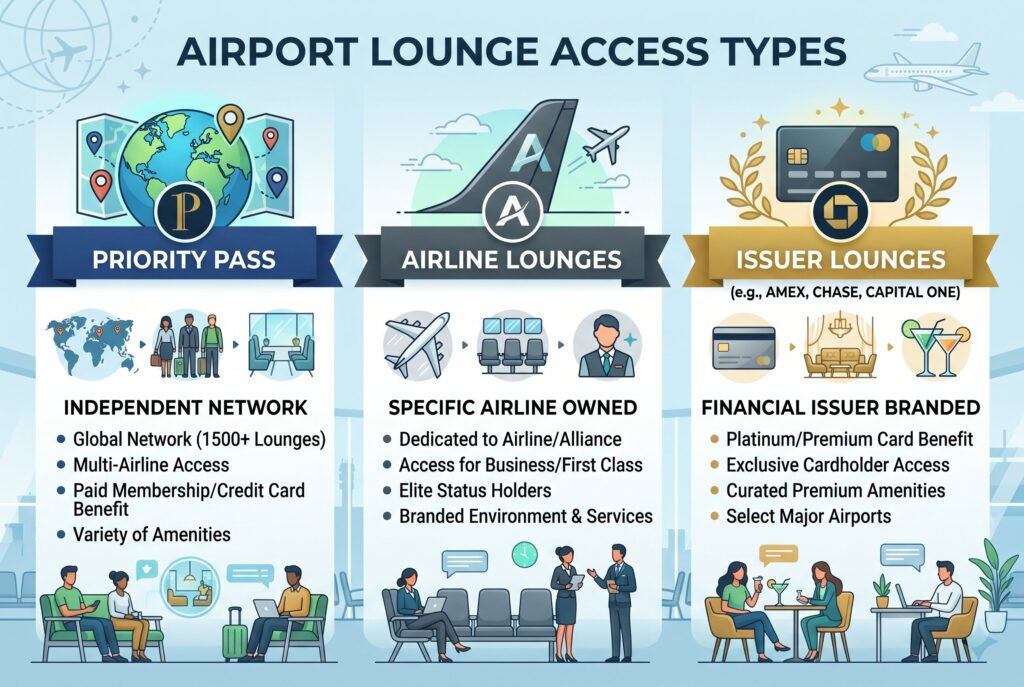
Priority Pass is broad and useful for international travelers because it works across many airports and airlines worldwide. The biggest advantage is flexibility, especially if you don’t stay loyal to one carrier. However, lounge quality can feel inconsistent. Some locations offer premium food, showers, and quiet seating, while others may be crowded with only basic snacks and limited space during busy travel times.
Airline lounges are usually better for frequent flyers who stick with one airline because they provide more consistent service and better help during delays or cancellations. Issuer lounges like Centurion or Capital One often feel the most premium overall, with higher-quality food, modern interiors, and upscale amenities, but their networks are much smaller. The best lounge option ultimately depends on your home airports, airline habits, family travel needs, and how much flexibility versus luxury you value.
Final Thoughts
A credit card with lounge access is no longer just about “free airport luxury.” The real value depends on how often you travel, which airports you use, and whether the card’s lounge network actually matches your flying habits. Before applying, travelers should compare annual fees, guest policies, authorized user costs, lounge visit limits, and how frequently they realistically expect to use the benefits.
For solo frequent travelers, premium travel cards with unlimited lounge access can easily justify the annual fee through comfort, food, Wi-Fi, and airport flexibility. For families, guest access rules often matter more than luxury amenities because extra guest fees can become expensive quickly. Occasional vacation travelers, on the other hand, may save more money with day passes or lower-fee cards instead of paying for benefits they rarely use. The best card is not necessarily the one with the most premium branding, it’s the one that consistently gets you into the right lounge, at the right airport, with the right people, without overspending.
Related Articles
- 7 Universal Credit Card Benefits: 2026 Rewards & Hidden Perks
- The Truth About Metal Credit Cards: 2026 Perks vs. Annual Fees
- Rewards Credit Cards Explained: How They Work and 10 Best Options for Maximizing Benefits
- Cash-Back Credit Cards Explained: How They Work and 10 Smart Ways to Maximize Rewards