
In options trading, the first concept every beginner should understand is call vs. put. A call option gives the buyer the right to buy an asset at a fixed price, while a put option gives the buyer the right to sell it at a fixed price. The fixed price is called the strike price, the cost of the contract is the premium, and the contract ends on the expiration date. For every option buyer, there is a seller on the other side of the trade, making options a market where gains and losses are typically balanced between participants. Understanding calls and puts is the foundation of any successful options strategy.
The basic put vs call distinction is simple: calls are generally used when you expect prices to rise, while puts are generally used when you expect prices to fall or want downside protection. But the real skill comes from knowing when to buy, when to sell, and when to avoid the trade completely.
The 4-Quadrant Payoff Visualizer
| Position | Profit Potential | Maximum Loss |
| Buy Call | Unlimited | Premium paid |
| Sell Call | Premium received | Unlimited (if naked) |
| Buy Put | High if stock falls | Premium paid |
| Sell Put | Premium received | Must buy shares if assigned |
Buyers have limited risk and larger upside, while sellers collect income upfront but take on greater obligations and risk.
The Basics: What Are Calls and Puts?
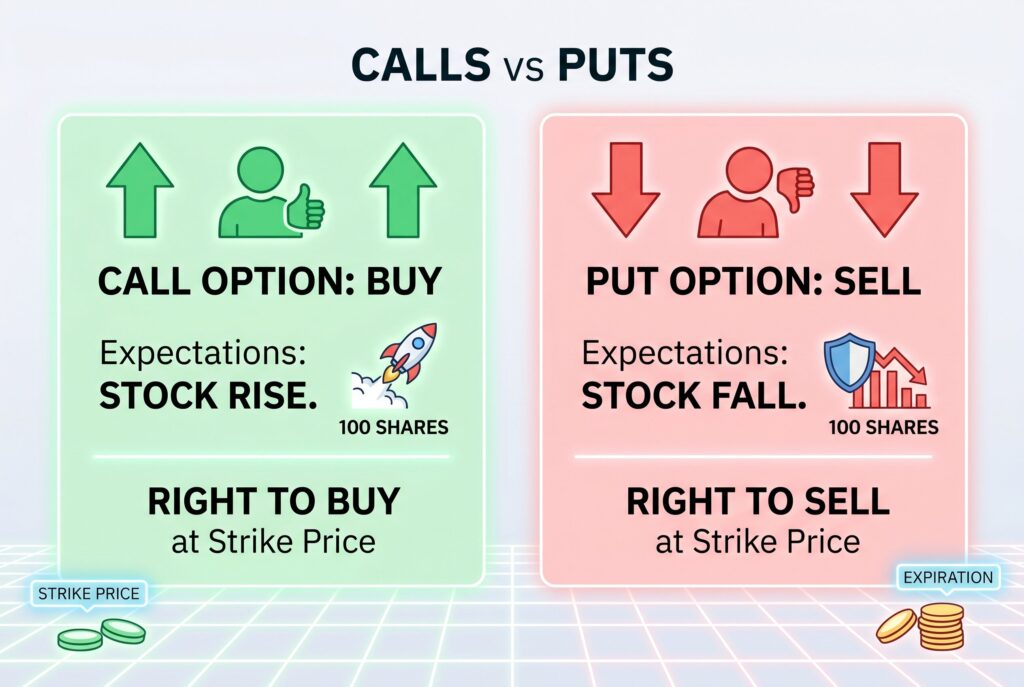
Every options contract has three core parts: premium, strike price, and expiration date. Without understanding those terms, calls vs puts can feel more complicated than they need to be.
A call option gives you the right, but not the obligation, to buy 100 shares at the strike price before expiration. Traders buy calls when they believe the underlying stock may rise above the strike price plus the premium paid.
A put option gives you the right, but not the obligation, to sell 100 shares at the strike price before expiration. If you’re asking what is a put, think of it as downside protection. It can act like insurance for shares you already own or as a bearish trade when you expect a stock to decline.
Here’s the simple put vs call matrix:
| Feature | Long Call | Long Put |
| Market view | Bullish | Bearish or defensive |
| Buyer’s right | Right to buy | Right to sell |
| Maximum loss | Premium paid | Premium paid |
| Maximum profit | Large potential upside | Limited by stock falling to zero |
| Common use | Upside speculation | Hedging or downside speculation |
Calls and puts both control 100 shares per standard contract. That means a quoted premium of $2.00 usually costs $200, before fees. This multiplier is one of the most important details beginners miss.
When to Trade a Call Option
A call option may make sense when you expect a stock to rise meaningfully before expiration. The move needs to be large enough to overcome the premium paid. For example, suppose a stock trades at $50 and you buy a call with a $55 strike price for $2. Your breakeven at expiration is $57. The stock must rise above $57 before the trade becomes profitable.
Buying options can be attractive because it limits your upfront risk. You don’t need to buy 100 shares outright. Still, time works against you. If the stock rises too slowly, the option may lose value as expiration approaches. Calls can also be sold for income. A covered call involves selling a call option against shares you already own. If the stock stays below the strike price, you may keep the premium. If the stock rises above the strike price, your shares may be called away. Covered calls can fit income-focused investors, but they limit upside. You’re getting paid today in exchange for agreeing to sell shares at a set price later.
When to Trade a Put Option
A put option may make sense when you expect a stock to fall or when you want protection on a position you already own. For example, suppose you own 100 shares at $80 and buy a put with a $75 strike price. If the stock drops sharply to $60, the put gives you the right to sell at $75. You still take some loss, plus the premium paid, but the damage is controlled. This is called a protective put. It works like insurance. You pay a premium to reduce the risk of a deeper decline.
Traders may also buy puts for speculation. Instead of short selling a stock, they buy a put to profit if the stock falls. This can be safer than shorting because the maximum loss is limited to the premium. Short selling can create much larger losses if the stock rises sharply. The downside is time decay. If the stock doesn’t fall enough before expiration, the put may expire worthless.
Selling Options: Becoming the Casino
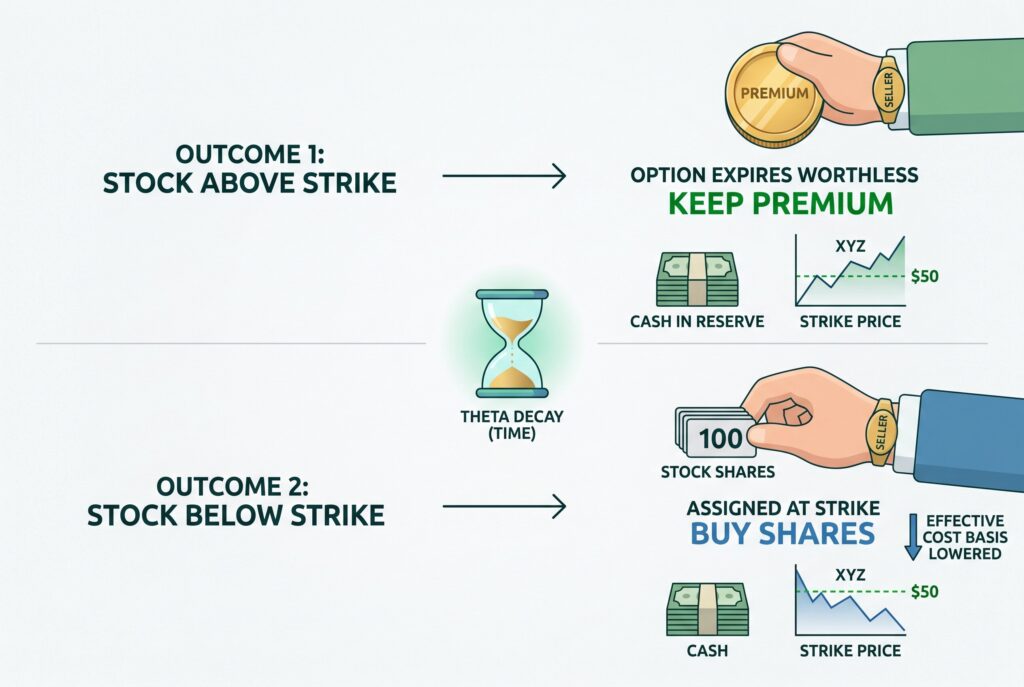
Many experienced investors eventually move from buying options to selling options. Instead of paying a premium and needing a fast move, they collect premium and let time decay work in their favor. When you’re selling puts or calls, you’re writing options. The buyer receives a right. The seller takes on an obligation. The key advantage is theta decay. Options lose time value as expiration approaches. If the stock moves sideways, the option buyer may lose money while the seller keeps the premium.
A cash secured put is one of the more conservative selling strategies. You agree to buy 100 shares at a strike price and keep enough cash in your account to cover that purchase. In exchange, you collect a premium upfront. For example, if a stock trades at $52 and you’d like to buy it at $50, you could sell a $50 put. If the stock stays above $50, the option may expire worthless and you keep the premium. If the stock falls below $50, you may be assigned and buy the shares at $50. The premium lowers your effective cost basis.
Selling a put isn’t free money. If the stock collapses, you can still suffer a large loss. This is why cash secured puts should be used only on stocks or ETFs you’re willing to own.
The Danger Zone: Covered vs. Naked Options
In the puts vs calls debate, the biggest risk often comes from whether the position is covered or naked. A covered call means you sell a call option while owning the shares. If assignment happens, you deliver shares you already have. The risk is mainly that you miss out on gains above the strike price. A naked call is very different. You sell a call without owning the stock. If the stock surges, you may be forced to buy shares at a much higher market price to deliver them. The potential loss can be unlimited.
A cash secured put is covered by cash. A naked put isn’t fully backed by cash and may rely on margin. If the stock falls sharply, the obligation to buy shares can become painful fast. New investors should avoid naked options. Defined-risk strategies and fully secured positions are much easier to understand and manage.
Conclusion
Calls and puts are more than trading terms. They are risk-management tools. Calls provide upside exposure with limited capital, while puts can hedge losses or profit from a declining stock. Strategies such as covered calls and cash-secured puts can also generate income.
However, options require discipline and a solid understanding of premiums, strike prices, expiration dates, and assignment risk. Start small, avoid naked positions, and use options strategically. When aligned with your risk tolerance, calls and puts can add flexibility to a portfolio while keeping investing focused and disciplined.