



A day trader buys and sells financial instruments within the same trading day, trying to profit from short-term price movement. These instruments may include stocks, options, futures, forex, or crypto. A true day trader usually closes all positions before the market closes and doesn’t hold trades overnight.
Day trading, also called intraday trading, can look exciting from the outside. Fast screens, quick profits, market news, and sudden breakouts. But the reality is much harder. Most beginners lose money because they underestimate risk, overtrade, use too much leverage, or enter trades without a tested plan. So if you want to learn how to day trade, start with this reality check: day trading isn’t a shortcut to easy income. It is a high-risk skill that requires capital, discipline, emotional control, fast execution, and strict risk management.
What Is a Day Trader?
A day trader is an investor who buys and sells financial securities, such as stocks, options, or cryptocurrencies, within the same trading day. The goal is to profit from short-term price movements rather than long-term investment growth. Day traders typically close all positions before the market closes to avoid overnight risk and often rely on technical analysis, market trends, and real-time data to make trading decisions.
The Core Rule: The $25,000 Pattern Day Trader Rule
The first step to know how to get into trading in the U.S. stock market, you need to understand the Pattern Day Trader rule, often called the PDT rule. Under FINRA rules, if you make four or more day trades within five business days in a margin account, and those trades represent more than 6% of your total trading activity during that period, your account may be marked as a Pattern Day Trader.
Once that happens, you generally must maintain at least $25,000 in equity in your margin account before you can continue day trading. If your balance falls below that level, your broker may restrict your ability to place new day trades until the requirement is met. This rule matters because many new traders think they can start with a few hundred dollars and trade actively every day. In a U.S. margin account, that usually isn’t realistic. You may still practice with a cash account, but cash accounts have settlement rules that limit how quickly you can reuse funds.
Interactive Tool: The Position Sizing & Risk Calculator
Position Sizing & Risk Calculator
Use this calculator before placing a trade to define risk in dollars, not feelings. Enter your account size, risk per trade, entry price, stop-loss price, and target price to estimate position size, maximum dollar loss, and reward-to-risk ratio.
Maximum Dollar Risk = Account Size × Risk per Trade
Risk per Share = Entry Price − Stop-Loss Price
Suggested Share Size = Maximum Dollar Risk ÷ Risk per Share
Maximum Dollar Loss = Suggested Share Size × Risk per Share
Potential Dollar Reward = Suggested Share Size × (Target Price − Entry Price)
Reward-to-Risk Ratio = Potential Dollar Reward ÷ Maximum Dollar Loss
Note: This calculator is for educational risk planning only. It does not account for slippage, gaps, commissions, liquidity, short selling rules, options risk, margin requirements, or taxes. Always understand your maximum possible loss before entering a trade.
Before placing any trade, you need to know how much you are willing to lose. A position sizing calculator helps you turn risk into a number instead of a feeling.
A simple risk calculator should include:
- Account size
- Risk per trade
- Entry price
- Stop-loss price
- Share size
- Maximum dollar loss
- Reward-to-risk ratio
For example, if your account is $30,000 and you risk 1% per trade, your maximum loss should be $300. If you buy a stock at $50 and place a stop at $48.50, your risk is $1.50 per share. That means your position size should be about 200 shares, not 1,000 shares. This is the difference between professional risk management and gambling. A good trader knows the loss before entering the trade.
How to Day Trade: 3 Essential Strategies
Many people searching for how to day trade want a strategy that works every time. Unfortunately, no such strategy exists. Markets are constantly changing, so the key is to understand your setup, stay patient, and manage risk rather than chasing every opportunity.
1. Momentum Trading
Momentum trading focuses on stocks or assets moving strongly in one direction. Day traders often look for news catalysts, earnings surprises, analyst upgrades, high volume, or unusual price movement. The key ingredients are liquidity and volatility. Liquidity helps you enter and exit quickly. Volatility creates enough movement for profit potential. Without both, a trade can become slow, choppy, and expensive.
2. Scalping
Scalping is a very short-term form of intraday trading. A scalper may hold a position for seconds or minutes, aiming to capture small price moves many times during the session. This style requires fast execution, tight spreads, discipline, and strong focus. One mistake can erase several small wins. Scalping isn’t ideal for beginners unless they understand order types, commissions, slippage, and stop-loss discipline.
3. Pullback Trading
Pullback trading means waiting for a strong trend to pause or retrace before entering. Instead of chasing a stock after it has already moved sharply, the trader waits for a better price. For example, if a stock breaks out on strong volume, a trader may wait for it to pull back toward a moving average or support level before buying. This strategy can reduce emotional entries, but it still requires confirmation and a clear exit plan. Swing trading is different from day trading. Swing trades are usually held for several days or weeks, while day trades are opened and closed within the same session.
The Trader’s Toolkit: Scanners, Level 2, and Charts
A serious day trader doesn’t rely only on a phone app and hope. The right tools help identify opportunity, manage speed, and reduce confusion. Stock scanners help filter the market for stocks with unusual activity. Traders may scan for gap percentage, relative volume, price range, float, short interest, and news catalysts. A good scanner helps answer: what is moving today, and why?
Charts help traders read price action. Common tools include candlesticks, volume bars, moving averages, support and resistance, VWAP, and trendlines. These tools don’t predict the future, but they help organize information. Level 2 data shows the order book, including bid and ask levels. Some traders use Level 2 to understand buying and selling pressure, though beginners should avoid treating it like a magic signal.
A direct access broker may also matter for active traders because execution speed can affect results. In day trading, a few cents of slippage can change the math.
The Real Risks of Day Trading
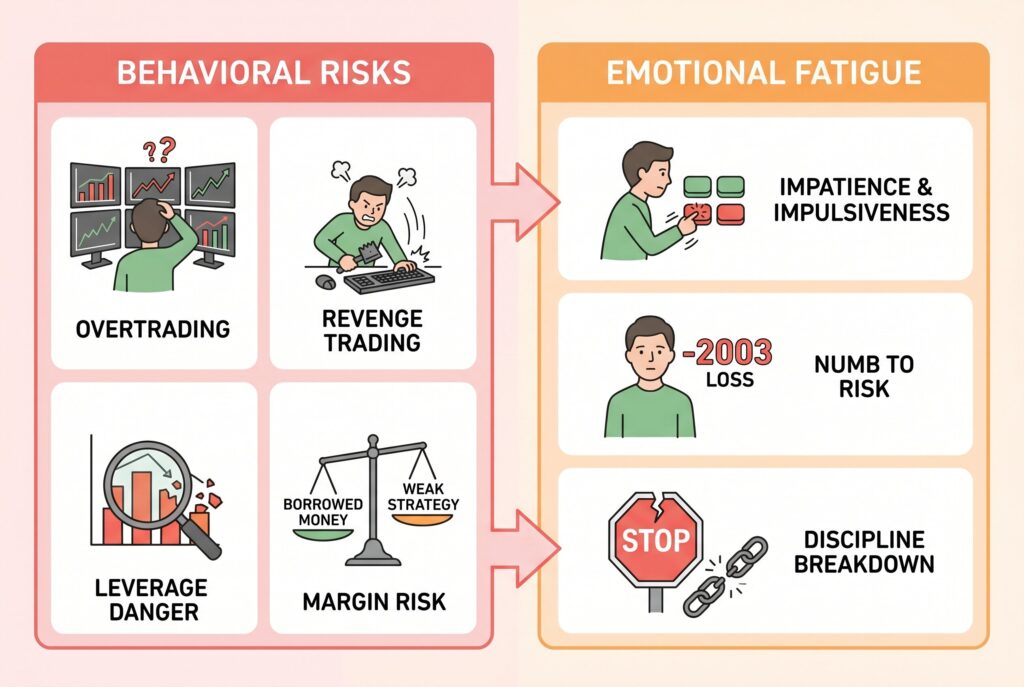
Day trading risks aren’t limited to losing money on one bad trade. The deeper risks are behavioral. Overtrading happens when you take too many low-quality setups. Revenge trading happens when you try to win back a loss immediately. Leverage can magnify gains, but it can also destroy an account quickly. Margin lets you trade with borrowed money, but borrowed money doesn’t make a weak strategy stronger.
There is also emotional fatigue. Watching charts all day can make traders impatient, impulsive, or numb to risk. That is why every trading plan should include a daily max loss, a maximum number of trades, and a rule for stopping when discipline breaks.
Conclusion
If you’re serious about learning how to day trade, start with a simulator or demo account before risking real money. Spend at least three to six months practicing and keep detailed records of every trade. Note the setup, entry, stop loss, profit target, outcome, and any mistakes that influenced your decisions.
A few profitable trades don’t prove a strategy works. Consistency matters far more than a lucky streak. Before moving to a live account, look for evidence that you can follow your rules under different market conditions and manage losses without letting emotions take over. Most successful day traders accept that losses are part of the business. Their focus stays on protecting capital, controlling risk, and letting results accumulate over hundreds of trades rather than a handful of winners. The market will open again tomorrow. A disciplined trader makes sure their account is ready for it.

