
When it comes to investing, knowing how to choose the right assets for your portfolio is critical to achieving financial success. Whether you’re just starting out or you’ve been investing for years, understanding how to choose the right investment for your goals and risk tolerance is the foundation for building a strong, diversified portfolio that maximizes returns over the long term.
In this guide, we’ll explore key considerations for selecting investments, the importance of asset allocation, and practical steps you can take to make informed decisions. By following these strategies, you can build a portfolio that aligns with your financial goals, helps manage risk, and maximizes your potential for growth.
Understanding Your Financial Goals and Time Horizon

Before making any investment decisions, the first step is to clearly define your financial goals and determine your investment time horizon. These two factors will directly influence your investment strategy and the types of assets that are best suited for your portfolio.
Short-Term vs. Long-Term Goals
Your investment strategy should differ depending on whether you are investing for short-term or long-term goals. For example, if you’re saving for a down payment on a house within the next 1-5 years, you’ll likely want to prioritize safer, more liquid investments, such as bonds, money market funds, or certificates of deposit (CDs). These assets are lower risk, though they may offer modest returns.
On the other hand, if you’re investing for retirement in 20 or 30 years, your time horizon is longer, and you can afford to take on more risk in exchange for potentially higher returns. In this case, investing in stocks, equity mutual funds, or even real estate may be appropriate, as these assets tend to provide higher growth potential over time.
Assessing Your Risk Tolerance
Understanding your risk tolerance is just as important as defining your financial goals. Risk tolerance refers to how much market volatility and potential loss you are comfortable with in order to achieve a specific return. Everyone has a different level of risk tolerance, and this will shape your investment choices.
If you’re uncomfortable with market fluctuations and potential losses, you may have a low risk tolerance and should consider investments that offer stability and predictable returns, such as bonds or cash-equivalents. If you’re more comfortable with risk and can tolerate market downturns, you may have a higher risk tolerance, which would make investing in stocks or growth-oriented mutual funds more suitable.
Key Asset Classes to Consider for Your Portfolio
Stocks and Equity Investments
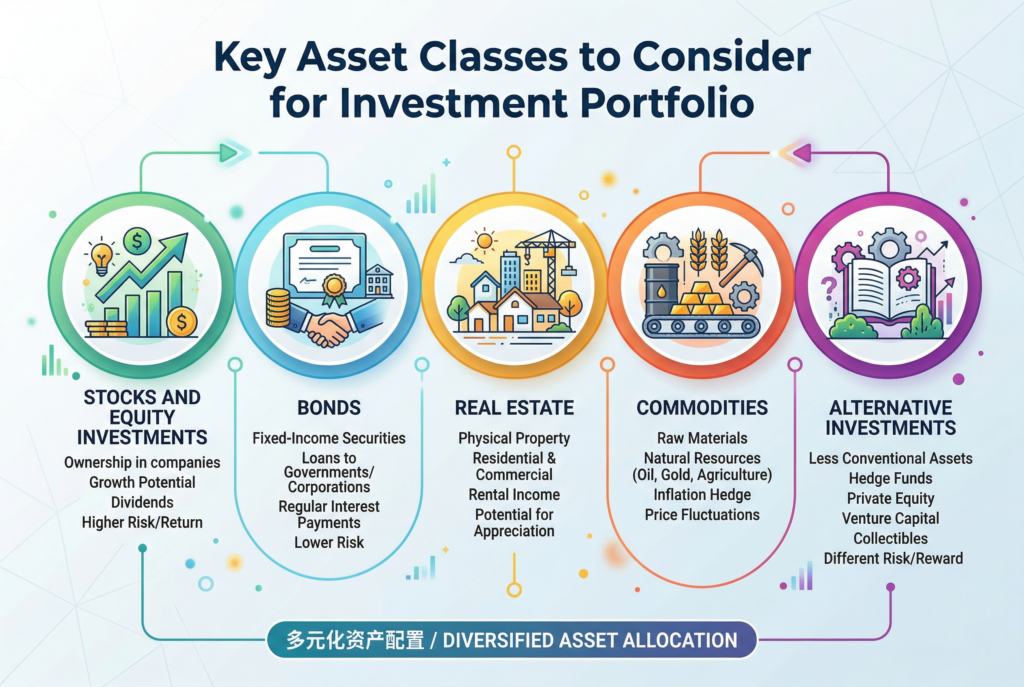
Stocks are one of the most well-known investment types, and for good reason. Equity investments give you partial ownership in a company, and while they can be volatile in the short term, they tend to offer high returns over the long term. Stocks can be a great choice for long-term goals like retirement, as they generally appreciate in value over time. Investing in a diverse range of stocks can help spread risk while also capitalizing on the potential for significant growth.
When selecting stocks, it’s important to conduct fundamental analysis, which involves looking at factors such as the company’s earnings, growth potential, and market position. Additionally, you can consider exchange-traded funds (ETFs) or mutual funds that invest in stocks, providing instant diversification.
Bonds
Bonds are debt securities where you lend money to a company or government entity in exchange for regular interest payments. Bonds are considered less risky than stocks, making them a popular choice for conservative investors or those with short-term goals. While they generally offer lower returns than stocks, they provide more stability and regular income.
There are several types of bonds to consider:
- Government bonds: Issued by national governments, these bonds are considered low-risk.
- Municipal bonds: Issued by state or local governments, these bonds often come with tax advantages.
- Corporate bonds: Issued by companies, these bonds offer higher returns but carry more risk.
Real Estate
Investing in real estate can offer both income and long-term appreciation, making it a popular asset class for building wealth. Real estate investments can be made directly through purchasing property, or indirectly through Real Estate Investment Trusts (REITs). REITs allow you to invest in real estate without the need to physically buy or manage properties.
Real estate can provide a stable income stream, especially if you invest in rental properties. However, it’s important to understand the risks, such as market fluctuations, property maintenance costs, and illiquidity, which may make real estate less accessible for some investors.
Commodities
Commodities, such as gold, oil, or agricultural products, are physical assets that can be bought and sold. Investing in commodities can serve as a hedge against inflation and market volatility, especially in uncertain economic times. Gold and other precious metals have historically been used as safe-haven assets during periods of inflation or economic instability.
However, investing in commodities can be highly speculative and volatile. Prices are influenced by a range of factors including geopolitical events, natural disasters, and shifts in supply and demand. Commodities can be an effective diversification tool but should be approached cautiously.
Alternative Investments
In addition to traditional assets like stocks and bonds, alternative investments such as cryptocurrency, private equity, or hedge funds have become increasingly popular. These investments typically carry higher risks but may offer higher returns compared to traditional assets. As a beginner, it’s essential to understand the unique risks of these investments before diving in.
The Importance of Diversification
When choosing your investments, one of the most important strategies is diversification. Diversification involves spreading your investments across various asset classes and industries to reduce risk. By holding a mix of stocks, bonds, real estate, and cash equivalents, you reduce the likelihood that a downturn in one asset class will negatively affect your entire portfolio.
A well-diversified portfolio balances risk and reward and helps smooth out market fluctuations. You can diversify within asset classes by investing in ETFs or mutual funds that provide exposure to a range of sectors or geographic regions.

Creating and Maintaining a Portfolio
Once you’ve decided on the types of assets to invest in, it’s important to allocate your assets according to your investment goals, risk tolerance, and time horizon. For instance, if you’re young and investing for retirement, you may want to allocate a large portion of your portfolio to stocks and equity funds for growth. If you’re closer to retirement, you might focus more on bonds and dividend-paying stocks to generate income while protecting your capital.
Regularly Rebalance Your Portfolio
It’s important to periodically review and rebalance your portfolio to ensure it continues to meet your goals and risk tolerance. Over time, some assets may perform better than others, causing your portfolio to become skewed toward one asset class. Rebalancing involves buying and selling assets to maintain your desired allocation and ensure that you stay aligned with your financial objectives.
Avoid Common Investment Mistakes
Many investors make mistakes that can harm their financial success. Some common mistakes include:
- Chasing past performance: Just because an investment has performed well in the past doesn’t guarantee it will continue to do so in the future.
- Overconcentration in a single asset: Placing all your money in one asset or industry can expose you to unnecessary risk.
- Trying to time the market: Predicting short-term market movements can be challenging and lead to poor investment decisions.
The key to successful investing is staying disciplined, avoiding emotional decisions, and sticking to your long-term plan.
Conclusion: Build a Strong Portfolio with the Right Investments
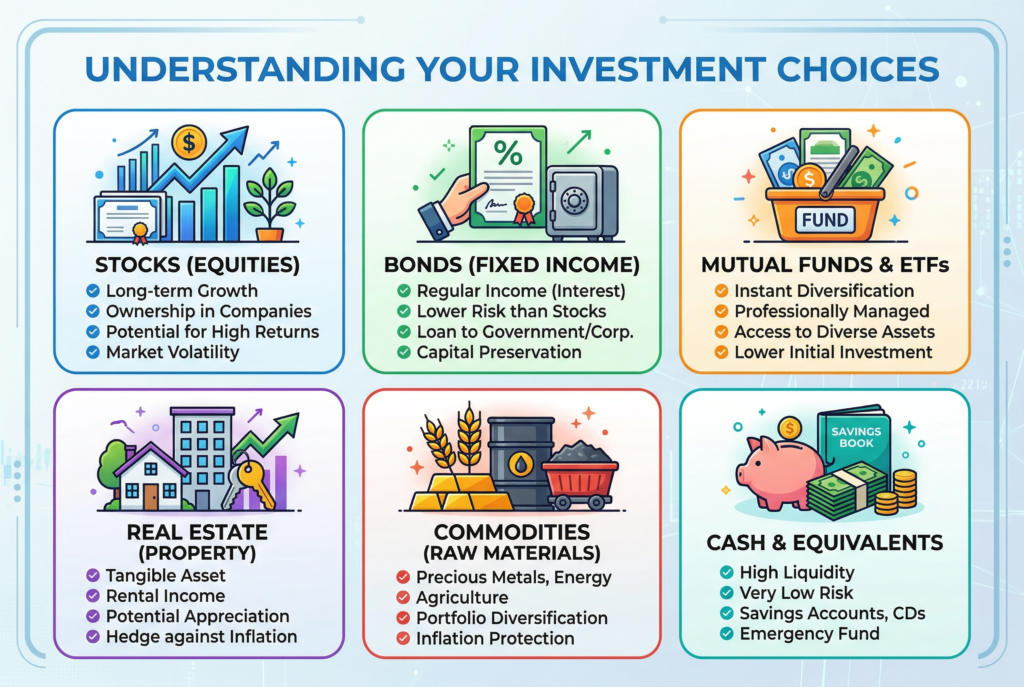
Choosing the right investment is crucial for building a strong portfolio that aligns with your goals, risk tolerance, and time horizon. By focusing on asset allocation, diversification, and maintaining a well-balanced portfolio, you can maximize your returns and minimize risk.
As you begin your investment journey, start by understanding your financial goals and time horizon, and then select the right mix of investments to match your strategy. With discipline, patience, and continuous learning, you can create a portfolio that will help you reach your financial goals and achieve long-term success.