Pet insurance can feel like either a financial lifesaver or a monthly bill you never use. That uncertainty is why so many owners ask the same question before enrolling: is pet insurance worth it? The honest answer is that pet insurance isn’t guaranteed savings. It’s risk protection. If your dog swallows a toy, your cat develops diabetes, or an emergency vet bill lands at the worst possible time, coverage can make treatment possible. But if your pet stays healthy for years, lifetime premiums may exceed what you receive back.
How Pet Insurance Actually Works
Monthly Premiums
Your premium is the monthly price you pay to keep the policy active. Pet insurance cost depends on your pet’s species, breed, age, location, and coverage level. Dogs usually cost more to insure than cats, and older pets often cost more than younger pets.
Deductibles
A pet insurance deductible is the amount you pay before insurance starts reimbursing claims. A higher deductible usually lowers your monthly premium, but it also means you pay more upfront during a vet visit.
Reimbursement Rates
The reimbursement rate is the percentage the insurer pays after your deductible. Common options include 70%, 80%, or 90%. For example, if an eligible bill is $2,000 and your reimbursement rate is 80%, your plan may reimburse $1,600 after deductible rules apply.
Annual Coverage Limits
Some plans cap how much they’ll pay per year. Others offer unlimited annual coverage. Lower limits may reduce premiums, but they can leave you exposed during a major emergency.
Waiting Periods
Most policies have waiting periods before coverage begins. If an illness or injury appears during that window, it may not be covered.
Pre-Existing Condition Exclusions
Pre-existing conditions are one of the biggest reasons claims get denied. If your pet already had symptoms before enrollment, many policies won’t cover related treatment later.
What Pet Insurance Usually Covers

Accident Coverage
Accident coverage may help with broken bones, poisoning, bite wounds, emergency surgery, swallowed objects, and sudden injuries. This is where pet insurance can be most valuable because accidents are unpredictable.
Illness Coverage
Accident and illness coverage may include cancer, allergies, infections, diabetes, digestive disease, arthritis, and chronic conditions. These treatments can become expensive because they often require repeated visits.
Emergency Vet Visits
Emergency care may include overnight hospitalization, diagnostics, IV fluids, oxygen support, and ICU monitoring. A single emergency visit can cost thousands, which is why insurance can create peace of mind.
Specialist Treatments
Some pets need oncology, orthopedic surgery, MRI, CT scans, or advanced diagnostics. Specialist care is often where the gap between a normal vet budget and a crisis budget becomes painfully clear.
Does Pet Insurance Cover Vaccines?
Why Standard Plans Usually Don’t Cover Vaccines
Does pet insurance cover vaccines? Standard accident and illness plans usually don’t because vaccines are preventive care, not unexpected medical treatment. Insurance is mainly designed for risks you can’t predict.
What Wellness Plans Usually Cover
Wellness coverage may help pay for vaccines, annual exams, flea and tick prevention, dental cleanings, heartworm tests, and routine care. These are often add-ons, not core insurance benefits.
Are Wellness Add-Ons Actually Worth It?
Wellness plans are worth checking carefully. Many have reimbursement caps. If the plan costs $300 per year but only reimburses $250 in routine care you would use, it isn’t a financial win. It may still help with budgeting, but it isn’t the same as emergency protection.
Vaccine Coverage Rules by Insurance Type
Accident-only plans usually don’t cover vaccines. Accident and illness plans usually don’t cover vaccines either. Wellness riders are the usual path for vaccine reimbursement.
Real 2026 Cost Analysis: Is Pet Insurance Financially Worth It?
Scenario 1: Healthy Indoor Cat
Is pet insurance worth it for cats? For a healthy indoor cat, premiums may be lower and emergency risk may be lower than for many dogs. If you have strong savings, self-insurance may work. But cats can still develop urinary blockages, kidney disease, diabetes, or unexpected injuries.
Scenario 2: Young Active Dog
Is pet insurance worth it for dogs? For many young dogs, yes, especially active breeds. Torn ligaments, swallowed objects, bite wounds, and emergency surgeries can become expensive fast. Buying while the dog is young also reduces pre-existing condition problems.
Scenario 3: Senior Pet with Chronic Conditions
Pet insurance for older dogs or cats can be harder to justify. Premiums rise with age, and existing conditions may be excluded. Still, coverage may help if your senior pet develops a new covered illness.
Scenario 4: High-Risk Breeds
Bulldogs, golden retrievers, dachshunds, and other breeds may have known medical risks. If your pet’s breed is prone to orthopedic, respiratory, cancer, or spinal issues, coverage may be more valuable.
Scenario 5: Multi-Pet Households
Multi-pet discounts can help, but premiums add up quickly. A household with three pets may face a large monthly insurance bill. Compare that cost against a dedicated emergency fund.
When Pet Insurance Is Usually Worth It
Pet insurance is usually worth it if you don’t have large emergency savings, your breed has high medical risk, you want financial predictability, or you would struggle with a $5,000 to $15,000 emergency bill. It’s also often smarter to buy when your pet is young and healthy because fewer conditions are excluded.
When Pet Insurance May Not Be Worth It
Pet insurance may not be worth it if you have strong emergency savings, your pet is already elderly, your policy exclusions are too restrictive, or you are comfortable self-insuring. It may also disappoint owners who expect routine care, vaccines, and preventive pet care to be automatically covered.
The Biggest Pet Insurance Mistakes Owners Make
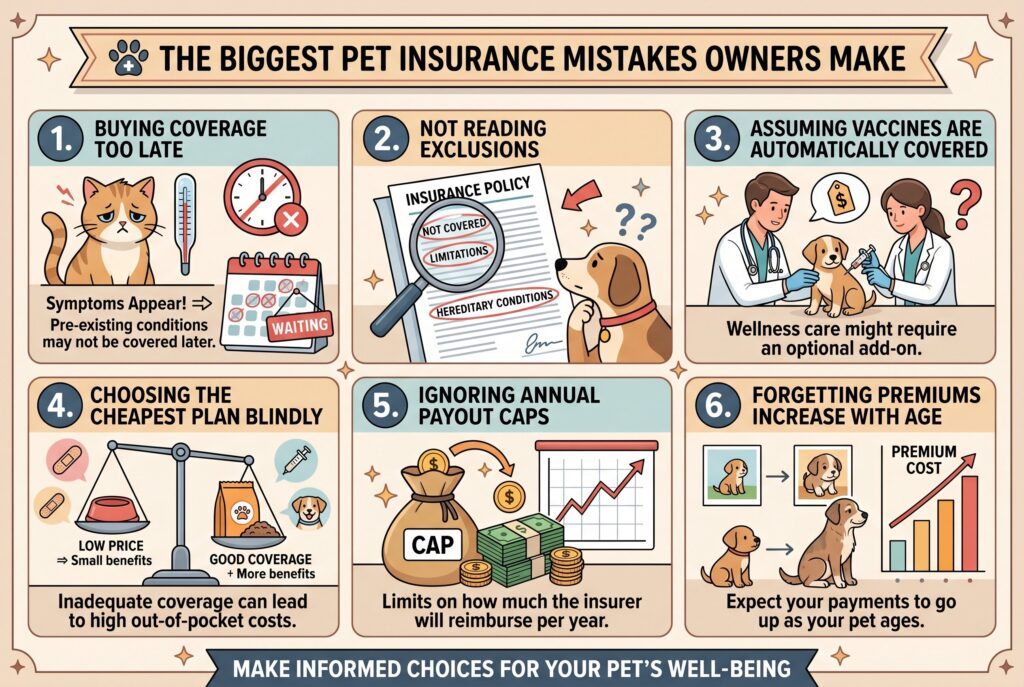
The biggest mistake is buying coverage too late. Once symptoms appear, they may become pre-existing conditions. Other mistakes include not reading exclusions, assuming vaccines are automatically covered, choosing the cheapest plan blindly, ignoring annual payout caps, and forgetting premiums increase with age.
How to Choose the Right Pet Insurance Plan
Compare pet insurance quotes carefully instead of focusing only on the monthly premium. A cheaper plan may look attractive upfront but provide limited protection when expensive veterinary bills happen. Before choosing a policy, review these details closely:
- Deductible: Check how much you must pay out of pocket before coverage starts. Lower deductibles usually mean higher monthly premiums.
- Reimbursement Rate: Most insurers reimburse 70% to 90% of eligible vet costs. Higher reimbursement rates reduce your financial burden during emergencies.
- Annual Coverage Limit: Some plans cap payouts at a few thousand dollars per year, while others offer unlimited coverage. Low limits may not help much during major surgeries or chronic illnesses.
- Breed-Specific Exclusions: Certain providers exclude hereditary or breed-related conditions, especially for breeds prone to hip dysplasia, breathing issues, or heart disease.
- Waiting Periods: Many policies don’t activate immediately. Accident coverage may start within days, but illness coverage can require weeks before benefits begin.
- Claims Reputation: Read reviews about how quickly and fairly the company processes claims. A low-cost policy may become frustrating if reimbursements are delayed or frequently denied.
- Customer Satisfaction: Strong customer support matters during stressful medical emergencies. Look for insurers with reliable service and transparent policy terms.
A cheap plan with narrow coverage or strict exclusions may save money monthly but provide far less value when your pet actually needs treatment.
Final Thoughts
Pet insurance is risk management, not guaranteed savings. The best decision depends on your emergency savings, pet’s age, breed risk, and emotional comfort during a crisis. Treat wellness coverage and vaccine reimbursement as a separate decision from catastrophic medical protection. If a large vet bill would force you to delay care, pet insurance may be worth far more than the monthly premium.