Being labeled a high-risk driver can make car insurance feel painfully expensive. A single DUI, at-fault accident, coverage lapse, license suspension, or SR-22 insurance requirement can push you out of standard pricing and into high risk car insurance. The frustrating part is that many drivers don’t even know they’re considered high risk until an insurer denies them, raises their premium, or requires extra filings. The good news is that high-risk status usually isn’t permanent. In 2026, understanding how insurers judge risk can help you rebuild your record, compare smarter, and lower car insurance premium costs over time.
What Is High-Risk Car Insurance?
High risk auto insurance isn’t a separate legal product. It’s usually standard auto coverage priced for a driver with higher claim risk. You may still buy liability, collision, comprehensive, uninsured motorist coverage, and medical payments coverage. The difference is underwriting. The insurer sees your profile as more expensive to cover. Many providers now market policies specifically as car insurance for high risk drivers to help consumers find specialized coverage options faster.
Why Insurers Label Drivers High Risk
Insurers use data to predict claim likelihood. If your record shows major violations, repeated tickets, unpaid premiums, coverage gaps, or risky vehicle ownership, your rate can rise. They aren’t judging your character. They’re pricing the chance that you may file a claim.
High-Risk Insurance vs Standard Insurance
Standard insurance is usually for drivers with cleaner records and stable coverage histories. Auto insurance for high risk drivers is designed for people who don’t fit that preferred profile. The coverage may look similar, but fewer companies may accept you, and premiums are often higher.
Why Premiums Increase So Dramatically
Premiums can jump because insurers expect more future losses. A DUI may suggest severe safety risk. A coverage lapse may suggest financial instability. Multiple tickets may suggest repeated unsafe behavior. One factor can raise rates, but several together can make affordable high risk insurance harder to find.
How Non Standard Auto Insurance Works
Non standard auto insurance serves drivers who struggle to qualify for regular coverage. These carriers may accept DUIs, SR-22 requirements, suspended license histories, or multiple violations. The tradeoff is usually higher premiums and stricter payment terms. Many consumers search specifically for high risk driver insurance when comparing these non-standard policies.
What Makes a Driver High Risk in 2026?
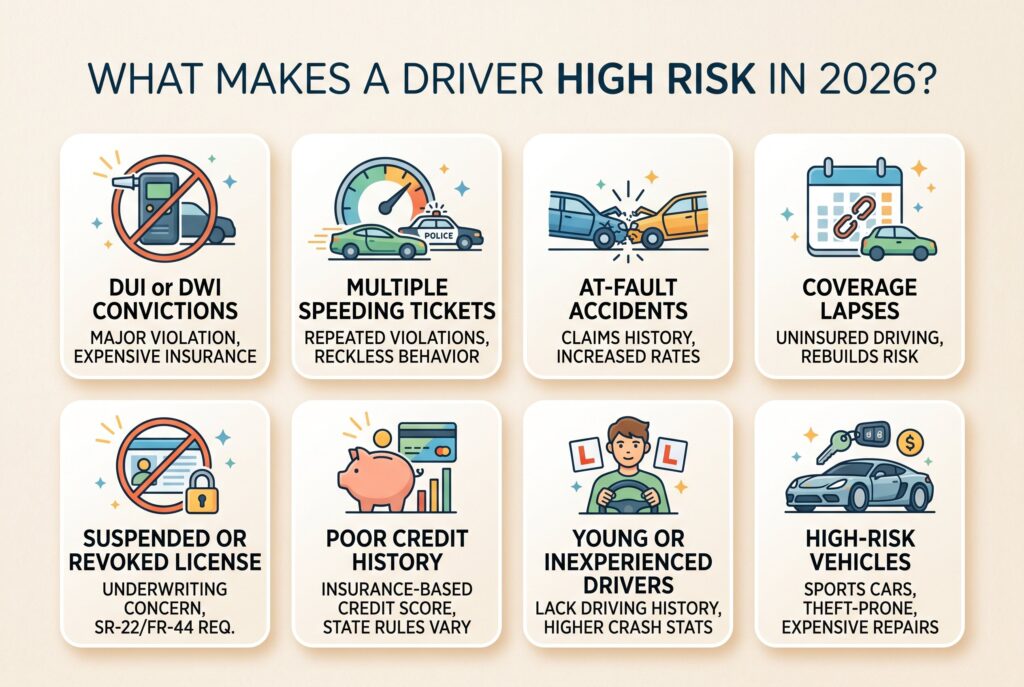
DUI or DWI Convictions
DUI insurance is usually expensive because drunk or impaired driving is treated as a major violation. Many states may also require SR-22 insurance or FR-44 insurance as proof that you carry required liability coverage. These filings don’t insure you by themselves. They prove to the state that you have active coverage.
Multiple Speeding Tickets
One small speeding ticket may not destroy your insurance profile. Multiple tickets can be different. Repeated violations suggest ongoing risky behavior, especially if they include reckless driving or excessive speed.
At-Fault Accidents
An at-fault accident can raise your rate because it creates a claims history. Accident forgiveness may help some drivers, but it often has limits. If you’ve had multiple claims, insurers may treat you as a high-risk driver for several years.
Coverage Lapses
A lapse in coverage is one of the most avoidable problems. Even a short gap can make insurers nervous because it suggests you drove uninsured or failed to maintain financial responsibility. Continuous coverage is one of the strongest signals you can rebuild.
Suspended or Revoked License
A suspended license can trigger major underwriting concern. Before you can legally drive again, you may need reinstatement, proof of insurance, and sometimes an SR-22 or FR-44 filing depending on your state.
Poor Credit History
In many states, insurers use insurance-based credit scores. Poor credit can increase premiums because it’s statistically linked with claim risk. Some states restrict or ban this practice, so rules vary.
Young or Inexperienced Drivers
Young drivers pay more because they lack driving history and are statistically more likely to crash. Teen drivers, newly licensed adults, and drivers with little U.S. insurance history may face higher rates.
High-Risk Vehicles
Risk isn’t only about the driver. Sports cars, theft-prone vehicles, luxury vehicles, and cars with expensive repair costs can raise premiums. A clean driver in a high-risk vehicle may still pay more.
How Long Does High-Risk Status Last?
How long does high risk insurance last? It depends on the violation, state rules, and insurer lookback periods.
| Violation Type | Typical High-Risk Period | Notes |
| Speeding ticket | About 3 years | Minor violations age off faster |
| At-fault accident | 3 to 5 years | Depends on claim severity |
| DUI or DWI | 5 to 10 years | SR-22 may be required |
| Coverage lapse | 6 months to 3 years | Continuous coverage helps |
| Reckless driving | 3 to 5 years | Multiple offenses extend impact |
| License suspension | 3 to 5 years | Filing rules vary by state |
The timeline isn’t always automatic. Some insurers keep pricing penalties longer than others, which is why shopping quotes regularly matter.
Smart Strategies to Lower High-Risk Insurance Premiums

Leverage Official Telematics Programs
Telematics insurance, also called usage-based insurance, tracks driving behavior through a mobile app or device. Programs may monitor hard braking, speeding, mileage, and nighttime driving. Safe drivers can sometimes earn meaningful discounts, especially if their record looks worse than their current habits.
Complete a State-Approved Defensive Driving Course
A defensive driving discount may be available if your insurer recognizes the course. Choose a state approved driving course, complete the certificate, and submit it to your insurer. This won’t erase a DUI or accident, but it may help reduce costs.
Increase Your Deductible Strategically
Raising a deductible from $500 to $1,000 can lower premiums, but only if you have emergency savings. Don’t choose a deductible you couldn’t pay after a crash.
Maintain Continuous SR-22 or FR-44 Coverage
If your state requires SR-22 or FR-44 insurance, avoid lapses at all costs. Even a one-day gap can reset timelines, trigger state penalties, or delay license reinstatement.
Remove Unnecessary Coverage on Older Vehicles
If your vehicle has low actual cash value, collision and comprehensive coverage may not be worth the cost. Keep enough protection to avoid financial disaster, but don’t overpay to insure a car that isn’t worth much.
Improve Credit Over Time
Where credit is allowed in insurance pricing, improving payment history and reducing debt may help. This is slow, but it supports your broader financial profile.
Common Mistakes High-Risk Drivers Make
The biggest mistake is letting coverage lapse again. The second is choosing minimum coverage blindly. Cheap high risk car insurance can become expensive if limits are too low after a serious accident. Other mistakes include ignoring official discounts, filing too many small claims, failing to compare quotes every 6 to 12 months, and hiding violations from insurers. Insurers check records. If you leave something out, it can delay approval or create problems later.
How to Transition Back to Standard Insurance
To remove high risk driver status, focus on consistency over time. Keep a clean driving record, avoid new tickets or accidents, and maintain continuous coverage without any lapses. Always pay your premiums on time since insurers also look at payment history. Monitor when violations expire from your record because speeding tickets, accidents, and DUIs usually stop affecting rates after several years. Once a violation ages off, compare quotes again immediately. Re-shopping rates every 6 to 12 months can help you find cheaper car insurance for high risk drivers as your profile improves.
You can also lower costs by joining telematics programs, taking a defensive driving course, and improving your credit where allowed. Many insurers offering auto insurance for high risk drivers reward safer driving habits over time. Finally, ask insurers directly whether you still qualify as a high-risk driver. Some companies won’t automatically move you to lower-risk pricing, so being proactive is important when shopping for better high risk driver insurance.
High-Risk Auto Insurance Trends for 2026
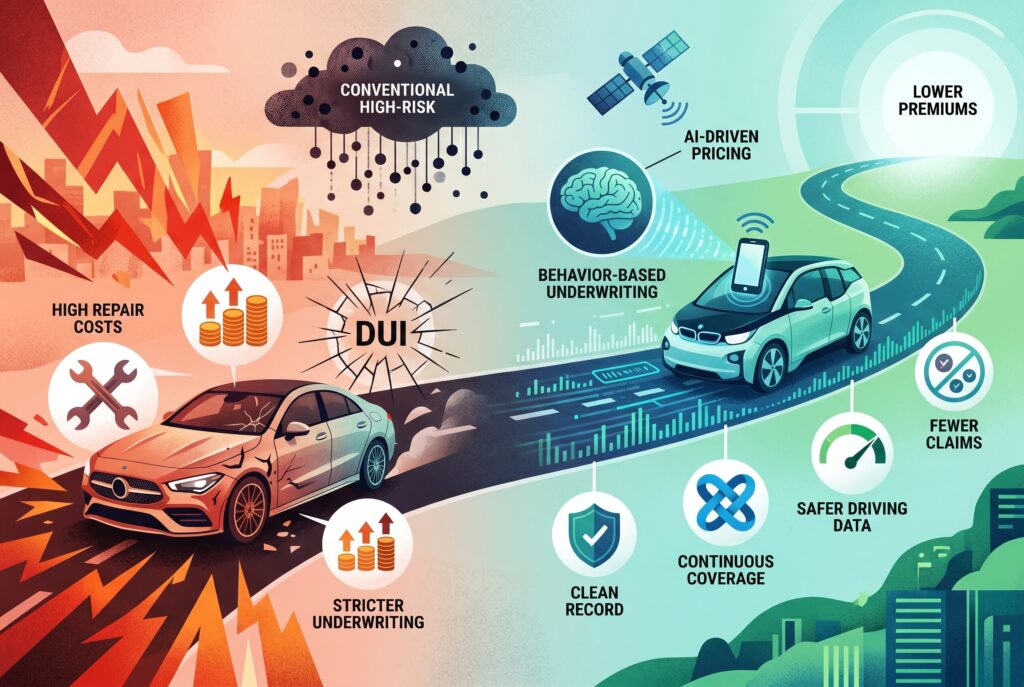
High-risk underwriting is becoming more behavior-based in 2026. Insurers increasingly use telematics, smartphone tracking, AI-driven pricing, and real-time driving data to evaluate how people actually drive instead of relying only on past violations. However, rising repair costs and stricter DUI underwriting continue to keep premiums high for many drivers. The people who reduce their rates fastest are usually the ones who build strong proof over time: clean driving records, continuous coverage, safer driving habits, and fewer claims. Drivers searching for car insurance for high risk drivers or auto insurance for high risk drivers may benefit the most from these newer behavior-based programs, especially when trying to lower high risk driver insurance costs.
Final Thoughts
High-risk status can feel like a punishment, but it’s usually a temporary pricing category. The fastest path back to affordable high risk insurance is boring but effective: drive safely, keep coverage active, complete approved courses, compare quotes, and let time work in your favor. High-risk car insurance may cost more today, but disciplined habits can help you earn standard pricing again.