


You don’t own a vehicle, but you borrow your roommate’s truck, rent cars on weekends, use car sharing apps, or need an SR 22 to keep your license active. That creates a confusing question: can I get car insurance without a car? The answer is yes, and that is exactly what non-owner car insurance is designed for.
Non-owner car insurance is one of the most misunderstood auto insurance products because it sounds unnecessary until something goes wrong. If you cause an accident in a borrowed or rented car, the owner’s policy may not fully protect you. In some cases, it may not protect you at all.
What Non-Owner Car Insurance Covers
A non-owner auto insurance policy usually includes bodily injury liability and property damage liability. Bodily injury liability helps pay for another person’s medical bills if you injure them in an at fault accident. Property damage liability helps pay for damage you cause to another person’s vehicle, fence, mailbox, building, or other property.
Some policies may also offer medical payments, personal injury protection, uninsured motorist coverage, or underinsured motorist coverage, depending on your state and insurer. These add-ons can matter because a basic liability only policy may leave important gaps. If you have ever wondered can you get car insurance without a car, this type of policy is the most common solution recommended by insurers.
What It Doesn’t Cover
The biggest misunderstanding is vehicle damage. Non-owner car insurance usually doesn’t include collision or comprehensive coverage. That means if you crash your friend’s car, your non-owner policy typically won’t pay to repair or replace that car.
It also usually doesn’t cover personal belongings inside the vehicle, business related driving, or vehicles owned by someone in your household. If you live with someone and drive their car regularly, you likely need to be listed on that person’s policy instead. Some drivers mistakenly think no car insurance means insurance without owning a vehicle, but it often refers to driving uninsured, which can create serious legal and financial risks.
Permissive Use vs. Non-Owner Policies
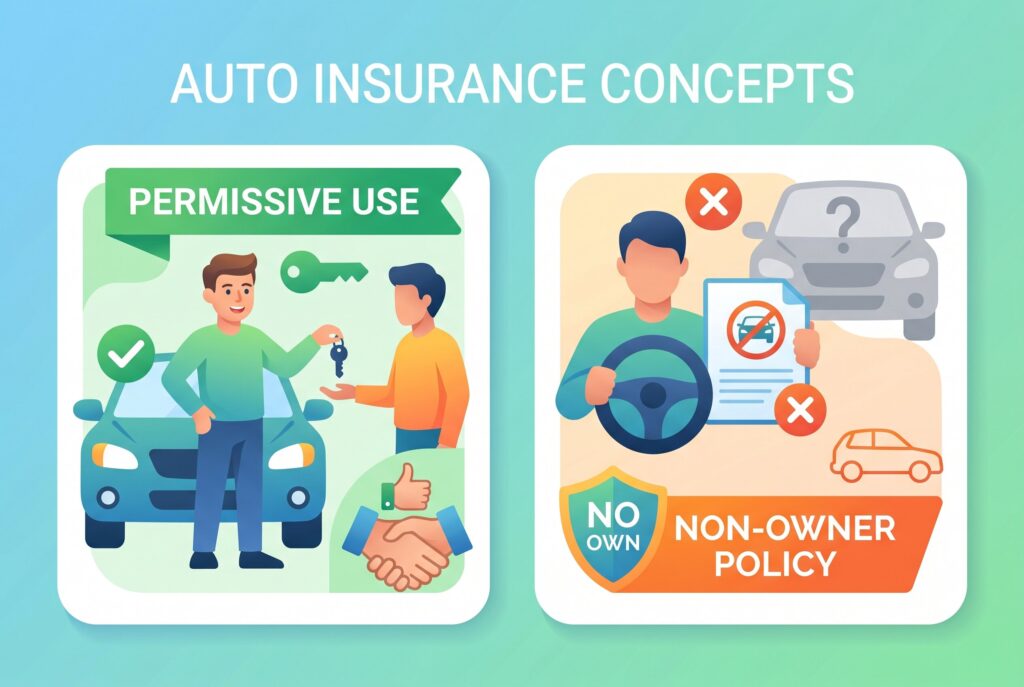
Permissive use auto insurance means the car owner gave you permission to drive their vehicle. In many cases, insurance follows the car first, so the owner’s policy may cover an occasional borrower. But “occasional” is the key word. If you borrow the same car every weekend, commute in it, or use it like your own vehicle, the insurer may see you as an undisclosed regular driver. That can create claim problems. A non-owner policy gives you your own liability protection when borrowing becomes frequent.
4 Scenarios Where You May Need a Non-Owner Policy
1. Filing an SR-22 or FR-44 Form
If your state requires an SR-22 or FR-44 after a DUI, suspended license, or serious violation, you may need proof of insurance even without owning a vehicle. SR-22 non-owner insurance can satisfy that requirement so you can work toward license reinstatement. This is one of the strongest use cases for non-owner coverage because it solves a legal problem, not just a convenience problem. High-risk drivers should ask the insurer directly whether they can file the form with the state.
2. Frequently Using Rental Cars or Car-Sharing
If you rent cars often, buying liability coverage at the rental counter every time can become expensive. A yearly non-owner policy may cost less than repeatedly paying daily supplemental liability fees. Many drivers looking for non owner car insurance quote options are actually frequent renters trying to lower their long term rental insurance costs. However, rental car insurance has layers. A non-owner policy may help with liability, but it usually won’t cover damage to the rental car itself. For that, you may still need a collision damage waiver, credit card rental coverage, or another protection option.
3. Maintaining Continuous Coverage
If you sold your car but plan to buy another one later, a non-owner policy can help prevent a lapse in continuous coverage. Insurers often view coverage gaps as a risk factor, which can raise future premiums. This makes insurance for non-car owners useful even if you don’t drive every day. It keeps your insurance history active while you are between vehicles.
4. Using Borrowed Vehicles for Work
Be careful here. Personal non-owner policies often exclude business use. If you borrow a vehicle to deliver food, drive for a platform, visit clients, or perform job duties, a standard policy may not protect you. Ask the insurer directly before assuming you are covered. Work-related driving needs clearer coverage than casual borrowing.
Cost Expectations

Non-owner car insurance is usually cheaper than a standard auto policy because the insurer isn’t covering a specific vehicle for collision or comprehensive damage. Many people are surprised to learn that these policies can cost only a few hundred dollars annually, depending on driving history and state requirements. Your actual price depends on your state, driving record, age, coverage limits, and whether you need SR 22 or FR 44 filing. Cheap doesn’t always mean enough. If you drive often, choose liability limits that protect your income and savings, not just the legal minimum.
How to Get a Non-Owner Car Insurance Quote
Getting a non-owner car insurance quote can be less obvious than buying regular car insurance. Many online quote tools ask for a vehicle first, so there may not be a simple “I don’t own a car” button. If you are wondering how to get car insurance without a car, the fastest route is often calling an insurer or independent agent directly. Use this script: “I don’t own a vehicle, but I need a non-owner auto insurance policy. I drive borrowed or rented cars, and I may need liability coverage. Can you quote a non-owner policy and tell me whether it includes SR-22 filing, rental car liability, uninsured motorist coverage, or medical payments?”
Final Thoughts
Can you get car insurance without a car? Absolutely. Non-owner insurance exists specifically for people who still drive occasionally but don’t own a vehicle. This type of coverage can provide important liability protection and help maintain continuous insurance history. Just remember the main limitation: it protects you mainly from liability claims, not damage to the car you are driving. Drive borrowed cars with confidence, but know exactly where your coverage starts and stops.

