If you run a small business, you’ve probably looked at your sales and thought, “We brought in good revenue this month, so why doesn’t it feel like we made a lot of money?” That’s exactly where gross profit becomes useful. Gross profit tells you how much money your business keeps after paying the direct costs of delivering what you sell, before you deal with overhead like rent, admin salaries, or marketing. In other words, it helps you see whether your core offer is actually making money before the rest of the business expenses show up.
A lot of owners skip this number and jump straight to net income, but that’s a mistake. If your gross profit is weak, the rest of the income statement usually gets ugly fast. If your gross profit is healthy, you have room to cover overhead, reinvest, and grow. That’s why understanding what gross profit is is one of the most useful accounting basics a business owner can learn.
What Is Gross Profit? A Simple Definition
Gross profit is the money your business has left after subtracting the direct costs of producing or delivering your goods or services from your revenue. Those direct costs are usually called cost of goods sold, or COGS.
So the simple idea is this: revenue comes in, direct production or delivery costs go out, and what remains is gross profit.
This doesn’t include everything your business pays for. It doesn’t include rent for the office, broad marketing campaigns, accounting software, admin salaries, or interest expense. Those come later. Gross profit focuses only on whether the thing you sell is profitable before the rest of the business structure gets layered on top. That’s why gross profit is such a useful first checkpoint. It tells you whether the engine of the business is working.
The Gross Profit Formula: How to Calculate It
The gross profit formula is simple:
Gross Profit = Total Revenue − Cost of Goods Sold
That’s the core profit formula people search for when they want to calculate gross profit. Let’s say your business generates $100,000 in revenue for the month. If your cost of goods sold is $62,000, your gross profit is $38,000. That means after paying the direct costs tied to what you sold, you still have $38,000 left to cover operating expenses and hopefully keep some profit at the end. This is why learning how to calculate gross profit matters. It shows whether your pricing and direct cost structure make sense before overhead starts distorting the picture.
The Tricky Part: What Actually Goes Into COGS?
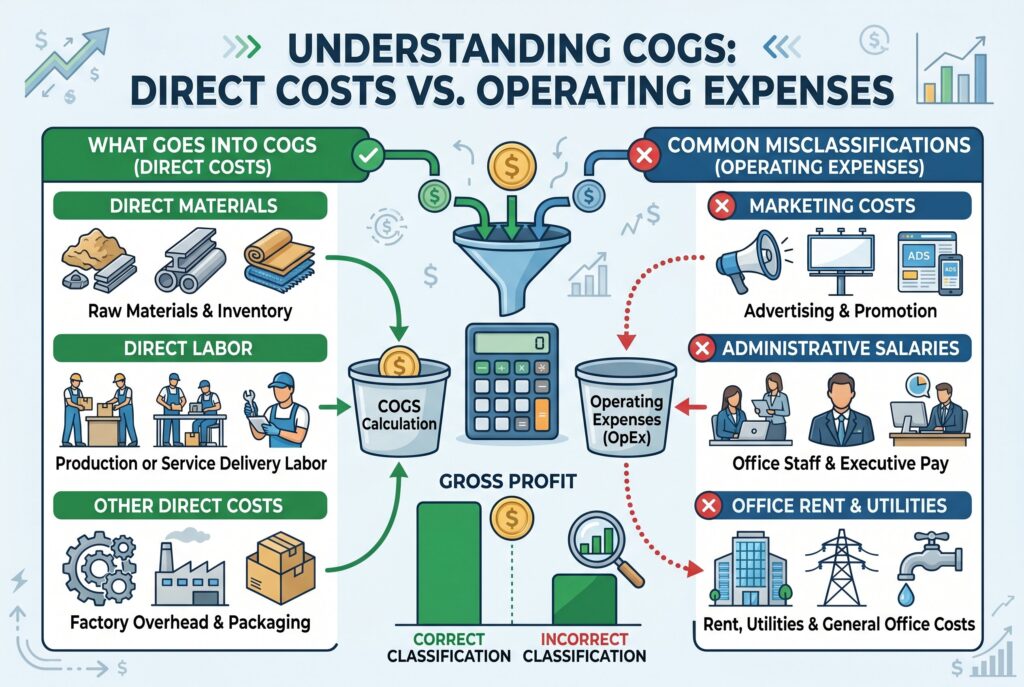
This is where many business owners make mistakes. COGS usually includes direct materials, direct labor, and other direct costs required to produce or deliver the product or service. If you manufacture something, that may include raw materials and production labor. If you run a product based small business, that may include inventory cost and packaging directly tied to the item. If you deliver services, the treatment can get trickier, especially if labor is split between client delivery and general support.
The most common problem isn’t the formula itself. It’s misclassifying costs. One common mistake is putting marketing into COGS. Marketing is important, but it usually isn’t a direct production cost. Another mistake is mixing office rent or admin salaries into COGS, which can make gross profit look worse than it really is. A third mistake is treating every shipping cost the same way. Some shipping costs are directly tied to production or fulfillment, while others are more properly treated as operating expenses depending on the business model. If you classify costs badly, your gross profit number becomes much less useful.
Gross Profit vs Gross Profit Margin: What’s the Difference?

Gross profit and gross profit margin are related, but they aren’t the same thing. Gross profit is the dollar amount left after subtracting COGS from revenue. Gross profit margin is the percentage of revenue that remains after direct costs. The gross profit margin formula is:
If you want the gross profit percentage formula, you just multiply that result by 100. So if your gross profit is $40,000 on $100,000 of revenue, your gross profit ratio is 40%.
Why does that matter? Because gross profit tells you the amount, while margin tells you efficiency. The dollar figure is useful, but the percentage makes comparison easier. You can compare one month to another, one product line to another, or your business against industry patterns more clearly when you look at margin too.
Net Profit vs Gross Profit: The Bottom Line
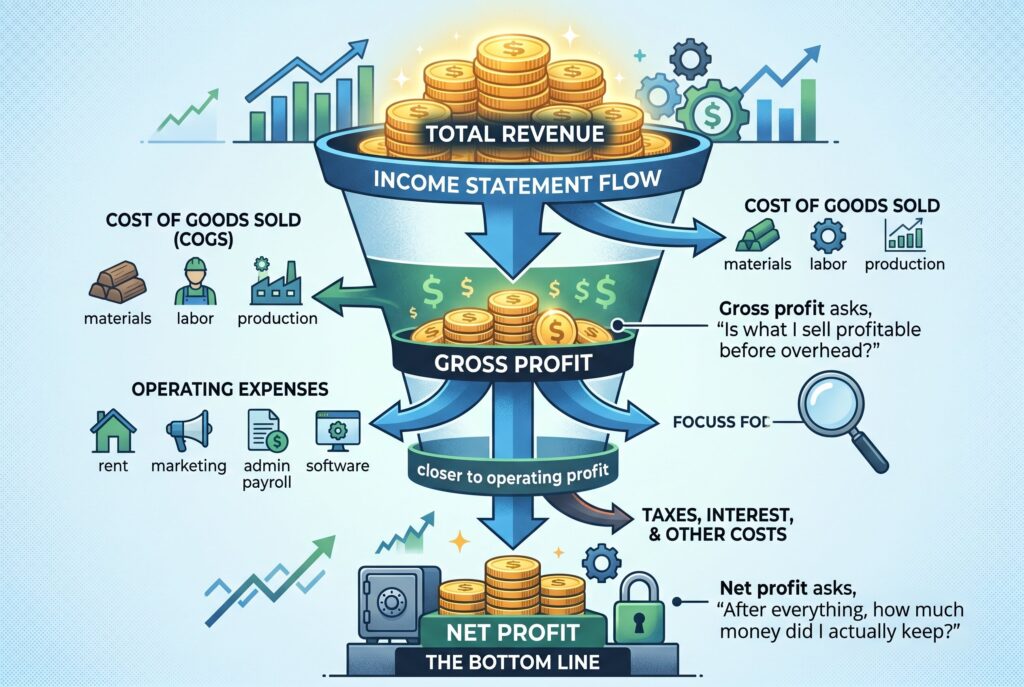
This is another distinction that confuses a lot of people. Gross profit comes earlier in the income statement. Net profit comes much later.
You start with revenue. Then you subtract the cost of goods sold to get gross profit. After that, you subtract operating expenses such as rent, marketing, admin payroll, and software. That gets you closer to operating profit. Then you subtract taxes, interest, and other final costs, and what remains is net profit.
That’s why net profit vs gross profit isn’t really a battle between two similar metrics. They answer different questions. Gross profit asks, “Is what I sell profitable before overhead?” Net profit asks, “After everything, how much money did I actually keep?” If gross profit is weak, net profit usually suffers. If gross profit is strong, you at least have a chance to build a healthy bottom line.
How to Use Gross Profit to Make Better Business Decisions in 2026
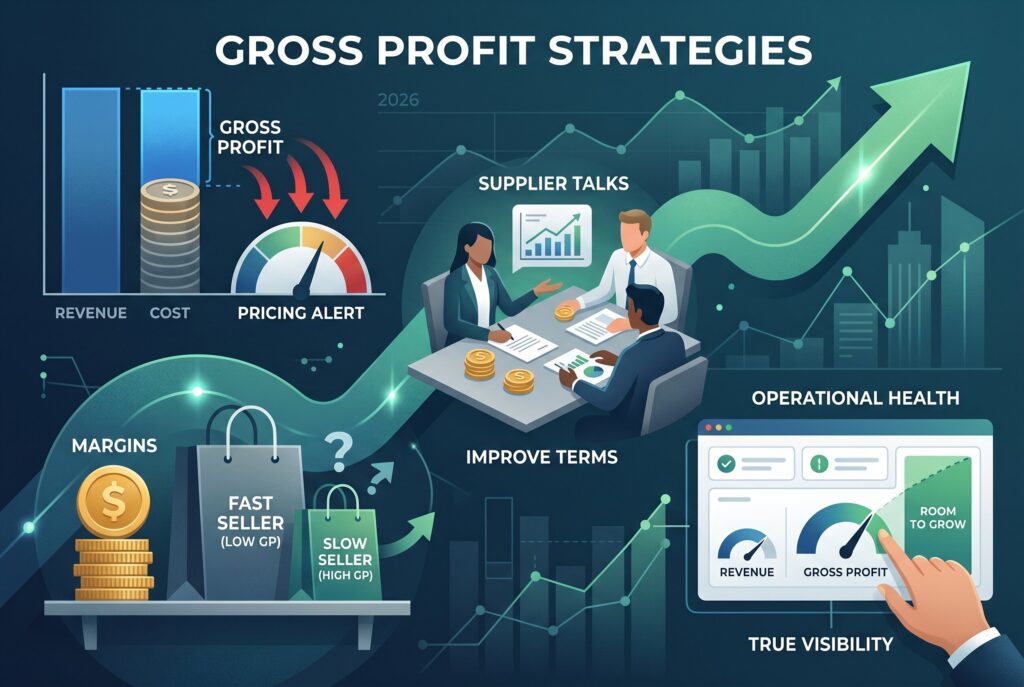
This is where the metric becomes strategic instead of academic.
Pricing Decisions
Gross profit helps with pricing. If your costs rise but your prices stay frozen, your gross profit shrinks. That’s often the first warning sign that your pricing no longer reflects reality.
Product Line Decisions
Gross profit helps with product line decisions. If one product sells well but produces poor gross profit, it may be dragging your business down. A slower seller with stronger margins may actually be more valuable.
Supplier Negotiations
Gross profit helps with supplier negotiations. If your cost of goods sold is eating too much of your revenue, improving supplier terms can widen your margin without requiring more sales.
Operational Health
Gross profit gives you a cleaner way to judge operational health. Revenue alone can be flattering. Gross profit is harder to fake. It tells you whether your business is creating enough room to support the rest of the company.
In 2026, when costs, wage pressure, and pricing sensitivity continue to challenge small businesses, that kind of visibility matters more than ever.
Conclusion
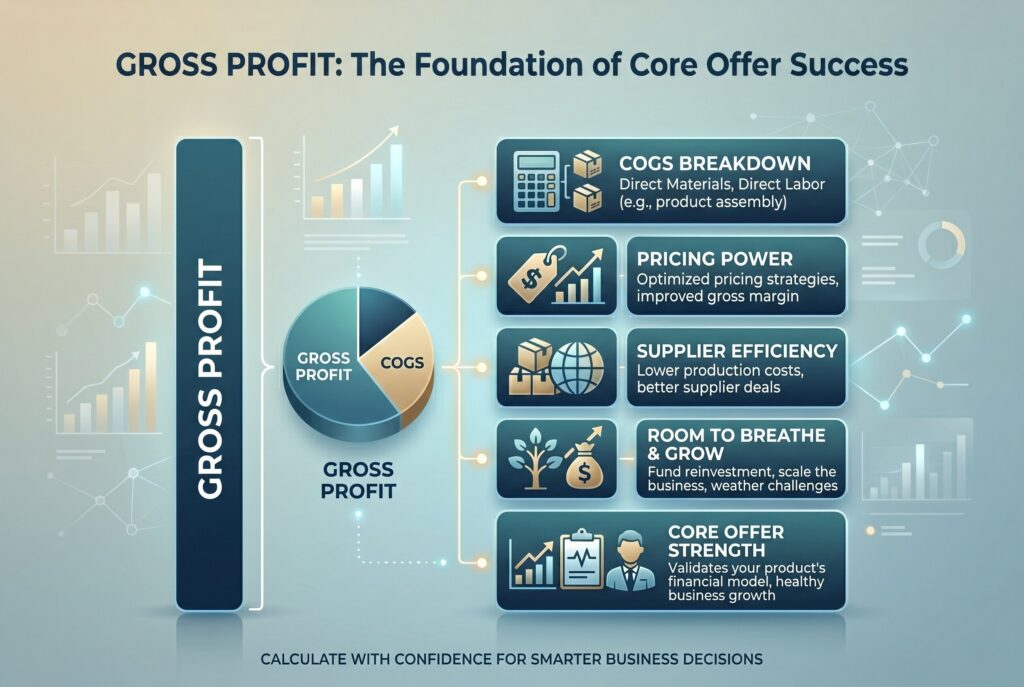
Gross profit is one of the most important numbers in your business because it shows whether your core offer actually works financially. Once you know the gross profit formula and understand what belongs in COGS, you can calculate gross profit with much more confidence and use it to make smarter decisions about pricing, products, and suppliers.
Revenue tells you how much came in. Gross profit tells you how much strength is left after direct costs. That’s the number that gives your business room to breathe, grow, and stay healthy. Pull up your latest income statement, run the math, and see what your gross profit is really telling you.