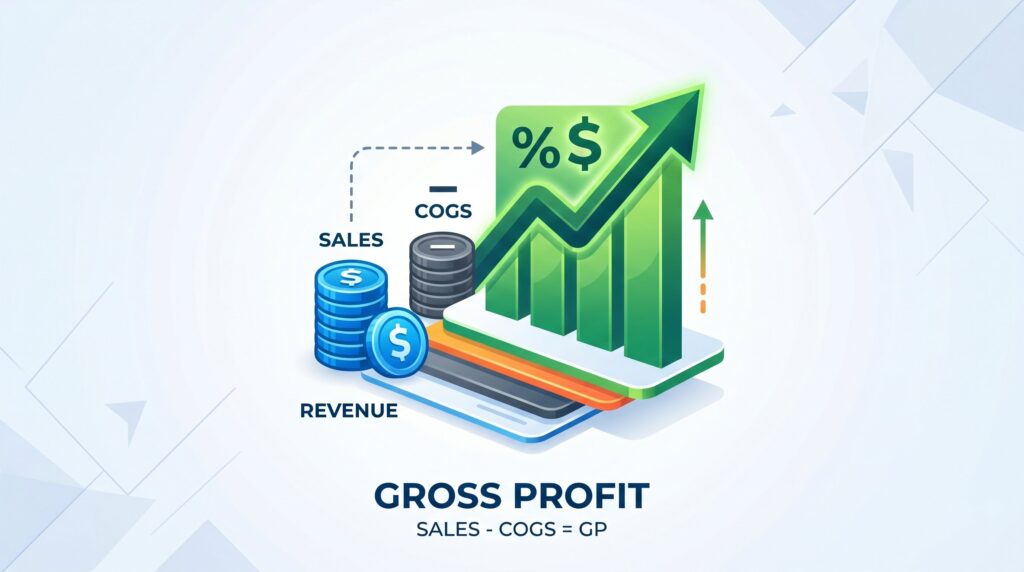
If you run a business, one of the fastest ways to understand whether you’re actually making money is to learn the gross profit formula. A lot of owners focus only on revenue, but revenue alone doesn’t tell you if your product or service is profitable. That’s why learning how to calculate gross profit is essential. It shows how much money is left after covering the direct costs tied to what you sell, before overhead expenses enter the picture.
The good news is that the formula is simple. The challenge isn’t the math. The challenge is understanding what goes into the calculation and how to use the result to make better decisions.
What Is Gross Profit? The Foundation of Profitability
Gross profit is the amount of money your business keeps after subtracting the cost of goods sold from total revenue. It reflects how efficiently you produce or deliver your product before considering broader operating costs like rent, marketing, or administrative salaries. So when people ask what gross profit is, the simplest answer is this: it’s revenue minus direct costs.
This is why gross profit is considered a foundational profitability metric. It focuses on the core economics of what you sell. If this number isn’t strong, the rest of your finances will struggle no matter how much revenue you generate.
The Gross Profit Formula: A Step by Step Breakdown
The gross profit formula is straightforward:
Gross Profit = Revenue − Cost of Goods Sold
That’s the entire profit formula at its core.
Revenue represents the total money your business earns from sales. Cost of goods sold, or COGS, represents the direct costs required to produce those goods or services. The key here is accuracy. The formula itself is simple, but if your inputs are wrong, your result won’t be useful.
COGS typically includes things like raw materials, direct labor, and production related costs. It doesn’t usually include indirect expenses such as office rent, general marketing, or executive salaries. Mixing those categories is one of the most common mistakes small business owners make when trying to calculate gross profit.
How to Calculate Gross Profit in 3 Simple Steps
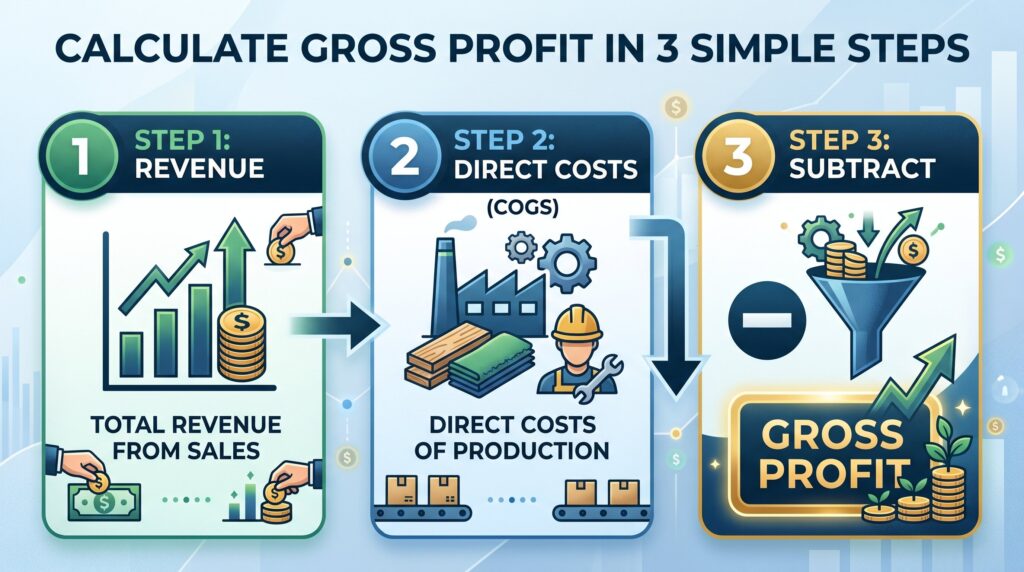
Step 1: Determine Your Total Revenue
Start by identifying your total revenue for a specific period. This is the total amount of money generated from sales before any costs are deducted. It should reflect actual sales activity, not projections or estimates.
Step 2: Identify Your Direct Costs
Next, determine your cost of goods sold. This includes all direct costs associated with producing or delivering your product or service. For example, if you sell physical products, this may include materials, manufacturing labor, and packaging. If you run a service business, it may include direct labor tied to client work. The important thing is to separate direct costs from indirect ones. This distinction is what keeps your gross profit calculation accurate.
Step 3: Subtract COGS from Revenue
Once you have both numbers, subtract your cost of goods sold from your total revenue. The result is your gross profit. This three step process is exactly what most business owners need when they search to calculate gross profit or how to calculate gross profit. It’s simple, repeatable, and works for almost any business model when the inputs are defined correctly.
Gross Profit Calculator
Enter data to automatically calculate Gross Profit.
Interactive Gross Profit and Margin Calculator
To make this easier, imagine plugging your numbers into a simple calculator. If your revenue is 50,000 dollars and your cost of goods sold is 30,000 dollars, your gross profit is 20,000 dollars. If your revenue increases but your costs rise even faster, your gross profit may shrink. That’s why this metric is so useful. It reveals the real economic pressure inside your business. Many businesses now use automated tools or accounting software to track this in real time, but the underlying logic remains the same.
Gross Profit vs Net Profit: Why Both Matter
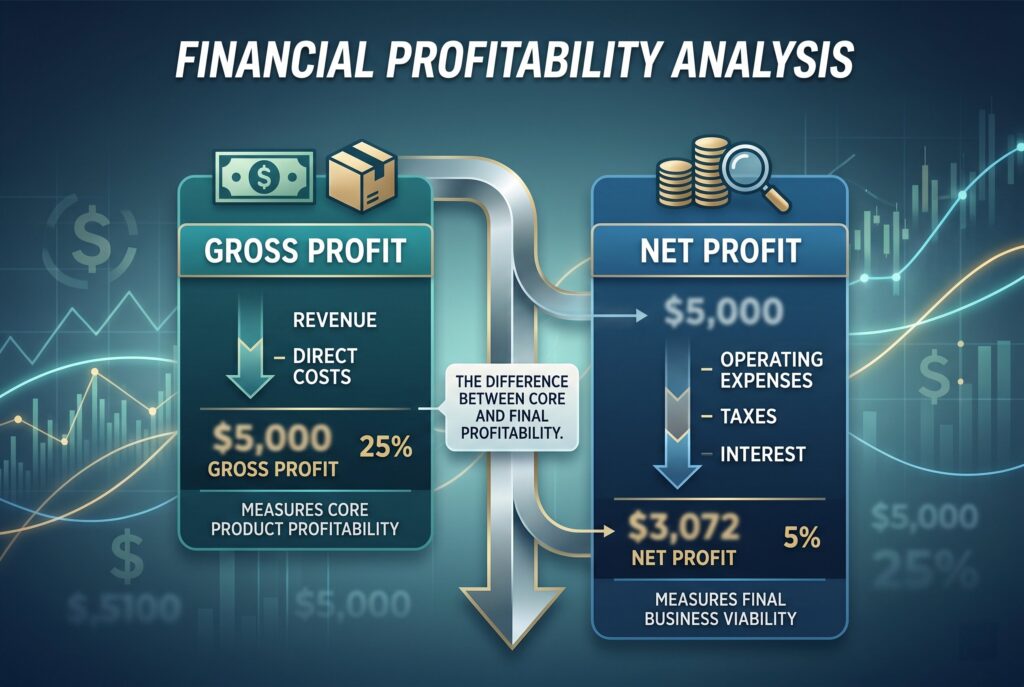
Gross profit and net profit are often confused, but they measure very different things. Gross profit is calculated early in the income statement. It only subtracts direct costs from revenue. Net profit comes at the end. It subtracts everything, including operating expenses, taxes, and interest. The difference between net profit vs gross profit is essentially the difference between core profitability and final profitability.
A business can have strong revenue but weak gross profit if its direct costs are too high. It can also have strong gross profit but weak net profit if overhead expenses are out of control. That’s why both numbers matter. Gross profit shows whether your product works financially. Net profit shows whether your entire business works.
Understanding Gross Profit Margin and Ratios
While gross profit gives you a dollar amount, gross profit margin gives you a percentage. That percentage tells you how efficient your business is at turning revenue into profit before overhead.
The gross profit margin formula is:
To express it as a percentage, multiply by 100. This is also called the gross profit ratio or gross profit percentage formula. For example, if your gross profit is 25,000 dollars and your revenue is 100,000 dollars, your gross profit margin is 25%. This percentage is powerful because it allows you to compare performance across time periods, products, or even competitors. A higher margin usually means better efficiency, stronger pricing power, or better cost control.
3 Ways to Improve Your Gross Profit in 2026
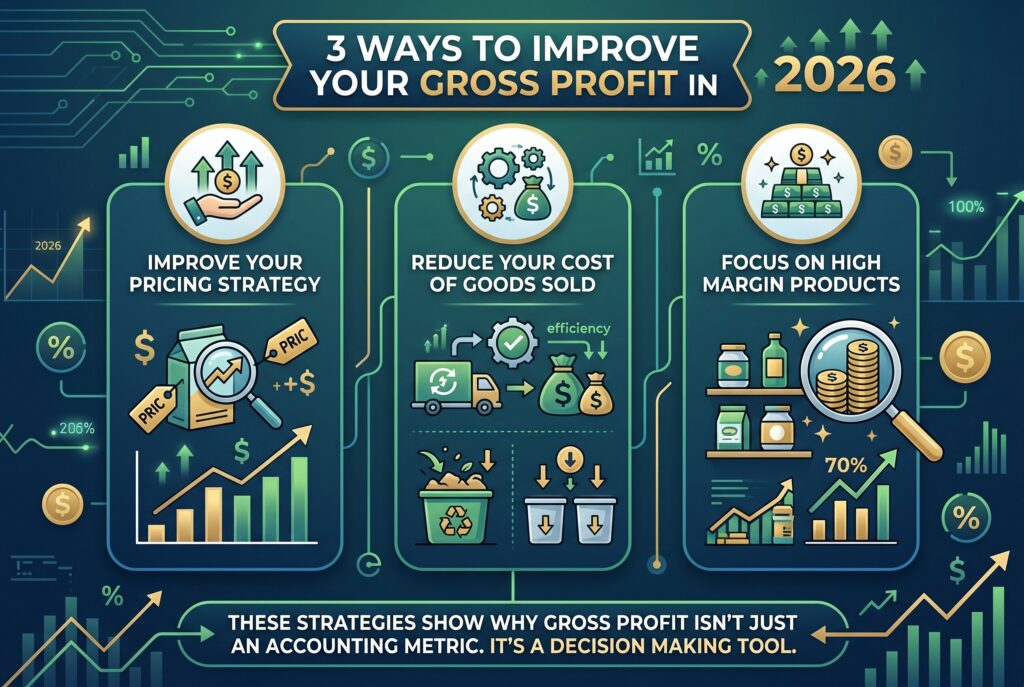
Improve Your Pricing Strategy
If your costs increase but your prices don’t, your gross profit shrinks. Adjusting pricing carefully can help restore margin without requiring more volume.
Reduce Your Cost of Goods Sold
Negotiating with suppliers, improving production efficiency, or reducing waste can lower your direct costs. Even small improvements here can have a big impact on gross profit.
Focus on High Margin Products
Not all products contribute equally. Some generate more profit per sale than others. Identifying and prioritizing high margin products can improve your overall profitability without increasing workload. These strategies show why gross profit isn’t just an accounting metric. It’s a decision making tool.
Conclusion
Learning the gross profit formula is one of the simplest ways to gain control over your business finances. Once you understand what gross profit is and how to calculate gross profit correctly, you can start making smarter decisions about pricing, costs, and product strategy. Revenue shows how much you sell. Gross profit shows how much you actually keep after direct costs. That difference is where real business insight begins.