If you’ve ever looked at an income statement and felt confused by multiple profit numbers, you aren’t alone. The difference between operating income vs net income matters because each number tells a different story. Operating income shows whether the core business works. Net income shows what is left after everything else is paid. Both are useful, but they don’t answer the same question.
What Is Operating Income? The Core Business Profit
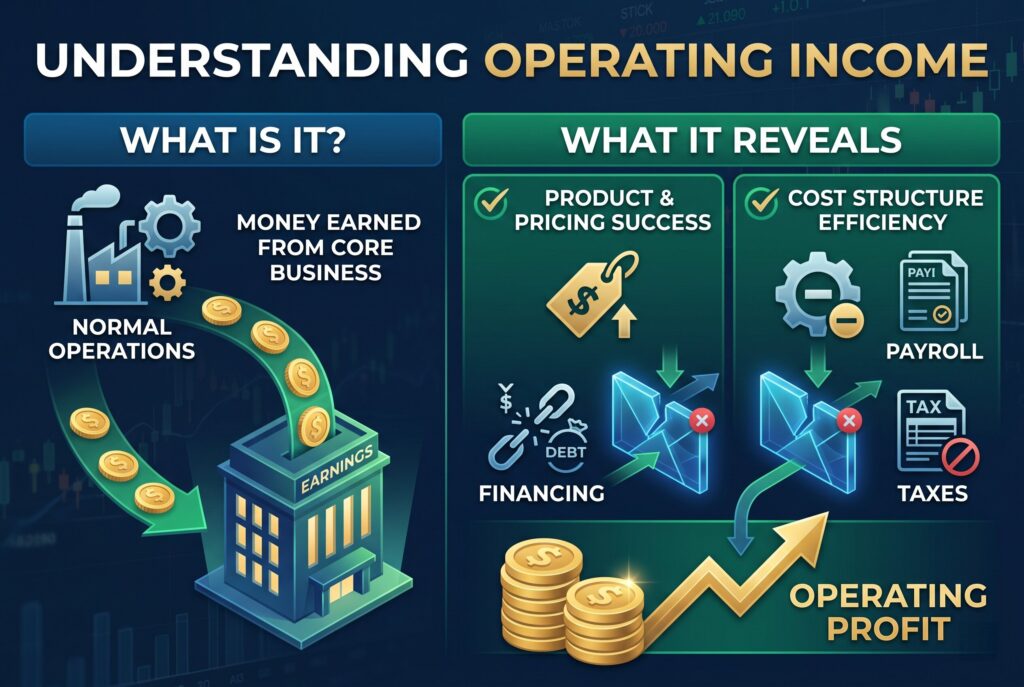
Operating income, also called operating profit, is the money a business earns from its normal operations. It removes the noise of financing and taxes so you can see whether the actual product, pricing, payroll, and cost structure are working.
The operating income formula is:
Operating Income = Gross Profit − Operating Expenses
Another way to calculate it is:
Operating Income = Revenue − COGS − Operating Expenses
Operating expenses usually include rent, payroll, marketing, software, utilities, sales costs, and administrative expenses. They don’t include interest payments, income taxes, or one time gains from selling assets. This is why investors and founders care about operating income. It shows whether the business engine itself is strong.
What Is Net Income? The Bottom Line Profit
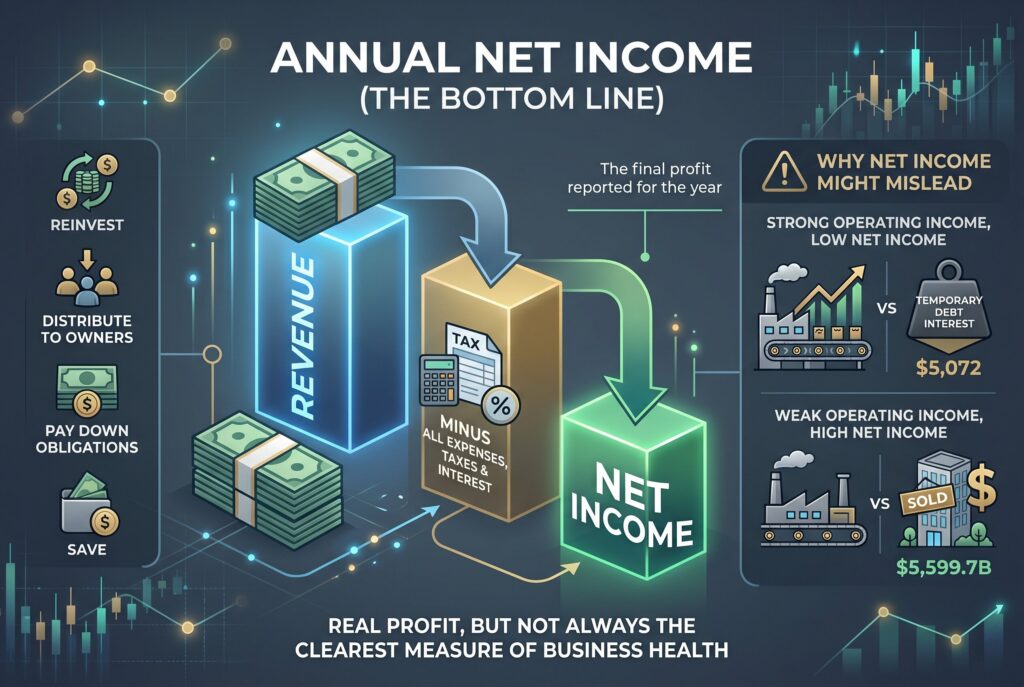
Net income is the final profit after all expenses, taxes, interest, and non operating items are included. This is the number many people mean when they talk about the bottom line. Annual net income meaning is simple: it’s the total final profit a business reports for the year after every cost and adjustment has been counted. It can be saved, reinvested, distributed to owners, or used to pay down obligations.
But net income can sometimes be misleading. A company might sell a building and report high net income even though its operating income is weak. Or a company might have strong operating income but low net income because debt interest is temporarily heavy. That’s why net income is real profit, but it isn’t always the clearest measure of business health.
Real World Example: The Heavily Funded Tech Startup

Imagine a 2026 SaaS startup with $5 million in revenue. After paying hosting costs, support, payroll, and marketing, it has $800,000 in operating income. That means the core business works. But the startup borrowed heavily to build infrastructure. Its annual interest expense is $1 million. After interest and taxes, net income becomes negative.
A lender may worry because the company doesn’t have a bottom line profit yet. But a venture investor may still be interested because operating income shows the product and pricing model are working. If the company refinances debt or grows revenue, net income could improve later. This is the key lesson: operating income tells you about the engine. Net income tells you what survived the full financial journey.
Which Profit Metric Should You Care About More?
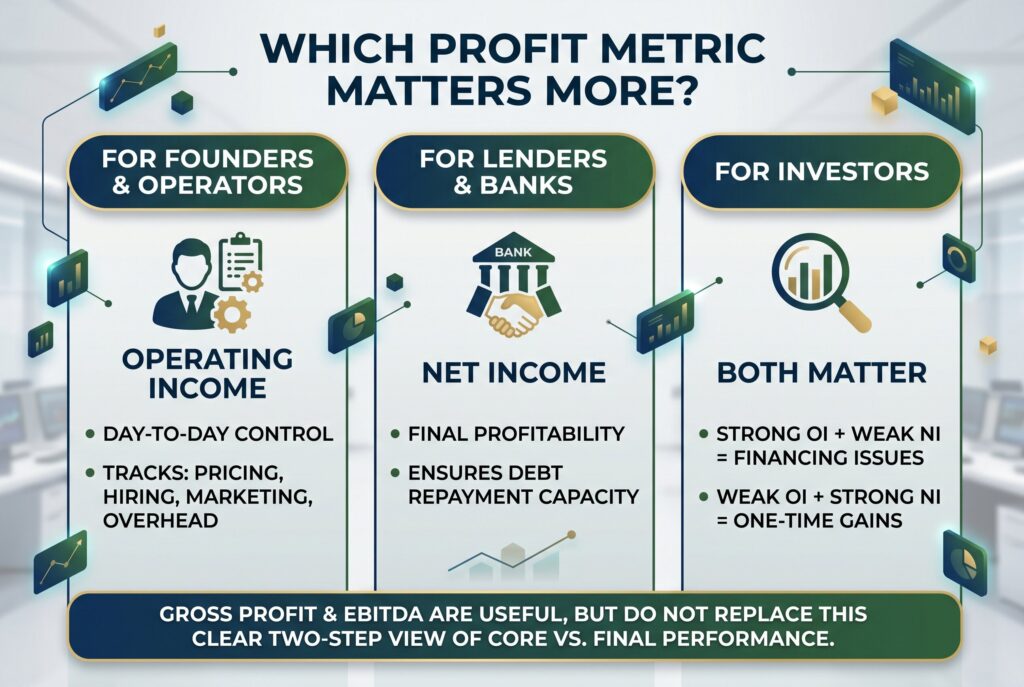
For founders and operators, operating income often matters more day to day. It shows whether pricing, hiring, marketing, and overhead are under control. For lenders and banks, net income often matters more. They want to know whether the business has enough final profit to repay debt.
For investors, both matter. Strong operating income with weak net income can suggest a good business with financing problems. Weak operating income with strong net income can suggest a business temporarily helped by one time gains.
Gross profit and EBITDA can also help, but they don’t replace this comparison. Gross profit stops before operating expenses. EBITDA adds back depreciation and amortization. Operating income and net income give a clearer two step view of core performance versus final outcome.
Conclusion

Operating income vs net income isn’t about choosing one number forever. It’s about knowing what each one reveals. Operating income shows whether the core business is profitable. Net income shows the final bottom line after taxes, debt, and non operating items. If you only look at net income, you may miss whether the business engine is strong. If you only look at operating income, you may ignore real financial obligations. The smartest move is to review both every month. That’s how you understand the true story behind your profit.