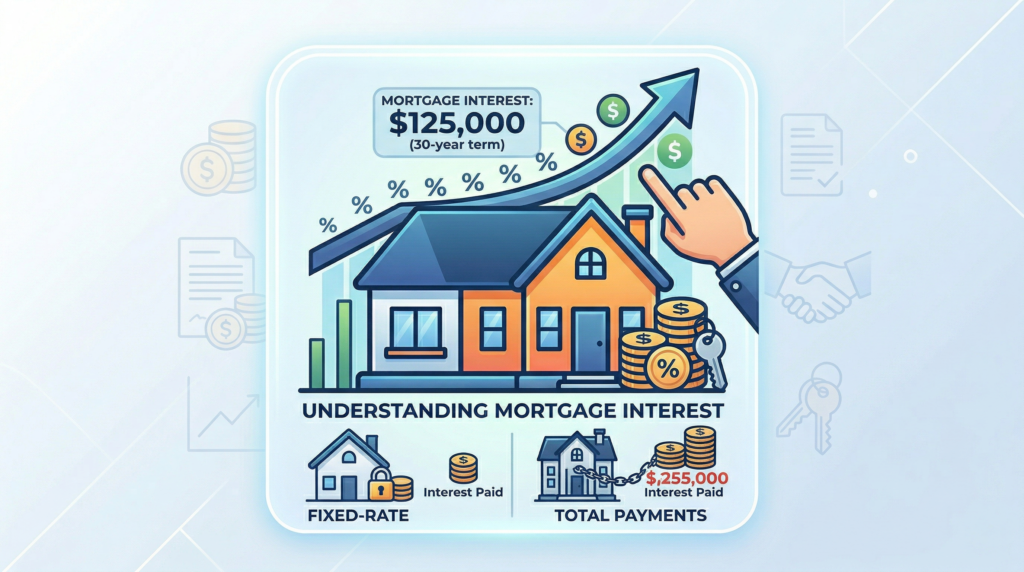
When you take out a home loan, the amount you borrow isn’t the only cost that matters. Mortgage interest plays a major role in determining how much your loan will cost over time and how large your monthly payment will be. For homebuyers and homeowners in the United States, understanding how mortgage interest works can make it easier to compare loan offers, improve borrowing decisions, and reduce long-term housing costs.
What Is Mortgage Interest?
Mortgage interest is the cost you pay a lender in exchange for borrowing money to buy a home. It’s expressed as a percentage of the loan amount, known as the interest rate. That rate affects how much you pay each month and how much the loan costs over its full term.
When you make a mortgage payment, part of the payment goes toward the loan balance, also called principal, and part goes toward interest. In the early years of most mortgages, a larger portion of each payment goes to interest. Over time, more of each payment starts going toward principal. This is one reason mortgage interest matters so much. Even a small difference in your interest rate can change your monthly payment and total loan cost by thousands of dollars over time.
How Mortgage Interest Works
A mortgage loan is usually repaid through monthly installments over a set number of years, often 15 or 30. The lender calculates the payment based on the loan amount, the mortgage rate, and the loan term.
With most fully amortizing loans, your principal and interest payment stays the same each month if you have a fixed-rate mortgage. But the split between principal and interest changes over time. In the beginning, interest makes up a bigger share of the payment because it’s calculated on a larger remaining balance. As the balance drops, interest charges gradually decline.
For example, if you borrow a large amount at a given interest rate, the lender applies that rate to the outstanding balance. Since the balance is highest at the beginning of the loan, interest charges are also highest then. That’s why early mortgage payments can feel like they’re reducing the balance slowly. Understanding this structure helps borrowers see why interest can become one of the biggest long-term costs of homeownership.
Fixed vs. Adjustable Mortgage Interest Rates
The way mortgage interest rates work depends partly on the type of loan you choose.
A fixed-rate mortgage has an interest rate that stays the same for the life of the loan. This means your principal and interest payment remains predictable, which can make budgeting easier.
An adjustable-rate mortgage, or ARM, starts with a fixed rate for an initial period and then adjusts later based on market conditions. This type of mortgage may begin with a lower rate than a fixed loan, but the rate can rise or fall after the introductory period ends.
For borrowers who want stability, fixed rates are often appealing. For those who expect to move or refinance before the adjustment period begins, an ARM may be worth considering. The right choice depends on budget, timeline, and comfort with uncertainty.
What Affects Your Mortgage Interest Rate?
Several factors influence the mortgage interest rate a lender offers. Some are tied to the broader economy, while others depend on your personal financial profile.
Credit Score and Credit History
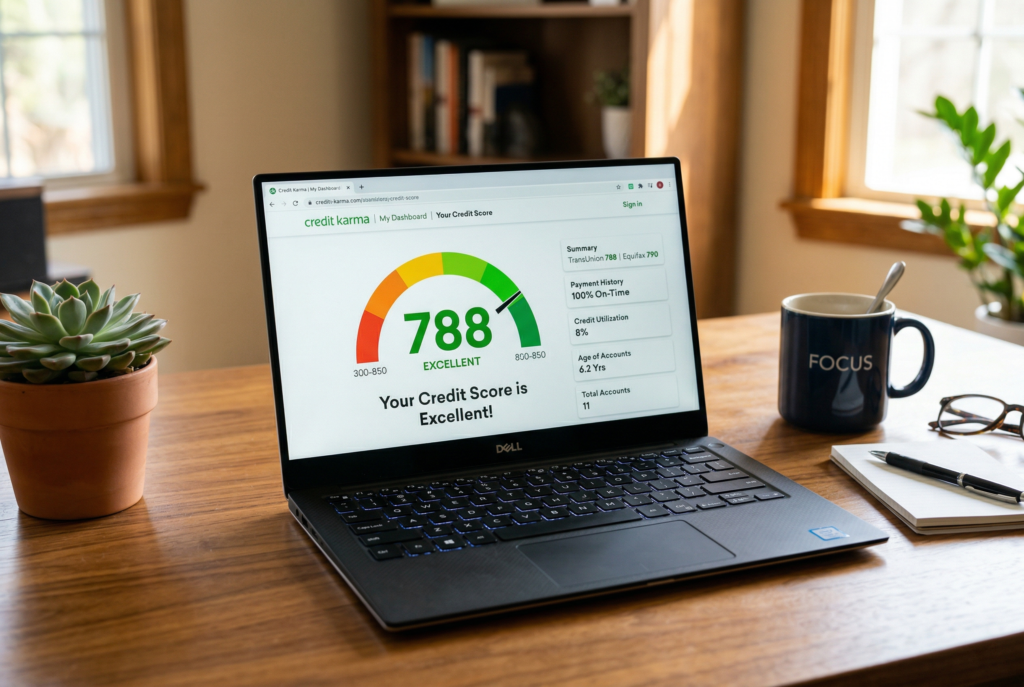
Your credit score is one of the biggest factors. Borrowers with stronger credit usually qualify for lower rates because lenders view them as less risky. A higher score can translate into meaningful savings over the life of the loan. Lenders also review your broader credit history, including payment habits, outstanding debt, and recent credit activity.
Down Payment Amount
Your down payment affects both the loan amount and the lender’s risk level. A larger down payment usually lowers the loan-to-value ratio, which can improve your chances of getting a better rate. It may also reduce or eliminate the need for private mortgage insurance, depending on the loan type and amount of equity.
Loan Term
The length of the loan matters too. A 15-year mortgage often comes with a lower interest rate than a 30-year mortgage, although the monthly payment is usually higher because the loan is repaid faster. Shorter terms often save money on total interest, while longer terms may offer lower monthly payments.
Loan Type
Different mortgage programs can come with different rates. For example, conventional loans, FHA loans, VA loans, and USDA loans may all have different pricing structures based on eligibility rules, insurance costs, and lender risk. The interest rate alone doesn’t tell the full story, but loan type still plays a big role in what you’re offered.
Economic Conditions
Broader market conditions also affect current mortgage rates. Inflation, Federal Reserve policy, bond market movements, and general economic uncertainty can all influence lending rates. Borrowers can improve their personal qualifications, but they can’t control the rate environment. That’s why mortgage pricing can vary noticeably from one period to another.
Debt-to-Income Ratio and Overall Financial Profile
Lenders also review your debt-to-income ratio, employment stability, income level, and available assets. A borrower with lower debt and stronger income documentation may look less risky and qualify for better pricing.
Why Mortgage Interest Matters So Much

Many homebuyers focus heavily on the purchase price of the home, but mortgage interest can affect total cost just as much. Over a long loan term, interest may add up to a very large amount.
For example, a lower interest rate can reduce your monthly payment and help you pay less overall, even if the home price stays the same. On the other hand, a higher rate may increase both monthly costs and the total amount paid over time.
This is why comparing rates carefully matters. A difference that looks small on paper can have a lasting financial impact, especially on a 30-year loan. Mortgage interest also affects affordability. In higher-rate environments, some buyers may qualify for smaller loan amounts or feel more pressure on their monthly budget.
APR vs. Interest Rate
When shopping for a mortgage, it’s important to understand the difference between the interest rate and the APR, or annual percentage rate. The interest rate reflects the cost of borrowing the principal. The APR includes the interest rate plus certain lender fees and financing costs, giving a broader picture of the loan’s true cost.
This means a mortgage with a lower interest rate isn’t always the cheapest loan overall. If the lender charges high upfront fees, the APR may be less attractive than it first appears. When comparing offers, looking at both the rate and the APR can give you a more complete understanding of what you’re paying.
How to Save Money on Mortgage Interest
Improve Your Credit Before Applying
One of the most effective strategies is improving your credit score before applying for a mortgage. Paying bills on time, reducing credit card balances, and avoiding unnecessary new debt can strengthen your profile. A better score may qualify you for lower rates, which can lead to major savings over the life of the loan.
Shop Around With Multiple Lenders
Mortgage rates and fees vary by lender. Getting quotes from multiple lenders can help you compare offers and avoid paying more than necessary. Even if one lender is familiar or convenient, it’s still worth checking other options. Better pricing may be available elsewhere.
Make a Larger Down Payment
A larger down payment can sometimes help you qualify for a better rate and reduce borrowing costs. It also lowers the total amount borrowed, which directly reduces total interest paid.
Choose a Shorter Loan Term if Affordable
A 15-year fixed mortgage often has a lower rate than a 30-year loan and builds equity faster. While the monthly payment is higher, the total interest paid is usually much lower. This option makes sense only if the payment fits comfortably into your budget.
Consider Paying Extra Toward Principal
Making extra payments toward the loan principal can reduce the balance faster and lower future interest charges. Even one extra payment a year or small monthly overpayments can make a difference. The key is making sure the lender applies the extra amount to principal rather than treating it as an early regular payment.
Refinance if Rates Drop
If market rates fall and your finances remain strong, refinancing may help you secure a lower interest rate. This can reduce your monthly payment or shorten the loan term. Still, refinancing comes with costs, so it’s important to compare the savings against closing fees and how long you plan to stay in the home.
How Mortgage Interest Fits Into Long-Term Financial Planning
Your mortgage interest rate doesn’t just affect your loan. It influences your broader financial life. A lower rate can free up room in your budget for retirement savings, home maintenance, emergency funds, and other priorities.
A higher rate, by contrast, can tighten cash flow and increase total housing costs significantly. That’s why mortgage interest should be viewed as part of your full financial picture, not just a number on a loan estimate. The right mortgage decision is usually the one that supports both homeownership and long-term financial stability.
Conclusion
Mortgage interest is one of the most important parts of any home loan because it affects both your monthly payment and the total amount you’ll repay over time. Understanding how it works, what influences your mortgage rate, and how lenders evaluate borrowers can help you make smarter decisions when buying or refinancing a home.
By improving your credit, comparing lenders, choosing the right loan term, and looking closely at both the interest rate and APR, you can put yourself in a better position to save money. A mortgage is a long-term commitment, and the interest rate attached to it can shape your finances for years. The more clearly you understand that cost, the more confidently you can choose the loan that fits your goals.