
If you’re trying to understand the operating income formula, you’re really trying to answer a bigger question: is your business actually making money from its core operations, or is revenue only masking weak cost control? That’s why learning how to calculate operating income matters. It helps you isolate the earnings generated by the business itself before taxes, interest, and other financial noise start distorting the picture.
For small business owners, students, and managers, this metric is one of the clearest ways to judge whether the business model is healthy. Sales may be growing, but if operating costs rise just as fast, that growth doesn’t mean much. Operating income gives you a cleaner answer.
What Is Operating Income? Definition and Importance
What is operating income? Operating income is the profit a company earns from its core business operations after subtracting cost of goods sold and operating expenses, but before subtracting interest and taxes. It’s also commonly called operating profit.
That definition matters because it strips away financial distractions. Debt structure, tax strategy, and non operating gains can all make final net income harder to interpret. Operating income focuses on the business engine itself. It tells you whether the company is actually good at making money from what it sells.
This is why operating income meaning is so useful in real analysis. A business with strong operating profit but weak net income may still be fundamentally healthy if taxes, financing, or one time charges are dragging down the bottom line. On the other hand, a business with weak operating income probably has a core performance problem that revenue alone won’t hide forever.
The Operating Income Formula: Two Ways to Calculate
The operating income formula can be written in two main ways.
The direct method is:
Operating Income = Gross Profit − Operating Expenses
The indirect method is:
Operating Income = Revenue − COGS − Operating Expenses
Both methods lead to the same result. The only difference is where you begin on the income statement. If you already know gross profit, the first version is faster. If you’re working from the top line and building downward, the second version may feel clearer. This is one reason the metric is easy to learn but still powerful. The calculation isn’t complicated. The real value comes from knowing what goes into each part. Revenue is the top line.
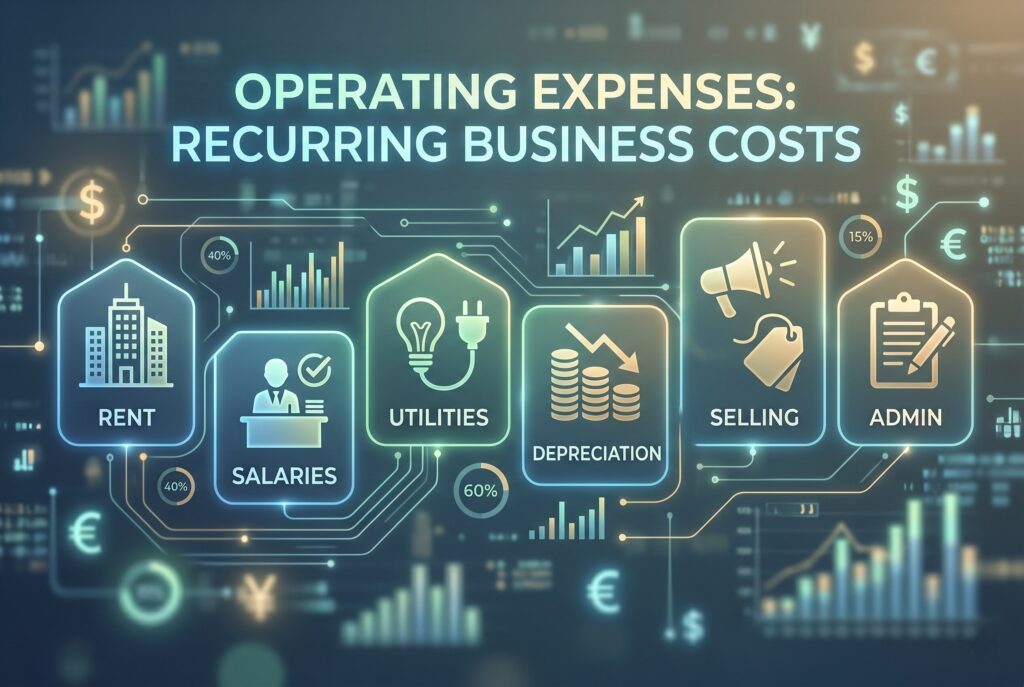
COGS represents direct costs tied to delivering the product or service. Operating expenses include recurring business costs such as rent, salaries, utilities, depreciation, selling costs, and administrative expenses. Once those layers are subtracted, what remains is operating income.
How to Calculate Operating Income in 5 Simple Steps
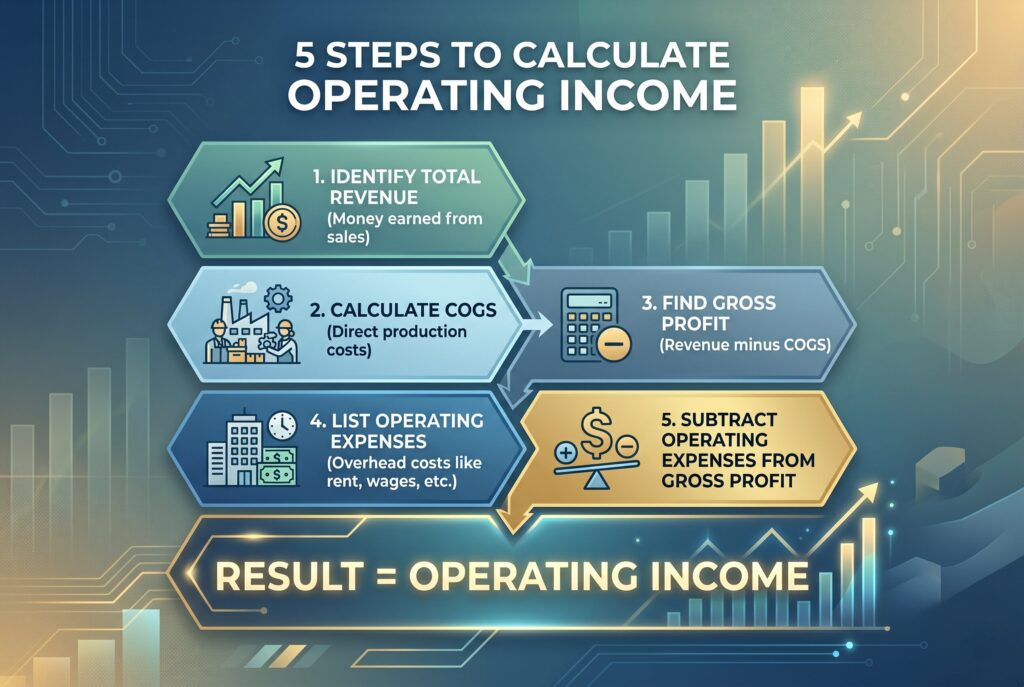
1. Identify Total Revenue
Start with total revenue for the period you want to analyze. This is the money the business earned from its normal sales activity before expenses are deducted.
2. Calculate Cost of Goods Sold
Next, calculate COGS. These are the direct costs required to produce or deliver the product or service. Depending on the business, that can include raw materials, direct labor, inventory costs, or other direct production expenses.
3. Find Gross Profit
Subtract COGS from revenue.
Gross Profit = Revenue − COGS
This tells you how much money is left after direct production costs but before the rest of the business overhead is taken into account.
4. List Operating Expenses
Now gather the recurring costs of running the business. These are operating expenses, often called OpEx. This typically includes wages not counted in direct labor, rent, utilities, depreciation, office expenses, sales expenses, and other day to day costs of operating the business.
5. Subtract Operating Expenses from Gross Profit
The final step is simple:
Operating Income = Gross Profit − Operating Expenses
That result is your operating profit.
Operating Income Calculator
This tool helps you calculate Gross Profit and Operating Income based on Total Revenue, Cost of Goods Sold, and Operating Expenses.
Gross Profit = Revenue − COGS
Operating Income = Gross Profit − Operating Expenses
Operating Income vs. Net Income: What’s the Difference?
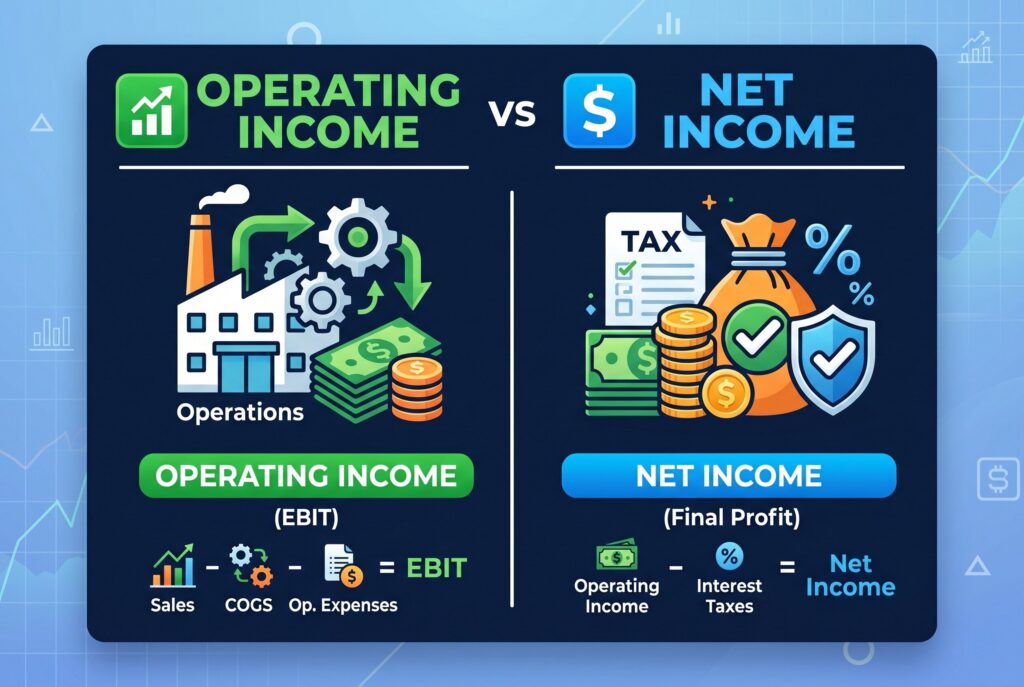
Operating income vs net income is one of the most important comparisons in business finance. Operating income shows how well you run the business itself. Net income shows what is left after everything is deducted, including taxes, interest, and non operating items.
That means operating income is more useful when you want to judge operational discipline. It tells you whether pricing, cost structure, and expense management are working. Net income is still important, but it can be influenced by financing choices that say less about the business model itself.
This is why a company can have positive operating income but weak or even negative net income and still deserve serious attention. Maybe it took on debt to expand. Maybe tax timing changed the quarter. Maybe a one time expense pulled net income down. The core operation may still be solid. So which number matters more? If you want to evaluate the quality of the business engine, operating income usually tells the clearer story.
Analyzing Efficiency: The Operating Margin Formula
Once you know operating income, the next step is operating margin. What is the operating margin? Operating margin is the percentage of revenue that remains as operating income after cost of goods sold and operating expenses are deducted. It gives you a cleaner way to compare efficiency across time periods or across companies.
The operating margin formula is:
If you want it as a percentage, multiply by 100. This matters because the operating income dollar figure alone doesn’t always tell the full story. A bigger company may report higher operating profit in absolute terms, but a smaller company with a better operating margin may actually be running more efficiently.
That’s why operating margin is so useful for benchmarking. It helps you compare businesses of different sizes on the same scale. It also helps explain how resilient a company might be when inflation, wage pressure, or other market stress hits.
Why Your Operating Income Matters to Investors

Investors care about operating income because it shows whether management can control costs and scale the business without relying on financial engineering. A company can improve net income through tax advantages, financing structures, or unusual gains, but those moves don’t necessarily prove the business is stronger. Operating profit is harder to fake. It comes from the actual performance of the company’s operations.
That is why operating income often matters in lender analysis, investor analysis, and internal management review. It acts as a cleaner indicator of how well the business itself is functioning.
If a company’s revenue is rising while operating income is shrinking, that signals a real operational problem. Costs may be growing too fast. Pricing may be too weak. Efficiency may be slipping. Investors notice that quickly because it affects future scalability.
Conclusion
The operating income formula is simple, but the insight it gives you is powerful. It helps you see whether your business is truly earning money from its core operations before taxes and financing muddy the picture. That makes operating income one of the most practical numbers to track if you want a clearer view of business health.
If you want to understand your business better, start with your latest income statement. Find your revenue, subtract COGS, subtract operating expenses, and calculate your operating profit. Then go one step further and calculate operating margin. That combination will tell you much more than revenue alone ever could.