



What is SG&A? In simple terms, SG&A refers to the everyday business costs required to sell products, manage operations, and keep a company running. The SG&A meaning goes beyond one line on the income statement. It’s a key signal of operating efficiency, cost discipline, and whether a business can grow without letting overhead get out of control.
What Does SG&A Stand For?
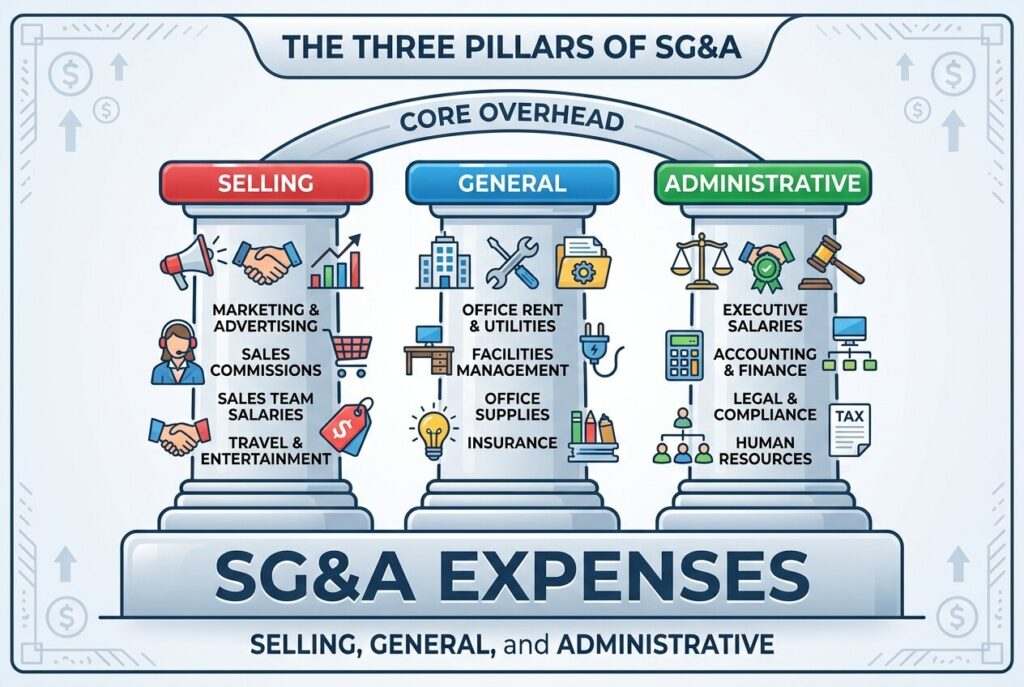
SG&A stands for Selling, General, and Administrative expenses. These are operating costs that aren’t directly tied to producing a product or delivering a core service. In other words, SG&A doesn’t include direct production costs like raw materials or factory labor, which usually fall under COGS. Selling general and administrative expenses typically include sales commissions, marketing, office rent, executive salaries, HR, legal, accounting, insurance, and other day-to-day overhead.
The Three Pillars of SG&A: A Detailed Breakdown
Selling Expenses
Selling expenses are the costs connected to promoting, selling, and sometimes distributing a company’s products or services. Common examples include advertising, digital marketing, sales team salaries, commissions, trade shows, promotional campaigns, and sales software. For example, if a company pays a commission to a sales representative after closing a deal, that cost usually belongs in SG&A. If it runs paid ads to attract customers, that’s also a selling expense.
General Expenses
General expenses support the overall business but aren’t tied to one department or product line. These can include office rent, utilities, insurance, office supplies, security, subscriptions, and general facility costs. These expenses are often called overhead because the company needs them to operate, even if they don’t directly generate revenue.
Administrative Expenses
Administrative expenses cover the management and back-office functions of the business. Examples include executive salaries, HR, legal, finance, accounting, payroll, compliance, and board-related costs. These costs may not be directly linked to sales volume, but they’re essential for governance, risk control, and long-term stability.
SG&A & Efficiency Analyzer
To analyze SG&A, start with this simple formula:
For example, if a company has $2 million in SG&A and $10 million in net sales, its SG&A ratio is 20%. A lower ratio can suggest efficiency, but it isn’t always better. If a company cuts marketing, sales support, or finance too deeply, short-term profit may improve while long-term growth suffers. A useful analyzer should compare current SG&A, prior-year SG&A, sales growth, and industry benchmarks together.
SG&A vs. COGS: Why the Distinction Matters for Your Margins
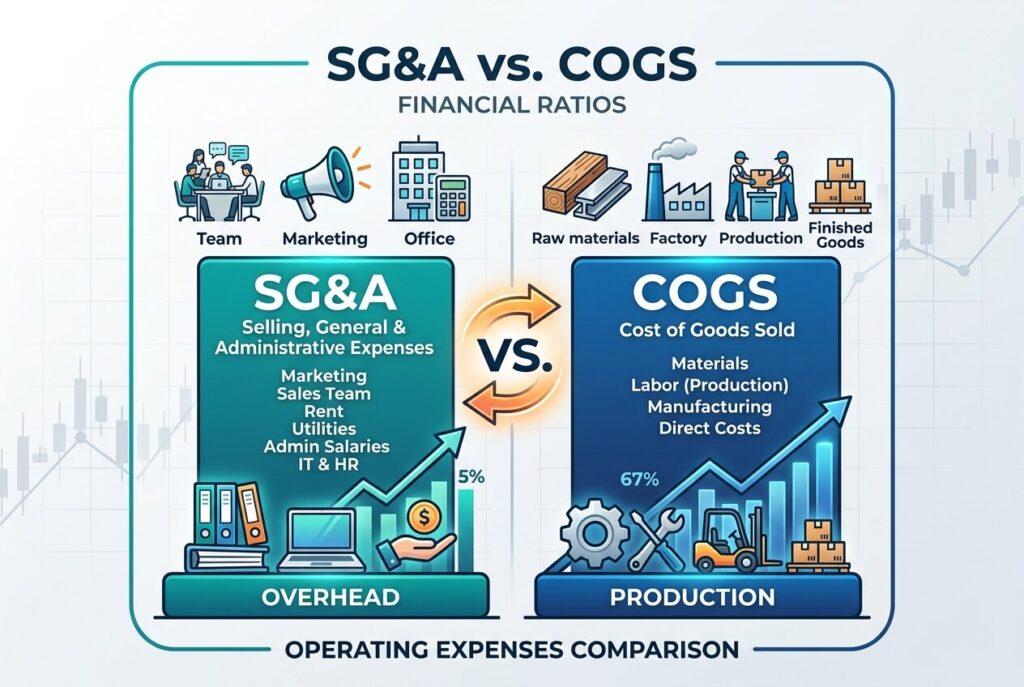
COGS stands for cost of goods sold. It includes direct costs required to produce or deliver what a company sells. Examples may include raw materials, production labor, manufacturing supplies, packaging, and certain freight costs. SG&A, by contrast, includes indirect operating expenses. These support the business but don’t directly create the product.
The distinction matters because COGS affects gross margin, while SG&A affects operating margin. If costs are misclassified, management may misunderstand profitability. A company might think its products have weak margins when the real issue is overhead, or it might think operations are efficient when direct costs are actually too high.
Operating expenses can include SG&A, but they aren’t always the same thing. Some companies also include R&D, depreciation, or amortization within operating expenses, depending on reporting structure.
The SG&A-to-Sales Ratio: Benchmarking by Industry
The SG&A-to-sales ratio helps compare overhead intensity across companies. It shows how much of each sales dollar is consumed by selling, general, and administrative costs.
Typical benchmark ranges vary by industry:
- Industrial manufacturing: 10% to 20%
- Consumer goods: up to around 25%
- Pharmaceuticals and healthcare: 40% to 50% or higher
These differences make context essential. A manufacturer may look inefficient at 30%, while a biotech company may still be normal at that level because it needs larger sales, compliance, and administrative infrastructure. The best comparison is usually against similar companies with similar business models, revenue size, and growth stage.
2026 Trends: FASB DISE and Automation in Expense Management

In 2026, finance teams are paying closer attention to expense detail and classification. FASB’s expense disaggregation direction is pushing companies toward clearer breakdowns of operating costs. That means businesses can’t treat SG&A as a vague catch-all forever.
Automation is also changing expense management. AI tools can help categorize spend, flag unusual vendor activity, detect duplicate subscriptions, and build dashboards for real-time SG&A monitoring. This doesn’t replace accounting judgment, but it can reduce manual work and make reporting more consistent.
For growing businesses, the opportunity is clear: better data leads to better decisions. Instead of asking only “how to calculate SG&A,” finance teams can ask which expenses support growth and which ones create waste.
Common Gray Areas in SG&A Classification
- Customer Success: Usually SG&A when focused on retention/account management, but can be closer to COGS if directly delivering the core service.
- Shipping: Delivery of finished goods may be included in COGS, while shipping tied to sales support or customer service is typically SG&A.
- Depreciation: Factory equipment depreciation is generally not SG&A, whereas office and administrative asset depreciation usually is; consistency in classification is key.
Conclusion
SG&A isn’t just overhead to cut. It’s the operating system behind sales, management, compliance, and scale. The goal isn’t to force SG&A as low as possible. The goal is to make sure every dollar supports efficiency, control, or sustainable growth. A strong SG&A review should define the expense categories, calculate the SG&A ratio, compare performance against industry benchmarks, and examine gray areas carefully. When managed well, SG&A becomes more than an accounting line. It becomes a practical measure of how intelligently a company runs.

